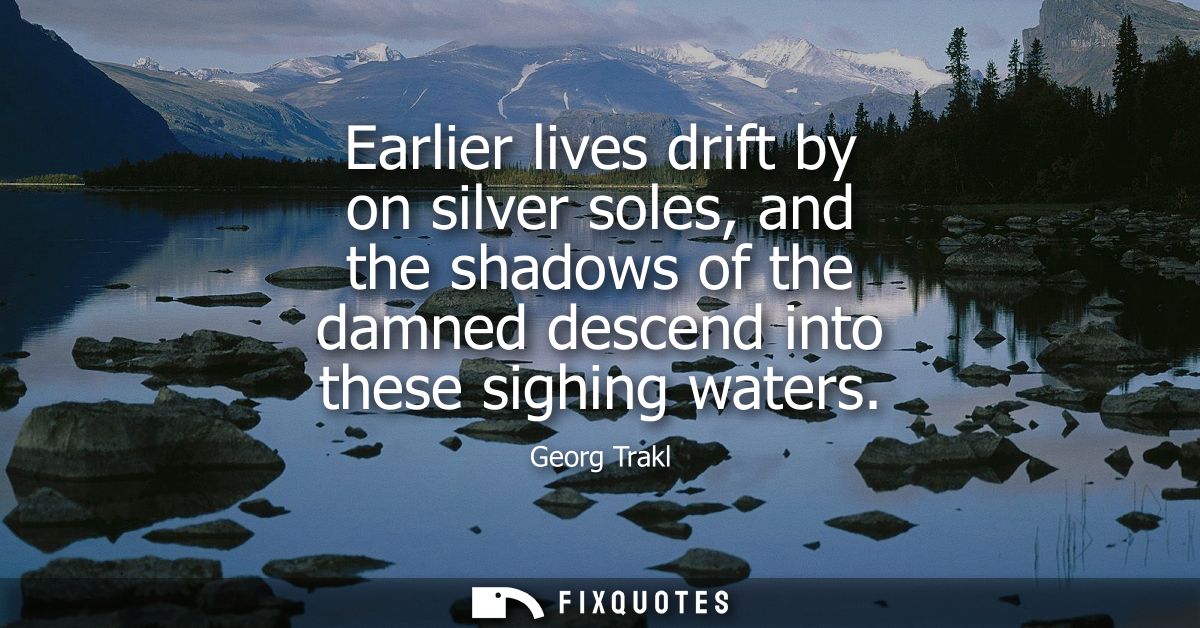
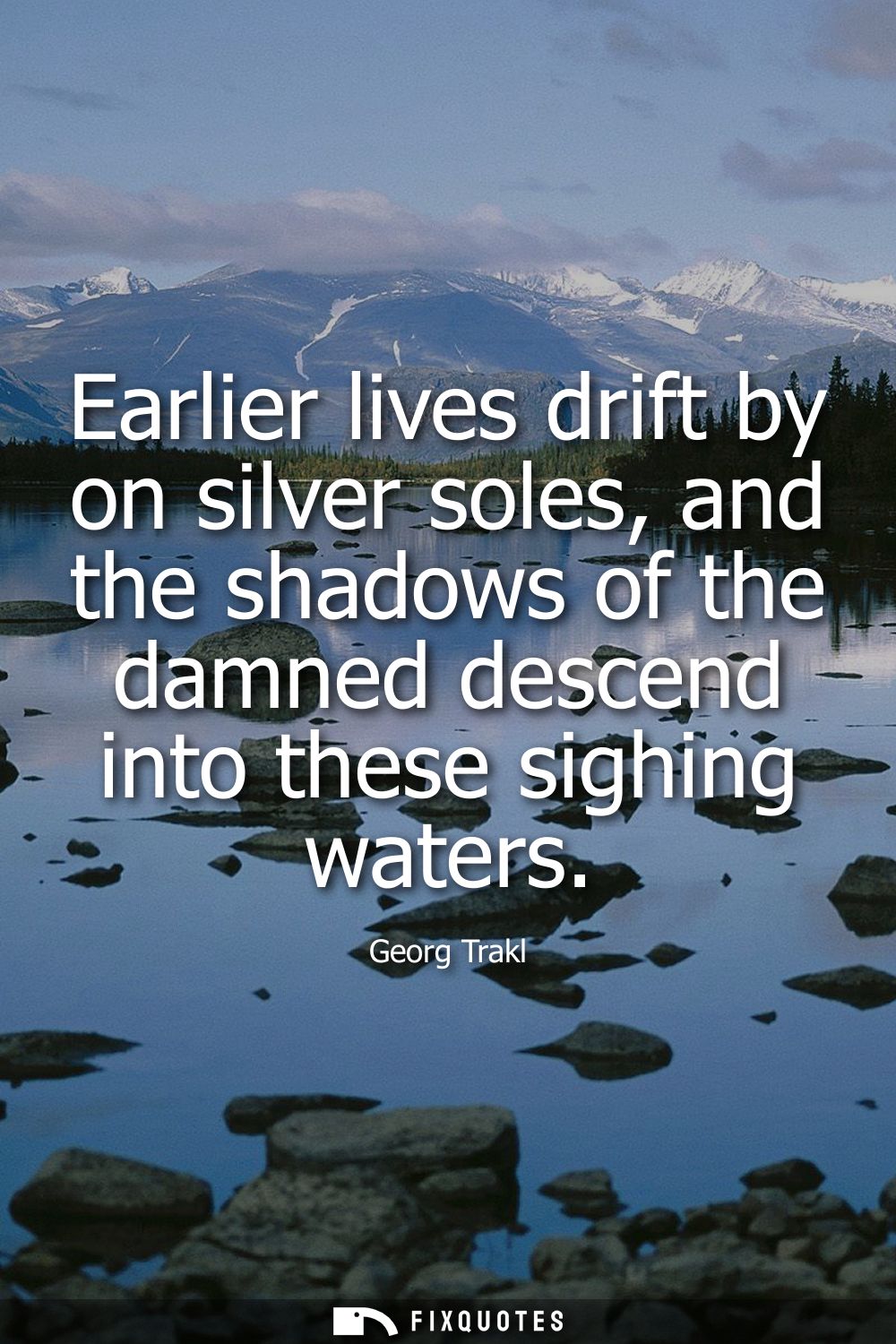
"Earlier lives drift by on silver soles, and the shadows of the damned descend into these sighing waters"
About this Quote
A gorgeous line that sounds like it was written with a fever on purpose: slick, luminous movement ("silver soles") sliding straight into moral and metaphysical rot ("the damned"). Trakl’s intent isn’t to tell a story so much as to stage a collapse of time and innocence in a single, hallucinatory image. "Earlier lives" implies reincarnation, memory, or simply the selves we’ve outlived; they don’t march, they drift, as if the past has lost its grip on chronology. The "silver" sheen is seduction and anesthesia at once, a beautiful surface that makes what’s happening feel inevitable, even elegant.
Then the line yanks downward. "Shadows of the damned descend" doesn’t argue for hell; it presumes it, like a weather system. The subtext is that guilt and ruin aren’t private experiences but environmental forces. And the water isn’t cleansing baptismal water. It’s "sighing": exhausted, complicit, a landscape that mourns without offering rescue. Trakl’s waters receive rather than redeem.
Context matters: Trakl is an Expressionist writing at the edge of World War I, and his work keeps returning to dusk, decay, and spiritual contamination. He served as a military medic; the vocabulary of drifting and descending reads like psychic triage, the mind watching bodies and identities slip away. The line works because it refuses stable footing: the reader is forced onto that shimmering surface, only to feel it become an entrance to something deeper, colder, and already crowded with shadows.
Then the line yanks downward. "Shadows of the damned descend" doesn’t argue for hell; it presumes it, like a weather system. The subtext is that guilt and ruin aren’t private experiences but environmental forces. And the water isn’t cleansing baptismal water. It’s "sighing": exhausted, complicit, a landscape that mourns without offering rescue. Trakl’s waters receive rather than redeem.
Context matters: Trakl is an Expressionist writing at the edge of World War I, and his work keeps returning to dusk, decay, and spiritual contamination. He served as a military medic; the vocabulary of drifting and descending reads like psychic triage, the mind watching bodies and identities slip away. The line works because it refuses stable footing: the reader is forced onto that shimmering surface, only to feel it become an entrance to something deeper, colder, and already crowded with shadows.
Quote Details
| Topic | Poetry |
|---|
More Quotes by Georg
Add to List