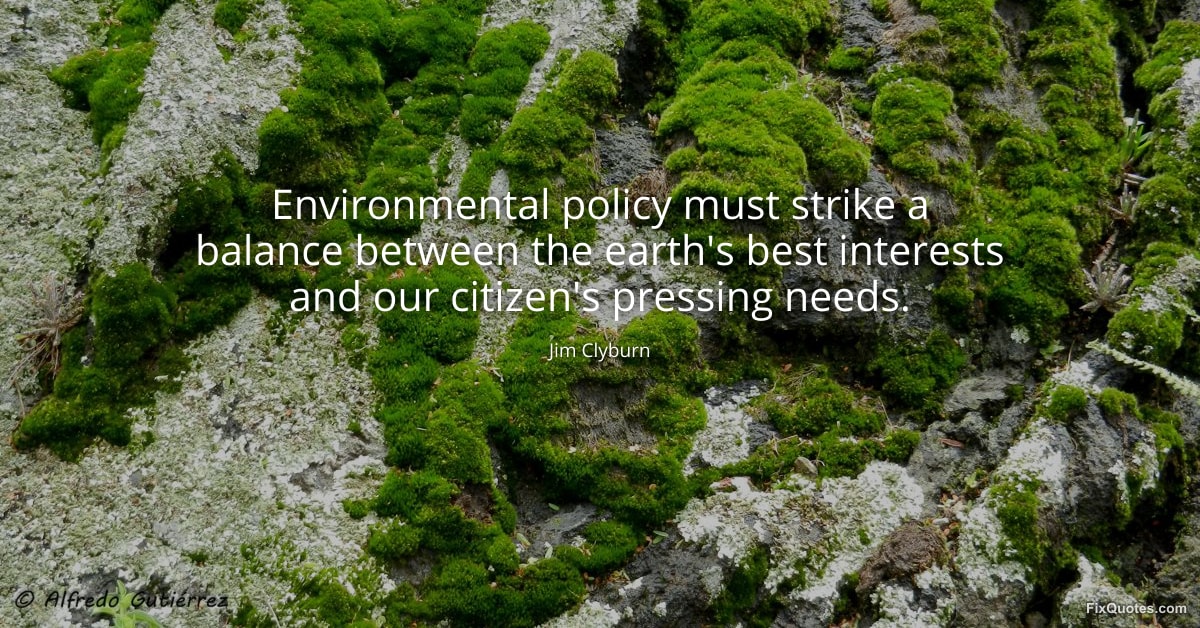
"Environmental policy must strike a balance between the earth's best interests and our citizen's pressing needs"
About this Quote
The subtext is defensive and strategic. It signals to industry, labor, and skeptical moderates that environmental policy won’t be pursued as purity politics. “Pressing needs” is a loaded placeholder: jobs, energy prices, transportation, housing, disaster recovery. It’s the language of kitchen-table economics, designed to blunt the caricature of climate policy as an elite project imposed on working people. At the same time, “must” asserts discipline: this is not optional virtue-signaling but an obligation of responsible governance.
Context matters. As a senior Democratic leader from South Carolina, Clyburn has long operated at the intersection of environmental risk and economic vulnerability: coastal storms and flooding on one side, manufacturing and energy realities on the other. The quote reads like coalition maintenance - an attempt to keep climate ambition tethered to material benefits, so it survives contact with elections, committee markups, and utility bills. The rhetoric isn’t poetic; it’s engineered to make action politically durable.
Quote Details
| Topic | Ethics & Morality |
|---|---|
| Source | Help us find the source |
| Cite |
Citation Formats
APA Style (7th ed.)
Clyburn, Jim. (2026, January 17). Environmental policy must strike a balance between the earth's best interests and our citizen's pressing needs. FixQuotes. https://fixquotes.com/quotes/environmental-policy-must-strike-a-balance-78594/
Chicago Style
Clyburn, Jim. "Environmental policy must strike a balance between the earth's best interests and our citizen's pressing needs." FixQuotes. January 17, 2026. https://fixquotes.com/quotes/environmental-policy-must-strike-a-balance-78594/.
MLA Style (9th ed.)
"Environmental policy must strike a balance between the earth's best interests and our citizen's pressing needs." FixQuotes, 17 Jan. 2026, https://fixquotes.com/quotes/environmental-policy-must-strike-a-balance-78594/. Accessed 6 Mar. 2026.