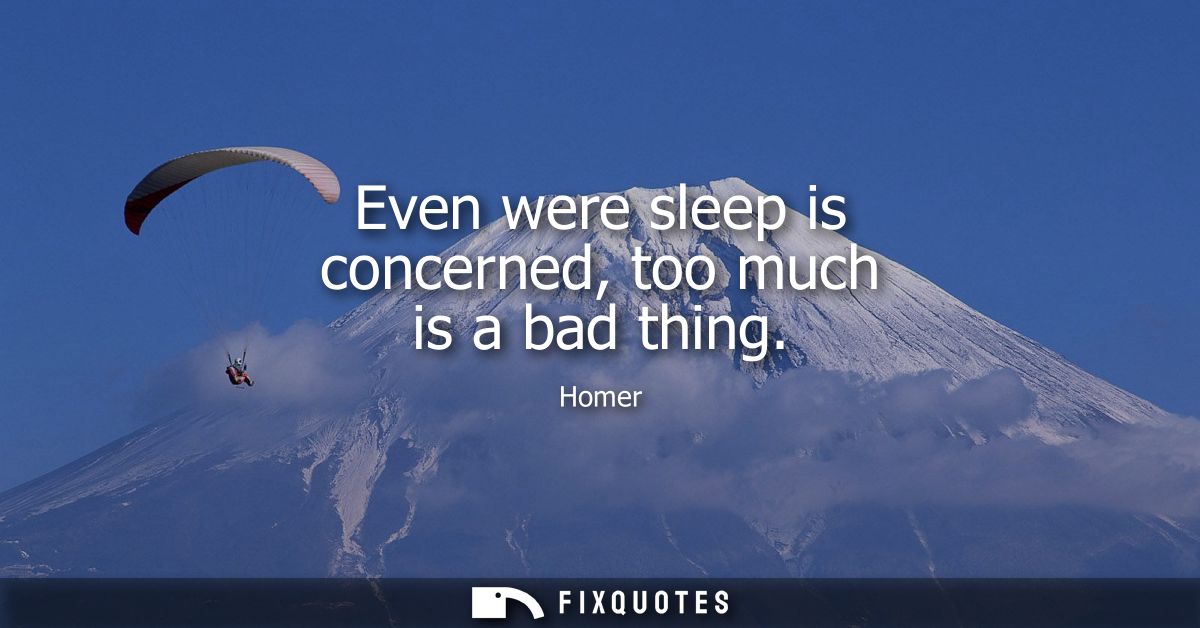
"Even were sleep is concerned, too much is a bad thing"
About this Quote
Homer lands the line like a dry warning from someone who has watched heroes ruin themselves not only with rage and pride, but with softer excesses. Sleep, the most innocent of human needs, gets drafted into the Greek moral universe where balance is the real virtue and indulgence is never neutral. The phrasing matters: “Even where sleep is concerned” signals an exception that isn’t an exception at all. If rest can curdle into vice, then nothing is safely outside the reach of self-mastery.
The intent is practical and martial. In an epic world, oversleeping isn’t a quirky habit; it’s a failure of vigilance. It risks missing the moment when a ship must launch, a guard must notice movement, a decision must be made before the gods (or enemies) decide for you. Homer’s audiences lived close to scarcity and danger, so “too much” reads less like a wellness tip and more like a survival ethic.
The subtext cuts deeper: sleep is a tiny rehearsal for death, a daily surrender of control. Homer doesn’t condemn it, but he refuses to romanticize it. Rest is permitted, even necessary, yet it must be disciplined, kept in proportion to duty and communal responsibility. In a culture suspicious of softness and obsessed with reputation, the person who sleeps too long isn’t just lazy; he’s slipping out of the story, forfeiting the chance to act, to be seen, to matter.
The intent is practical and martial. In an epic world, oversleeping isn’t a quirky habit; it’s a failure of vigilance. It risks missing the moment when a ship must launch, a guard must notice movement, a decision must be made before the gods (or enemies) decide for you. Homer’s audiences lived close to scarcity and danger, so “too much” reads less like a wellness tip and more like a survival ethic.
The subtext cuts deeper: sleep is a tiny rehearsal for death, a daily surrender of control. Homer doesn’t condemn it, but he refuses to romanticize it. Rest is permitted, even necessary, yet it must be disciplined, kept in proportion to duty and communal responsibility. In a culture suspicious of softness and obsessed with reputation, the person who sleeps too long isn’t just lazy; he’s slipping out of the story, forfeiting the chance to act, to be seen, to matter.
Quote Details
| Topic | Wisdom |
|---|---|
| Source | Help us find the source |
| Cite |
Citation Formats
APA Style (7th ed.)
Homer. (2026, January 15). Even were sleep is concerned, too much is a bad thing. FixQuotes. https://fixquotes.com/quotes/even-were-sleep-is-concerned-too-much-is-a-bad-112042/
Chicago Style
Homer. "Even were sleep is concerned, too much is a bad thing." FixQuotes. January 15, 2026. https://fixquotes.com/quotes/even-were-sleep-is-concerned-too-much-is-a-bad-112042/.
MLA Style (9th ed.)
"Even were sleep is concerned, too much is a bad thing." FixQuotes, 15 Jan. 2026, https://fixquotes.com/quotes/even-were-sleep-is-concerned-too-much-is-a-bad-112042/. Accessed 7 Mar. 2026.
More Quotes by Homer
Add to List