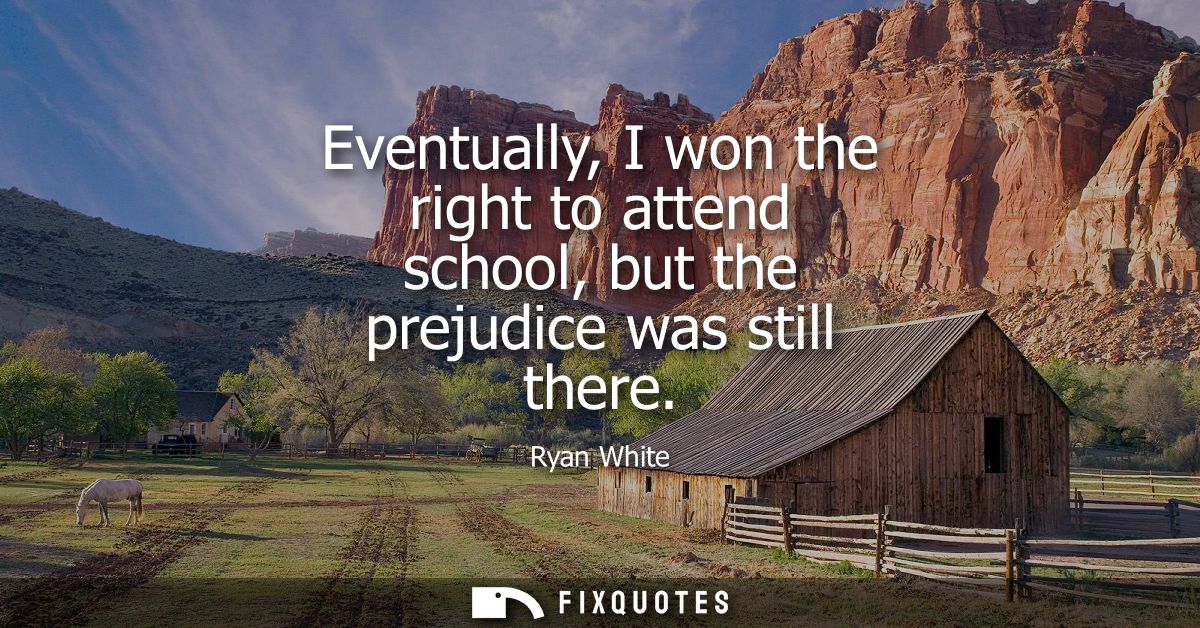
"Eventually, I won the right to attend school, but the prejudice was still there"
About this Quote
The second clause is the gut punch. "But the prejudice was still there" rejects the tidy narrative of progress where one victory solves the problem. White is naming what institutions often try to launder: policy change without cultural change. Letting him into school could be treated as compliance, a box checked; prejudice, meanwhile, sticks to lockers, whispers, PTA meetings, and the everyday humiliations that don’t show up in court documents.
Context is everything. In the mid-1980s, White became the face of America’s AIDS panic after contracting HIV through hemophilia treatment. His battle to attend school in Indiana wasn’t just about one student; it was about how misinformation hardens into moral judgment. The quote’s intent is quietly accusatory: you can’t call yourself fair because you finally opened the door. If the room is still hostile, the injustice just changed its outfit.
Quote Details
| Topic | Equality |
|---|---|
| Source | Help us find the source |
| Cite |
Citation Formats
APA Style (7th ed.)
White, Ryan. (2026, January 15). Eventually, I won the right to attend school, but the prejudice was still there. FixQuotes. https://fixquotes.com/quotes/eventually-i-won-the-right-to-attend-school-but-164965/
Chicago Style
White, Ryan. "Eventually, I won the right to attend school, but the prejudice was still there." FixQuotes. January 15, 2026. https://fixquotes.com/quotes/eventually-i-won-the-right-to-attend-school-but-164965/.
MLA Style (9th ed.)
"Eventually, I won the right to attend school, but the prejudice was still there." FixQuotes, 15 Jan. 2026, https://fixquotes.com/quotes/eventually-i-won-the-right-to-attend-school-but-164965/. Accessed 6 Mar. 2026.