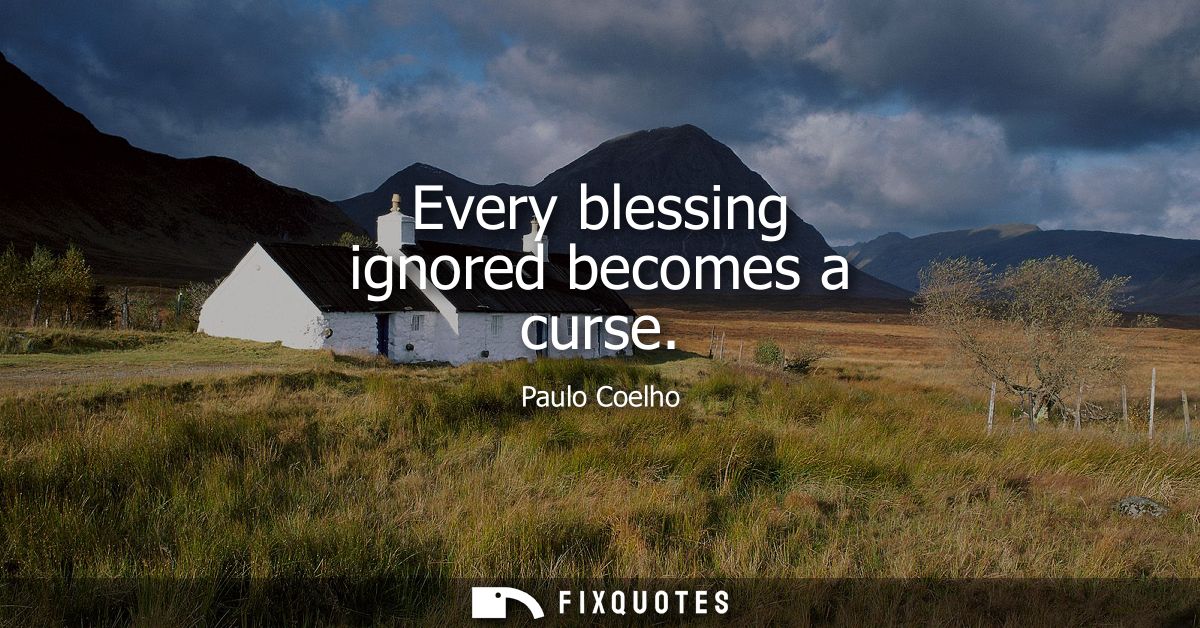
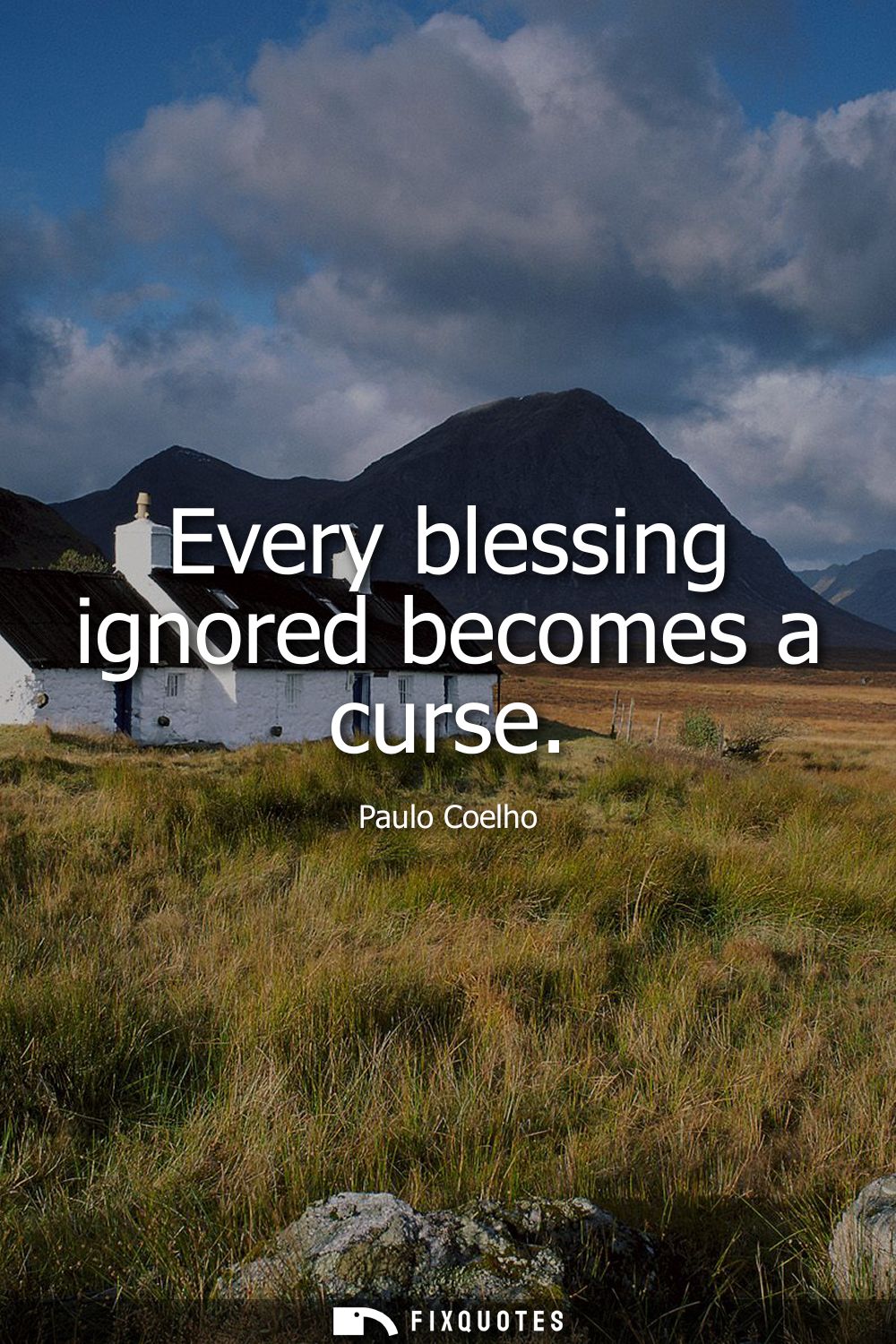
"Every blessing ignored becomes a curse"
About this Quote
A Coelho line that sounds like a proverb because it wants to behave like one: portable, slightly mystical, and quietly accusatory. "Every blessing ignored becomes a curse" turns gratitude into a form of spiritual maintenance. Not appreciating what you have is not framed as neutral neglect; it is framed as alchemy in reverse, where good fortune rots into punishment. The sentence is built to sting. "Every" removes the loopholes. "Ignored" is a slippery verb that includes distraction, entitlement, and the modern condition of having too much input to notice what matters. Then comes the twist: the curse is not delivered by fate, or God, or an enemy. It is manufactured inside the self.
Coelho's intent, consistent with his novels' self-help-inflected spirituality, is to push the reader from passive receiving to active seeing. Blessings aren't just events; they're invitations to participate in your own life. The subtext is moral economics: gifts require attention as a kind of payment. Refuse to pay, and the gift turns predatory - not because the world is cruel, but because unacknowledged goodness breeds resentment, boredom, and a sense of being cheated. The "curse" can look like cynicism, anxiety, or a relationship that feels suffocating precisely because it was taken for granted.
The context here is late-20th-century global pop spirituality: a novelist writing parables for a restless, self-optimizing audience. It's motivational, yes, but it also smuggles in a warning. The real danger isn't lacking blessings. It's becoming the kind of person who can't recognize them.
Coelho's intent, consistent with his novels' self-help-inflected spirituality, is to push the reader from passive receiving to active seeing. Blessings aren't just events; they're invitations to participate in your own life. The subtext is moral economics: gifts require attention as a kind of payment. Refuse to pay, and the gift turns predatory - not because the world is cruel, but because unacknowledged goodness breeds resentment, boredom, and a sense of being cheated. The "curse" can look like cynicism, anxiety, or a relationship that feels suffocating precisely because it was taken for granted.
The context here is late-20th-century global pop spirituality: a novelist writing parables for a restless, self-optimizing audience. It's motivational, yes, but it also smuggles in a warning. The real danger isn't lacking blessings. It's becoming the kind of person who can't recognize them.
Quote Details
| Topic | Gratitude |
|---|---|
| Source | Help us find the source |
| Cite |
Citation Formats
APA Style (7th ed.)
Coelho, Paulo. (2026, January 15). Every blessing ignored becomes a curse. FixQuotes. https://fixquotes.com/quotes/every-blessing-ignored-becomes-a-curse-1201/
Chicago Style
Coelho, Paulo. "Every blessing ignored becomes a curse." FixQuotes. January 15, 2026. https://fixquotes.com/quotes/every-blessing-ignored-becomes-a-curse-1201/.
MLA Style (9th ed.)
"Every blessing ignored becomes a curse." FixQuotes, 15 Jan. 2026, https://fixquotes.com/quotes/every-blessing-ignored-becomes-a-curse-1201/. Accessed 24 Mar. 2026.
More Quotes by Paulo
Add to List