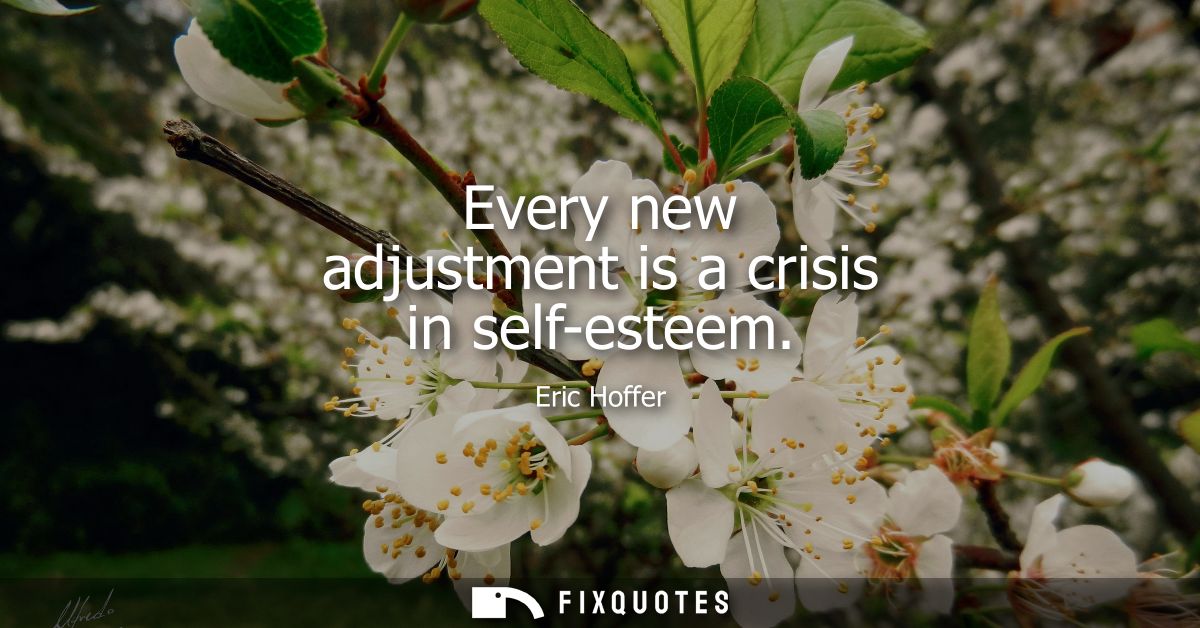
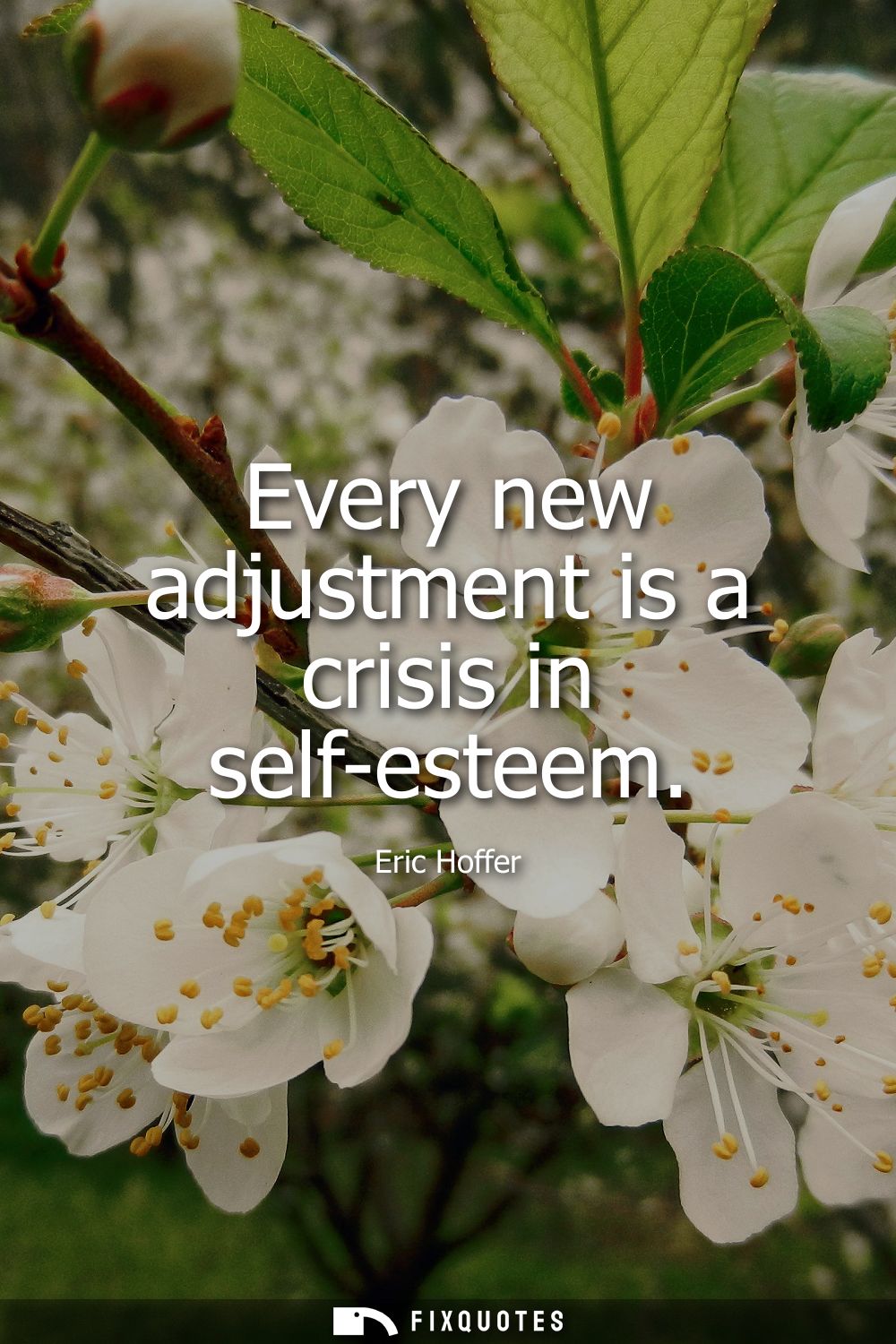
"Every new adjustment is a crisis in self-esteem"
About this Quote
Modern life sells adaptation as a virtue, but Hoffer needles the hidden bill that comes due: every tweak to how you live, work, or see yourself forces a renegotiation of dignity. “Adjustment” sounds mild, almost therapeutic, yet he pairs it with “crisis,” turning the language of flexibility into an indictment. The line works because it refuses the self-help fantasy that change is merely logistics. Change is moral theater. You don’t just move cities or switch careers; you risk discovering that your old story about yourself no longer fits, and that you were leaning harder on it than you admitted.
Hoffer’s intent is diagnostic, not consoling. He’s tracking the psychological friction that shows up whenever external reality demands an internal rewrite. Self-esteem here isn’t a vibe; it’s a precarious social instrument, built from competence, belonging, and continuity. An “adjustment” threatens all three at once: you become temporarily less competent, uncertain of your rank, unclear on the rules. Even positive changes carry the same sting because they still expose dependency and beginnerhood.
The subtext is political, too, in Hoffer’s mid-century context: mass upheaval, industrial shifts, war, migration, the churn of modernity. People who can’t metabolize repeated small humiliations go looking for sturdier identities, often prefabricated by movements, ideologies, or tribes that promise instant stature. By framing adaptation as an ego emergency, Hoffer explains why “just adapt” can sound less like advice and more like a threat.
Hoffer’s intent is diagnostic, not consoling. He’s tracking the psychological friction that shows up whenever external reality demands an internal rewrite. Self-esteem here isn’t a vibe; it’s a precarious social instrument, built from competence, belonging, and continuity. An “adjustment” threatens all three at once: you become temporarily less competent, uncertain of your rank, unclear on the rules. Even positive changes carry the same sting because they still expose dependency and beginnerhood.
The subtext is political, too, in Hoffer’s mid-century context: mass upheaval, industrial shifts, war, migration, the churn of modernity. People who can’t metabolize repeated small humiliations go looking for sturdier identities, often prefabricated by movements, ideologies, or tribes that promise instant stature. By framing adaptation as an ego emergency, Hoffer explains why “just adapt” can sound less like advice and more like a threat.
Quote Details
| Topic | Confidence |
|---|---|
| Source | Help us find the source |
| Cite |
Citation Formats
APA Style (7th ed.)
Hoffer, Eric. (2026, January 17). Every new adjustment is a crisis in self-esteem. FixQuotes. https://fixquotes.com/quotes/every-new-adjustment-is-a-crisis-in-self-esteem-31081/
Chicago Style
Hoffer, Eric. "Every new adjustment is a crisis in self-esteem." FixQuotes. January 17, 2026. https://fixquotes.com/quotes/every-new-adjustment-is-a-crisis-in-self-esteem-31081/.
MLA Style (9th ed.)
"Every new adjustment is a crisis in self-esteem." FixQuotes, 17 Jan. 2026, https://fixquotes.com/quotes/every-new-adjustment-is-a-crisis-in-self-esteem-31081/. Accessed 27 Mar. 2026.
More Quotes by Eric
Add to List