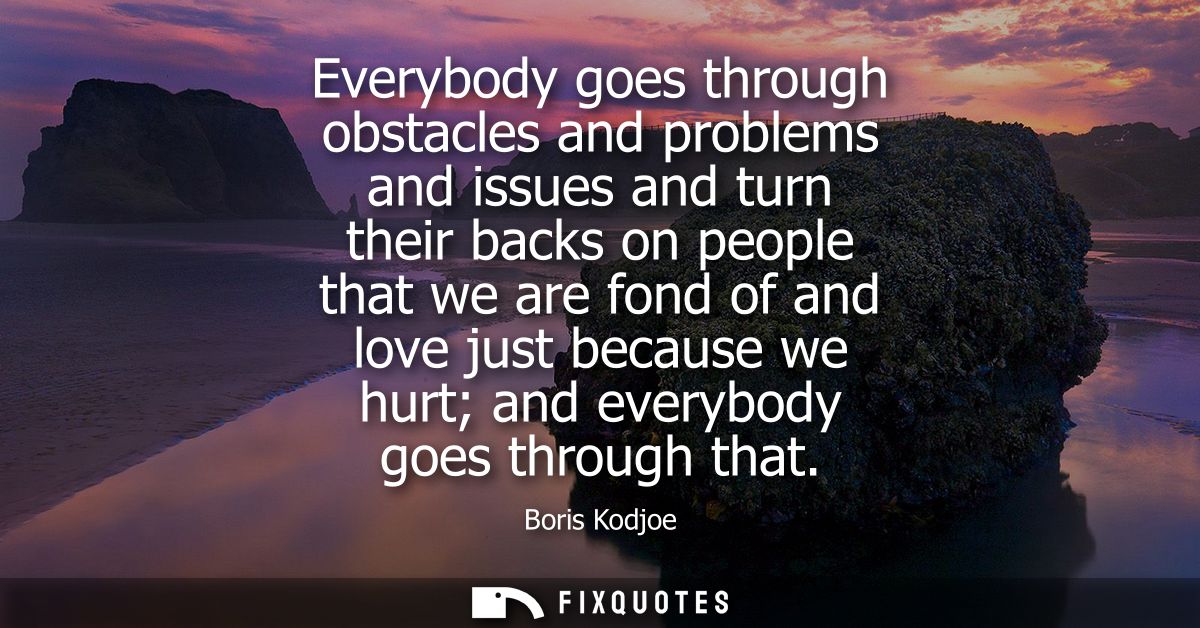
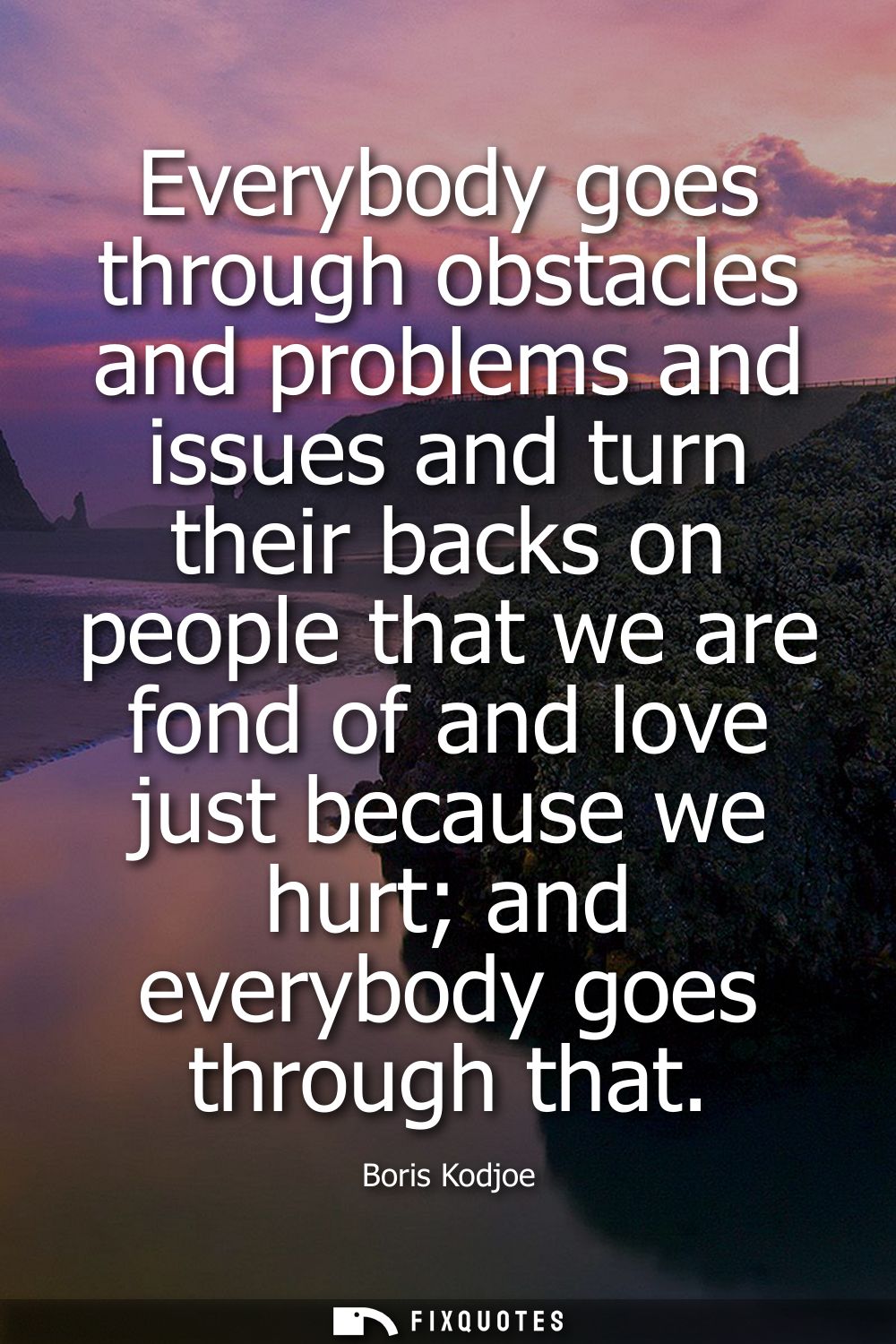
"Everybody goes through obstacles and problems and issues, and turn their backs on people that we are fond of and love just because we hurt; and everybody goes through that"
About this Quote
The specific intent is softening judgment. “Turn their backs on people that we are fond of and love” names a betrayal without calling it that, then slides in the alibi: “just because we hurt.” He’s trying to reframe abandonment as a symptom, not a verdict on love. That’s an actorly move in the best sense - not manipulation, but empathy through motive. The subtext is: I’ve done this, or I’ve been close to someone who did. Notice how quickly “we” and “everybody” show up. He distributes responsibility across the crowd, turning a personal failing into a shared pattern. That universalizing is comforting, but it also lets the speaker step back from accountability without denying harm.
Contextually, it reads like the language of modern therapy culture filtered through celebrity plainspokenness: feelings as explanations, not excuses; vulnerability as social currency. It’s also a quiet defense of people who go missing emotionally - not monsters, just overwhelmed. The line works because it refuses a clean moral binary. It insists that love and withdrawal can coexist in the same person, sometimes in the same day, and that the damage is real even when the intent isn’t.
Quote Details
| Topic | Betrayal |
|---|---|
| Source | Help us find the source |
| Cite |
Citation Formats
APA Style (7th ed.)
Kodjoe, Boris. (2026, February 20). Everybody goes through obstacles and problems and issues, and turn their backs on people that we are fond of and love just because we hurt; and everybody goes through that. FixQuotes. https://fixquotes.com/quotes/everybody-goes-through-obstacles-and-problems-and-4267/
Chicago Style
Kodjoe, Boris. "Everybody goes through obstacles and problems and issues, and turn their backs on people that we are fond of and love just because we hurt; and everybody goes through that." FixQuotes. February 20, 2026. https://fixquotes.com/quotes/everybody-goes-through-obstacles-and-problems-and-4267/.
MLA Style (9th ed.)
"Everybody goes through obstacles and problems and issues, and turn their backs on people that we are fond of and love just because we hurt; and everybody goes through that." FixQuotes, 20 Feb. 2026, https://fixquotes.com/quotes/everybody-goes-through-obstacles-and-problems-and-4267/. Accessed 30 Mar. 2026.