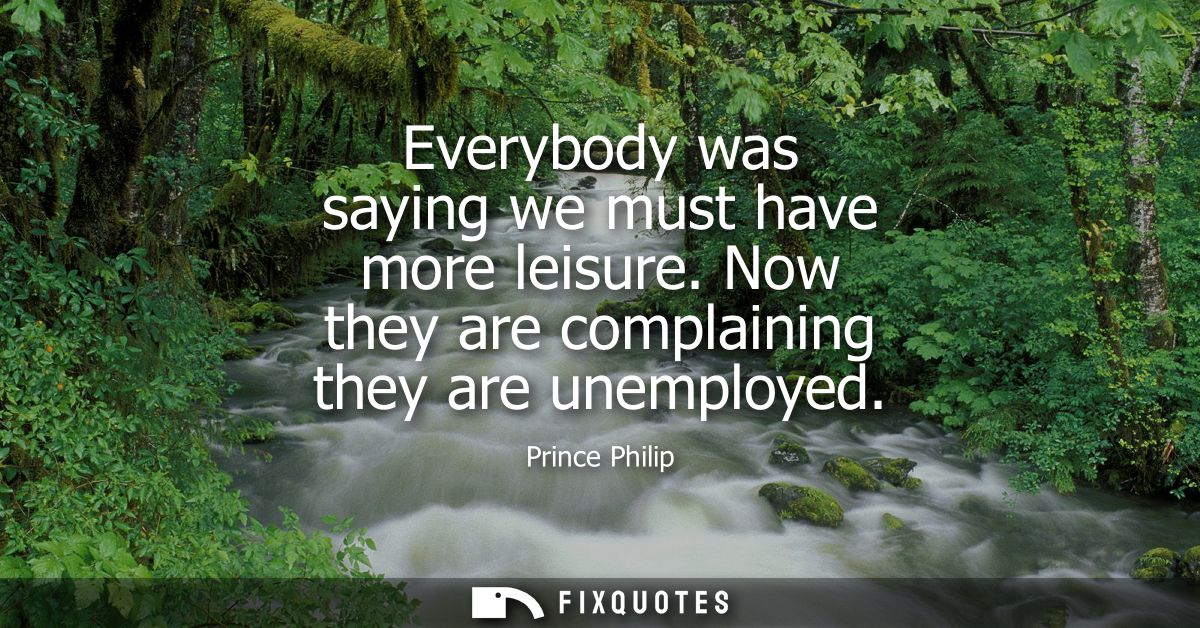
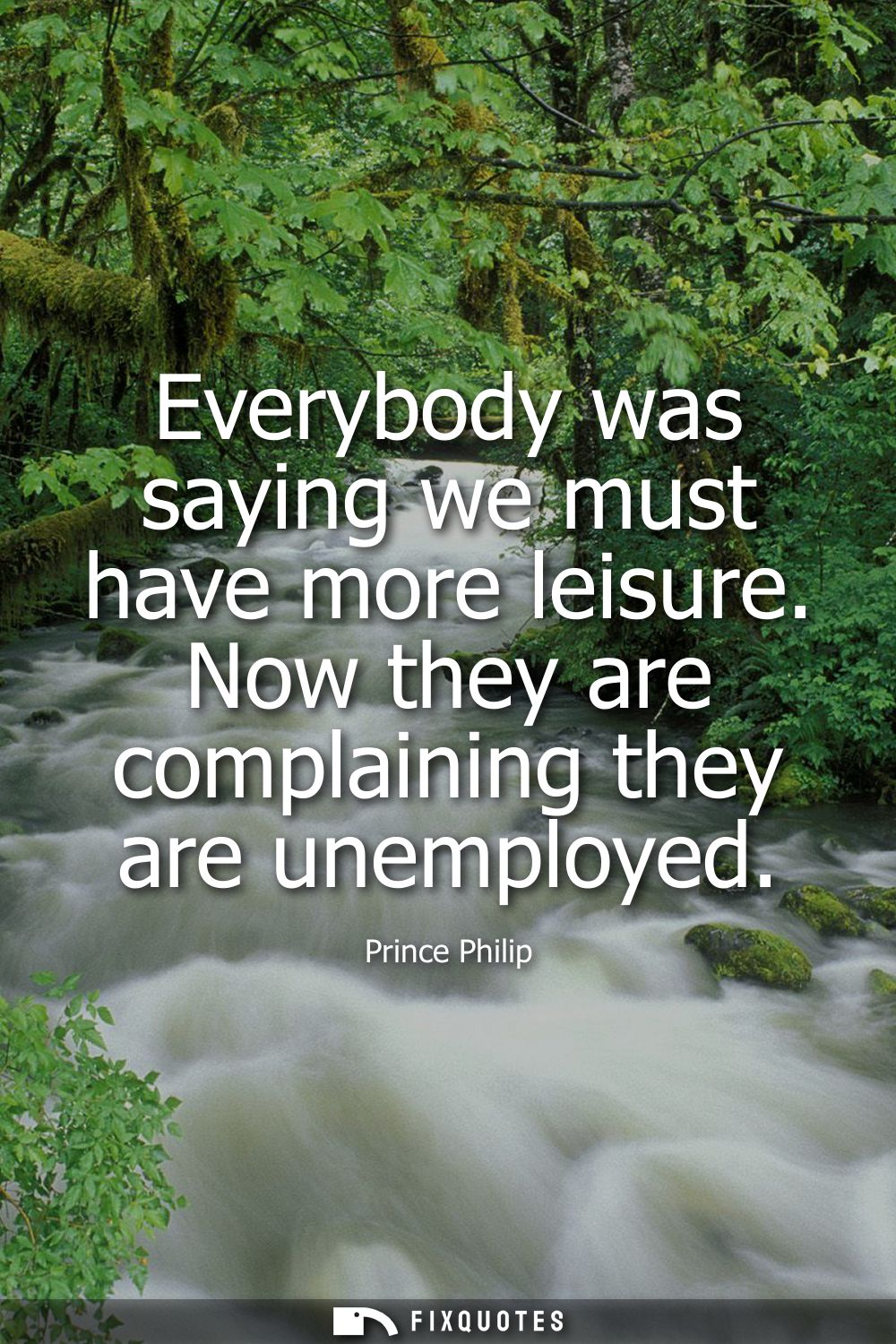
"Everybody was saying we must have more leisure. Now they are complaining they are unemployed"
About this Quote
The intent is pointedly conservative in the old royal sense: a suspicion of utopian social talk, and an impatience with public mood swings. Philip frames the public as fickle - demanding a benefit in the abstract, then resenting it in practice. That’s a neat bit of rhetorical trap-setting: he collapses two different conditions (time off with pay versus joblessness) into one word, leisure, and dares you to untangle them without sounding precious.
Context matters. Coming from a figure synonymous with duty, schedules, and institutional continuity, the joke doubles as self-portrait. Work isn’t just economic; it’s moral theater, a way societies distribute status and purpose. In late-20th-century Britain - deindustrialization, labor unrest, rising unemployment - “more leisure” wasn’t a lifestyle trend so much as a euphemism for disruption. Philip’s quip channels that anxiety, mocking the idea that technology or policy can painlessly subtract work without subtracting belonging.
Quote Details
| Topic | Witty One-Liners |
|---|---|
| Source | Help us find the source |
| Cite |
Citation Formats
APA Style (7th ed.)
Philip, Prince. (2026, January 15). Everybody was saying we must have more leisure. Now they are complaining they are unemployed. FixQuotes. https://fixquotes.com/quotes/everybody-was-saying-we-must-have-more-leisure-115451/
Chicago Style
Philip, Prince. "Everybody was saying we must have more leisure. Now they are complaining they are unemployed." FixQuotes. January 15, 2026. https://fixquotes.com/quotes/everybody-was-saying-we-must-have-more-leisure-115451/.
MLA Style (9th ed.)
"Everybody was saying we must have more leisure. Now they are complaining they are unemployed." FixQuotes, 15 Jan. 2026, https://fixquotes.com/quotes/everybody-was-saying-we-must-have-more-leisure-115451/. Accessed 12 Mar. 2026.