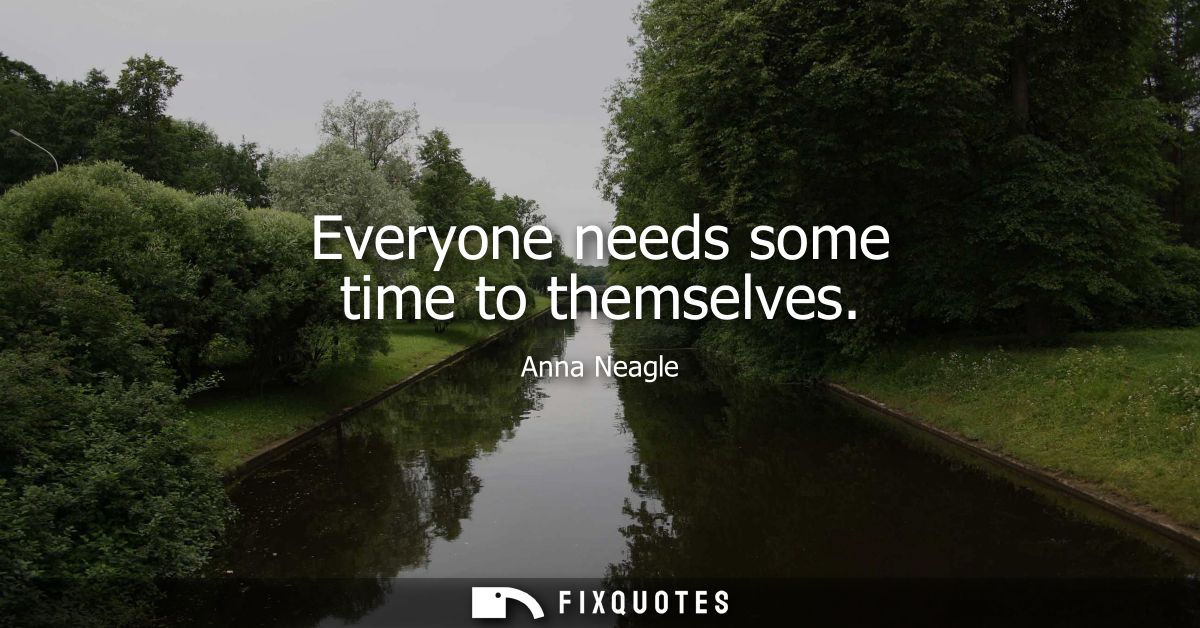
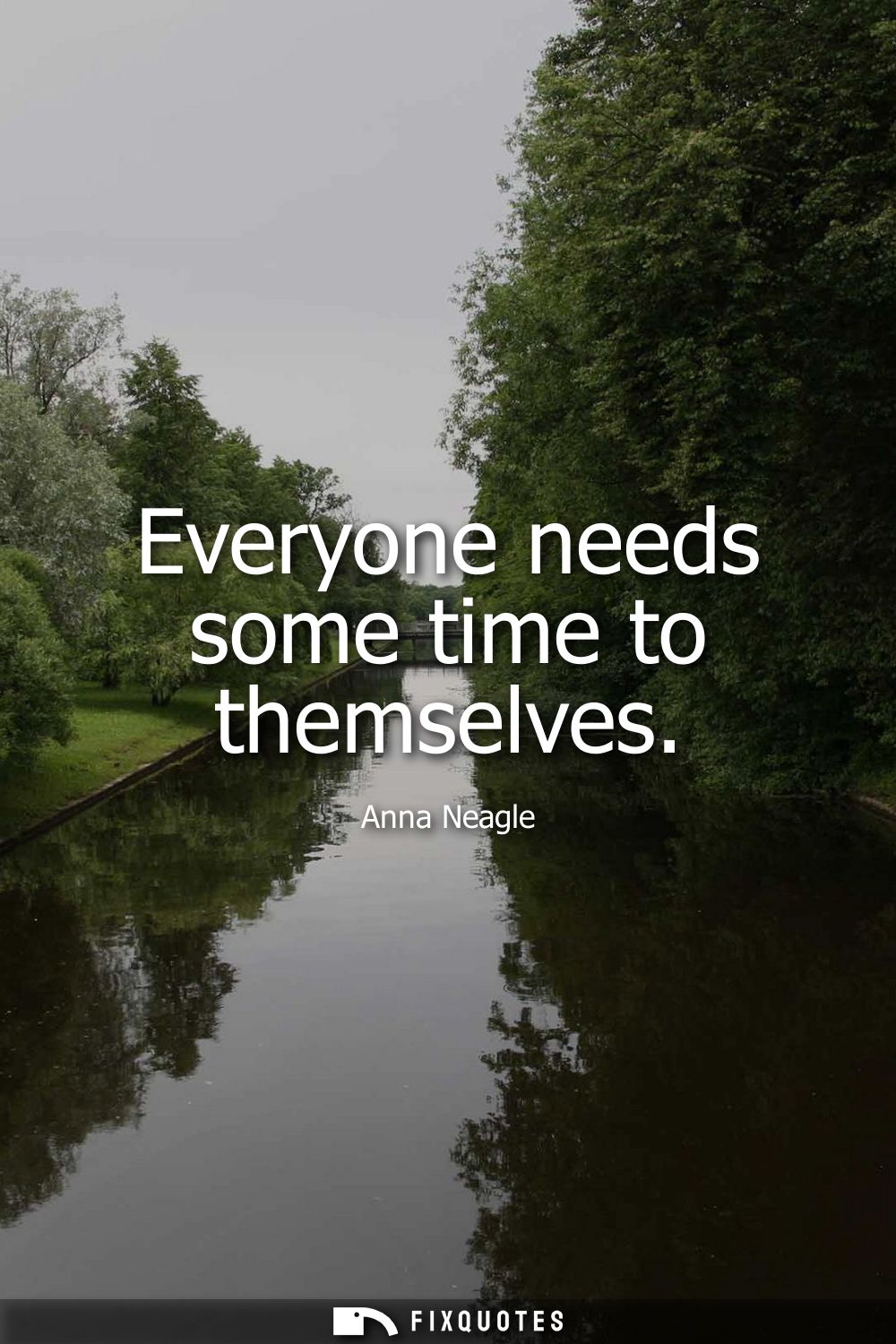
"Everyone needs some time to themselves"
About this Quote
Everyone needs some time to themselves is the kind of plainspoken line that sounds like a gentle wellness slogan until you remember who is saying it: a mid-century film star whose job description was, essentially, being publicly consumable. In Anna Neagle's era, an actress was expected to be endlessly available not just to cameras but to gossip columns, studio schedules, and a moralizing public that treated a woman's private life as communal property. The sentence works because it refuses drama. It doesn't plead for privacy; it states it as a baseline human requirement, which is quietly defiant.
The intent feels practical rather than poetic: a boundary drawn in soft pencil, not permanent marker. Neagle isn't declaring independence from fame so much as insisting on a minimal right to recover. The subtext is labor. Time to oneself isn't indulgence; it's maintenance. When your face is your product and your demeanor is part of the performance, solitude becomes a workplace safety measure.
There's also an old-Hollywood tension embedded in the word "needs". Not wants. Needs. That single verb turns alone time into something medically necessary, a corrective to the cultural expectation that women stay agreeable, accessible, and smiling. In today's language we'd call it self-care, but Neagle's phrasing is tougher than that trend: it implies that constant social availability is a kind of extraction. The line's power is its modesty. It asks for so little that denying it would look cruel.
The intent feels practical rather than poetic: a boundary drawn in soft pencil, not permanent marker. Neagle isn't declaring independence from fame so much as insisting on a minimal right to recover. The subtext is labor. Time to oneself isn't indulgence; it's maintenance. When your face is your product and your demeanor is part of the performance, solitude becomes a workplace safety measure.
There's also an old-Hollywood tension embedded in the word "needs". Not wants. Needs. That single verb turns alone time into something medically necessary, a corrective to the cultural expectation that women stay agreeable, accessible, and smiling. In today's language we'd call it self-care, but Neagle's phrasing is tougher than that trend: it implies that constant social availability is a kind of extraction. The line's power is its modesty. It asks for so little that denying it would look cruel.
Quote Details
| Topic | Self-Care |
|---|---|
| Source | Help us find the source |
| Cite |
Citation Formats
APA Style (7th ed.)
Neagle, Anna. (2026, January 17). Everyone needs some time to themselves. FixQuotes. https://fixquotes.com/quotes/everyone-needs-some-time-to-themselves-38313/
Chicago Style
Neagle, Anna. "Everyone needs some time to themselves." FixQuotes. January 17, 2026. https://fixquotes.com/quotes/everyone-needs-some-time-to-themselves-38313/.
MLA Style (9th ed.)
"Everyone needs some time to themselves." FixQuotes, 17 Jan. 2026, https://fixquotes.com/quotes/everyone-needs-some-time-to-themselves-38313/. Accessed 12 Feb. 2026.
More Quotes by Anna
Add to List