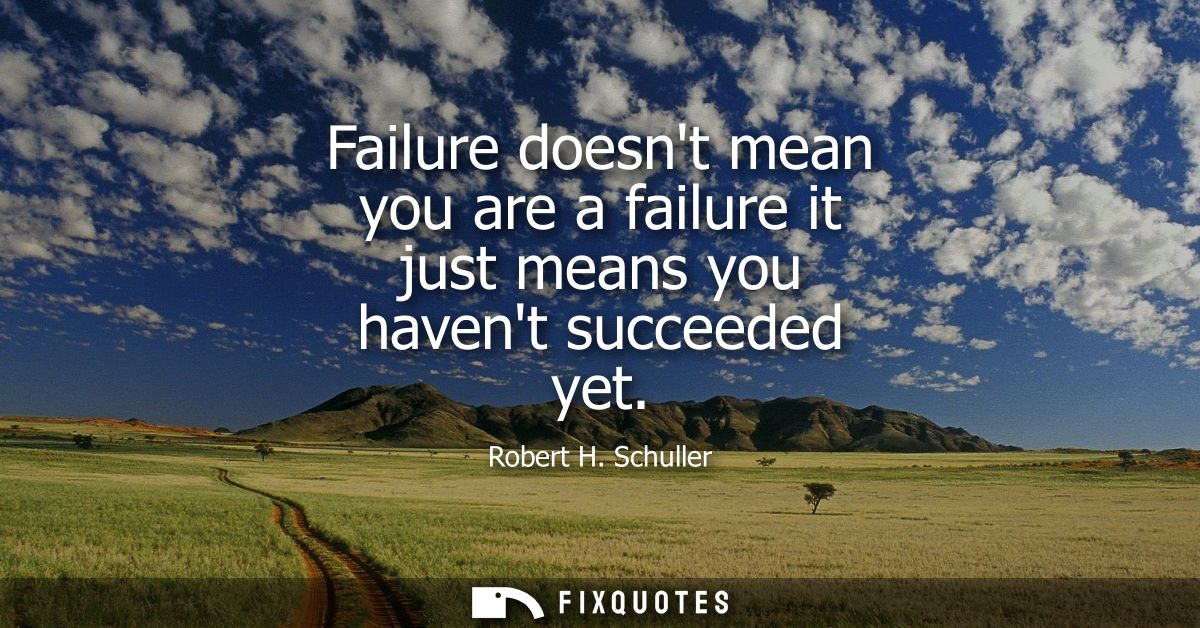
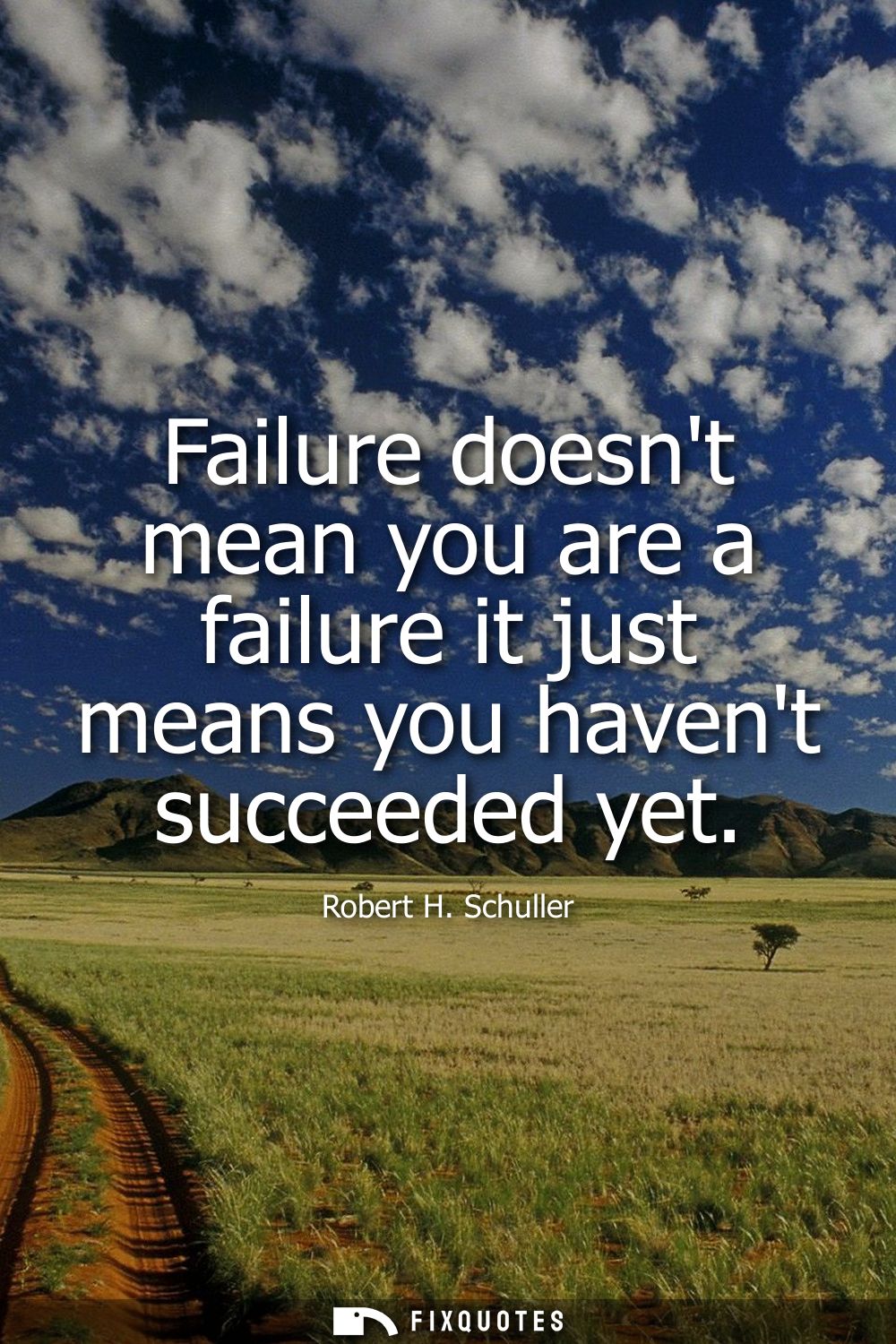
"Failure doesn't mean you are a failure. It just means you haven't succeeded yet"
About this Quote
The subtext is pure mid-to-late 20th-century American optimism, the kind that treats inner narrative as a lever for outer reality. Schuller, famous for “possibility thinking” and a television-era ministry built on encouragement, speaks to an audience trained to interpret setbacks as verdicts. The line offers an alternative script: identity is not the sum of outcomes, and bad outcomes are not final. The word “just” softens the blow, almost managerial in its calm, while “yet” does the heavy lifting, converting defeat into a temporary status.
Its strength is also its vulnerability. It smuggles in the assumption that success is the natural endpoint if one persists, which can feel liberating in personal growth and cruel in structural contexts where effort doesn’t reliably convert to opportunity. Still, as rhetoric, it’s clean and repeatable: a compact piece of cognitive mercy that turns the spotlight from judgment to endurance, and asks you to keep faith with your unfinished self.
Quote Details
| Topic | Never Give Up |
|---|---|
| Source | Help us find the source |
| Cite |
Citation Formats
APA Style (7th ed.)
Schuller, Robert H. (2026, February 20). Failure doesn't mean you are a failure. It just means you haven't succeeded yet. FixQuotes. https://fixquotes.com/quotes/failure-doesnt-mean-you-are-a-failure-it-just-16390/
Chicago Style
Schuller, Robert H. "Failure doesn't mean you are a failure. It just means you haven't succeeded yet." FixQuotes. February 20, 2026. https://fixquotes.com/quotes/failure-doesnt-mean-you-are-a-failure-it-just-16390/.
MLA Style (9th ed.)
"Failure doesn't mean you are a failure. It just means you haven't succeeded yet." FixQuotes, 20 Feb. 2026, https://fixquotes.com/quotes/failure-doesnt-mean-you-are-a-failure-it-just-16390/. Accessed 5 Mar. 2026.