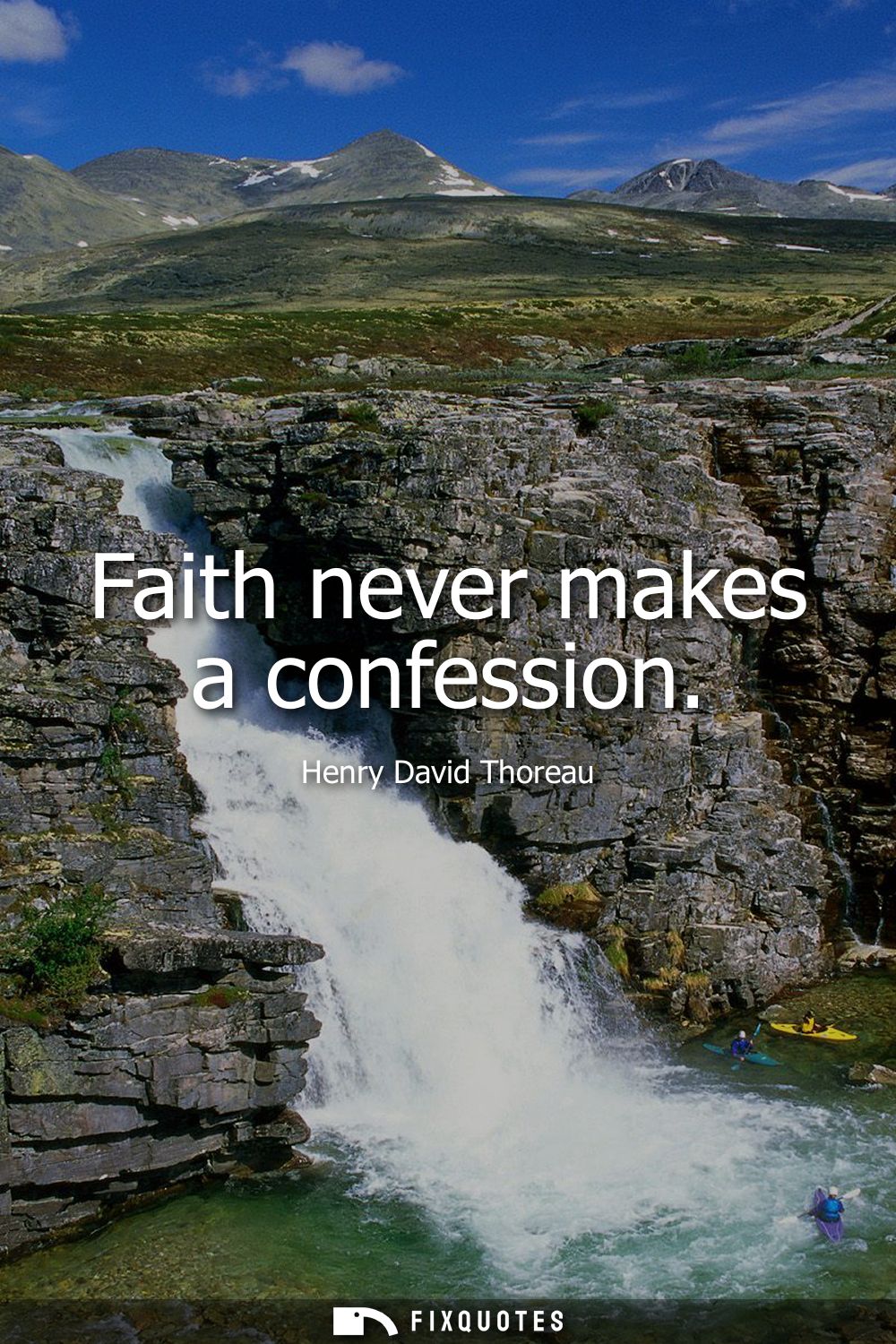
"Faith never makes a confession"
About this Quote
Thoreau’s line snaps like a twig underfoot: faith, for him, isn’t a courtroom plea or a churchly admission of guilt, it’s a posture so self-justifying it refuses the ritual of self-incrimination. “Confession” carries institutional baggage in 19th-century New England Protestant culture - the public accounting of sin, the social performance of humility, the tacit agreement that authority (clerical, communal, moral) gets to interrogate the soul. Thoreau’s faith won’t play that game.
The intent is less pious than insurgent. He’s separating an inward, lived conviction from the bureaucratic habits of religion: doctrines you sign, testimonies you recite, moral ledgers you balance. Confession implies an audience and a judge; Thoreau’s faith answers to neither. It doesn’t need to narrate itself to be real. That’s classic Thoreau: the individual as the primary site of truth, with institutions cast as noisy middlemen.
The subtext has bite. Confession can be a form of control, a way communities discipline dissent by demanding transparency, remorse, and conformity. By saying faith “never” confesses, Thoreau denies the premise that the self must constantly translate experience into acceptable language. It’s also a swipe at performative sincerity - the idea that virtue is proven by how well you can talk about your flaws.
In context, this fits the Transcendentalist revolt against inherited creed: God (or meaning) encountered directly in nature and conscience, not mediated through sanctioned scripts. Faith, in Thoreau’s hands, is not a statement. It’s a way of walking.
The intent is less pious than insurgent. He’s separating an inward, lived conviction from the bureaucratic habits of religion: doctrines you sign, testimonies you recite, moral ledgers you balance. Confession implies an audience and a judge; Thoreau’s faith answers to neither. It doesn’t need to narrate itself to be real. That’s classic Thoreau: the individual as the primary site of truth, with institutions cast as noisy middlemen.
The subtext has bite. Confession can be a form of control, a way communities discipline dissent by demanding transparency, remorse, and conformity. By saying faith “never” confesses, Thoreau denies the premise that the self must constantly translate experience into acceptable language. It’s also a swipe at performative sincerity - the idea that virtue is proven by how well you can talk about your flaws.
In context, this fits the Transcendentalist revolt against inherited creed: God (or meaning) encountered directly in nature and conscience, not mediated through sanctioned scripts. Faith, in Thoreau’s hands, is not a statement. It’s a way of walking.
Quote Details
| Topic | Faith |
|---|
More Quotes by Henry
Add to List