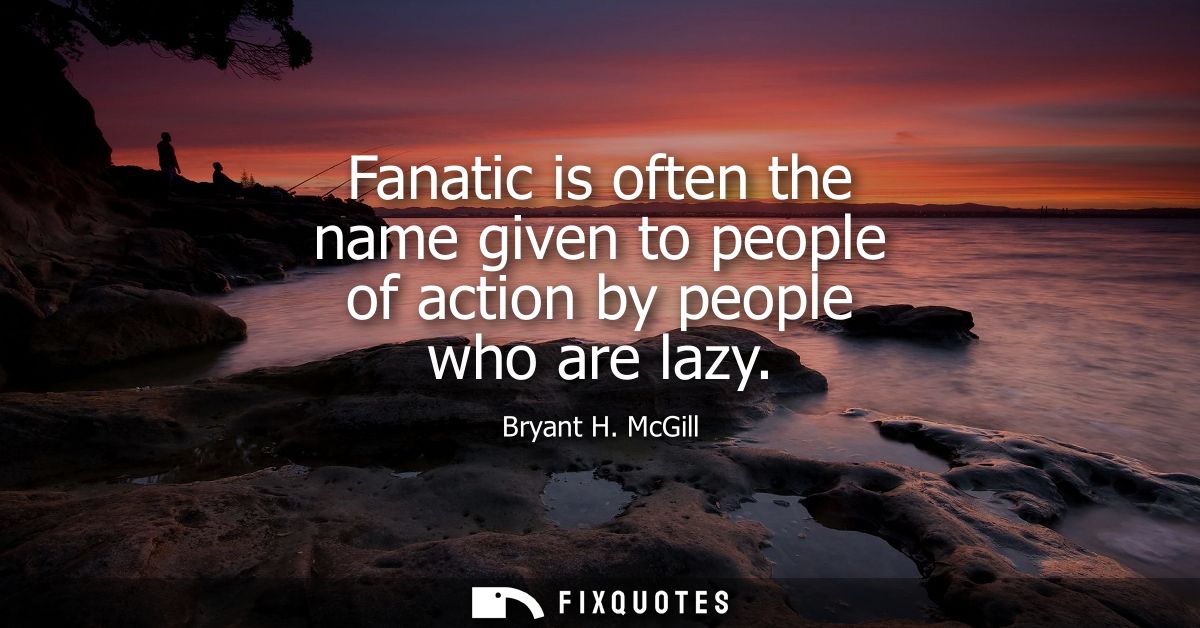
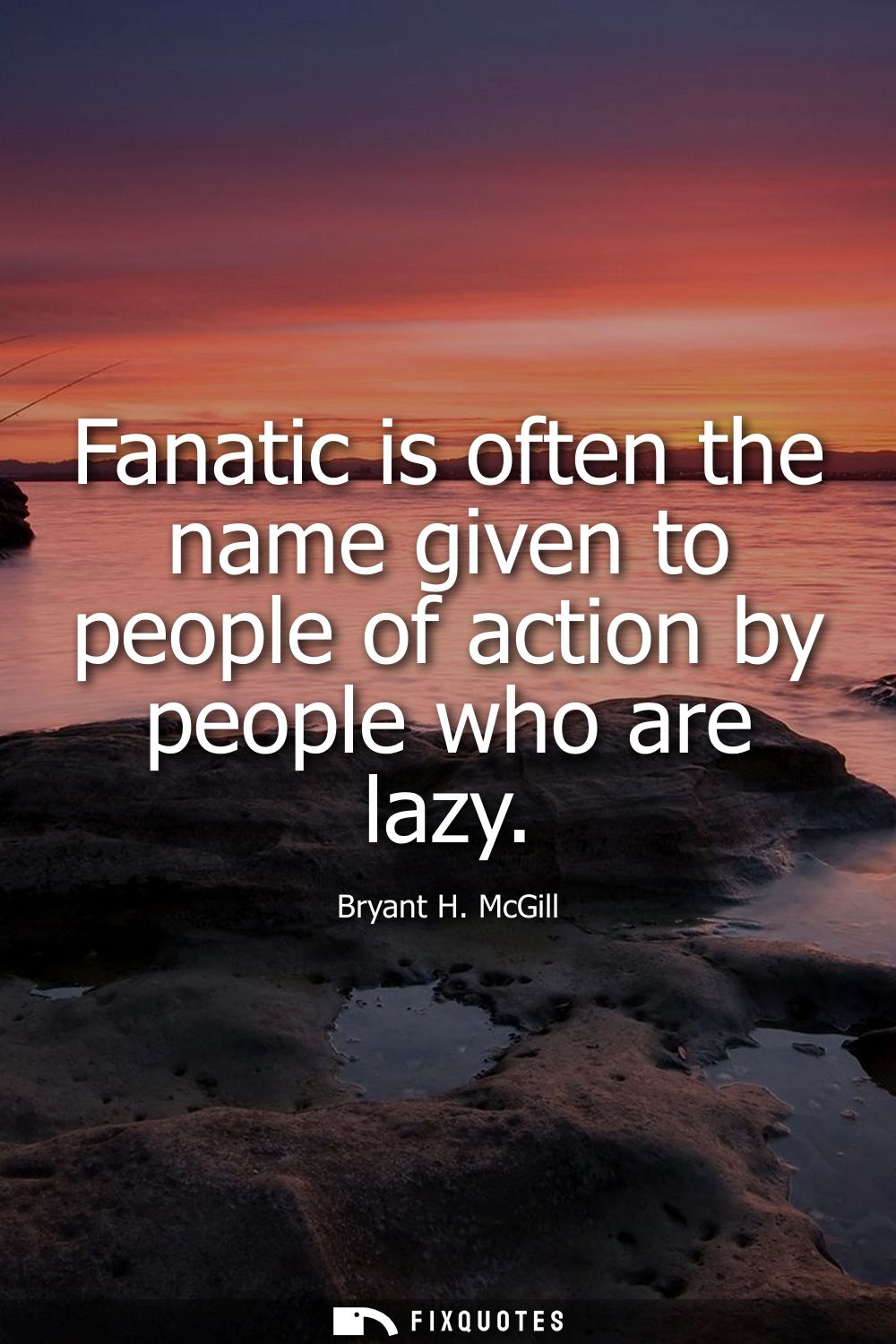
"Fanatic is often the name given to people of action by people who are lazy"
About this Quote
The intent is plainly confrontational: don’t trust the critics who posture as moderates while contributing nothing. “People of action” are framed as a threat not because they’re irrational, but because they force a decision point. Action creates consequences, and consequences are inconvenient for anyone invested in the comfort of spectatorship. Labeling activism as extremism becomes a kind of moral sedation: if the doer is “fanatical,” the bystander gets to feel superior while staying still.
Subtextually, McGill is also warning about narrative control. The laziest power in culture is the power to name. Once you can brand reformers, whistleblowers, organizers, or even annoying truth-tellers as “fanatics,” you don’t have to answer them. You just have to pathologize them.
Context matters: McGill writes in a late-20th/early-21st century self-help and motivational register, where “action” is a moral category. The quote plays well in an era of performative outrage and armchair critique, when commentary is abundant and commitment is rarer. It’s a provocation to move from opinion to stake.
Quote Details
| Topic | Wisdom |
|---|---|
| Source | Help us find the source |
| Cite |
Citation Formats
APA Style (7th ed.)
McGill, Bryant H. (2026, January 17). Fanatic is often the name given to people of action by people who are lazy. FixQuotes. https://fixquotes.com/quotes/fanatic-is-often-the-name-given-to-people-of-43763/
Chicago Style
McGill, Bryant H. "Fanatic is often the name given to people of action by people who are lazy." FixQuotes. January 17, 2026. https://fixquotes.com/quotes/fanatic-is-often-the-name-given-to-people-of-43763/.
MLA Style (9th ed.)
"Fanatic is often the name given to people of action by people who are lazy." FixQuotes, 17 Jan. 2026, https://fixquotes.com/quotes/fanatic-is-often-the-name-given-to-people-of-43763/. Accessed 7 Apr. 2026.