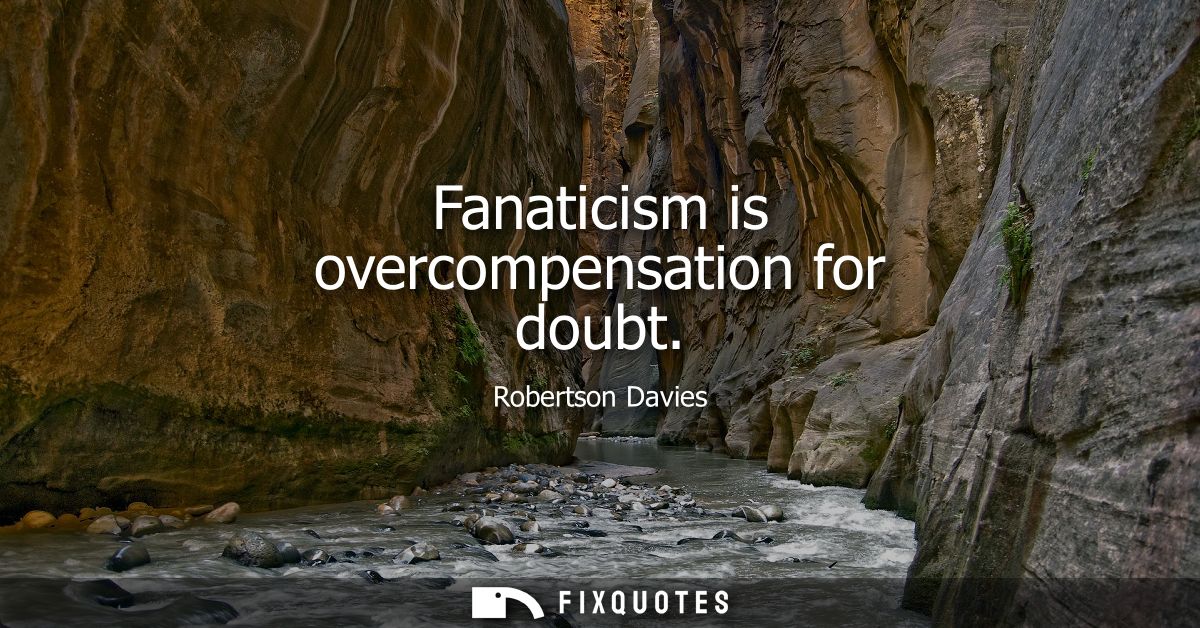
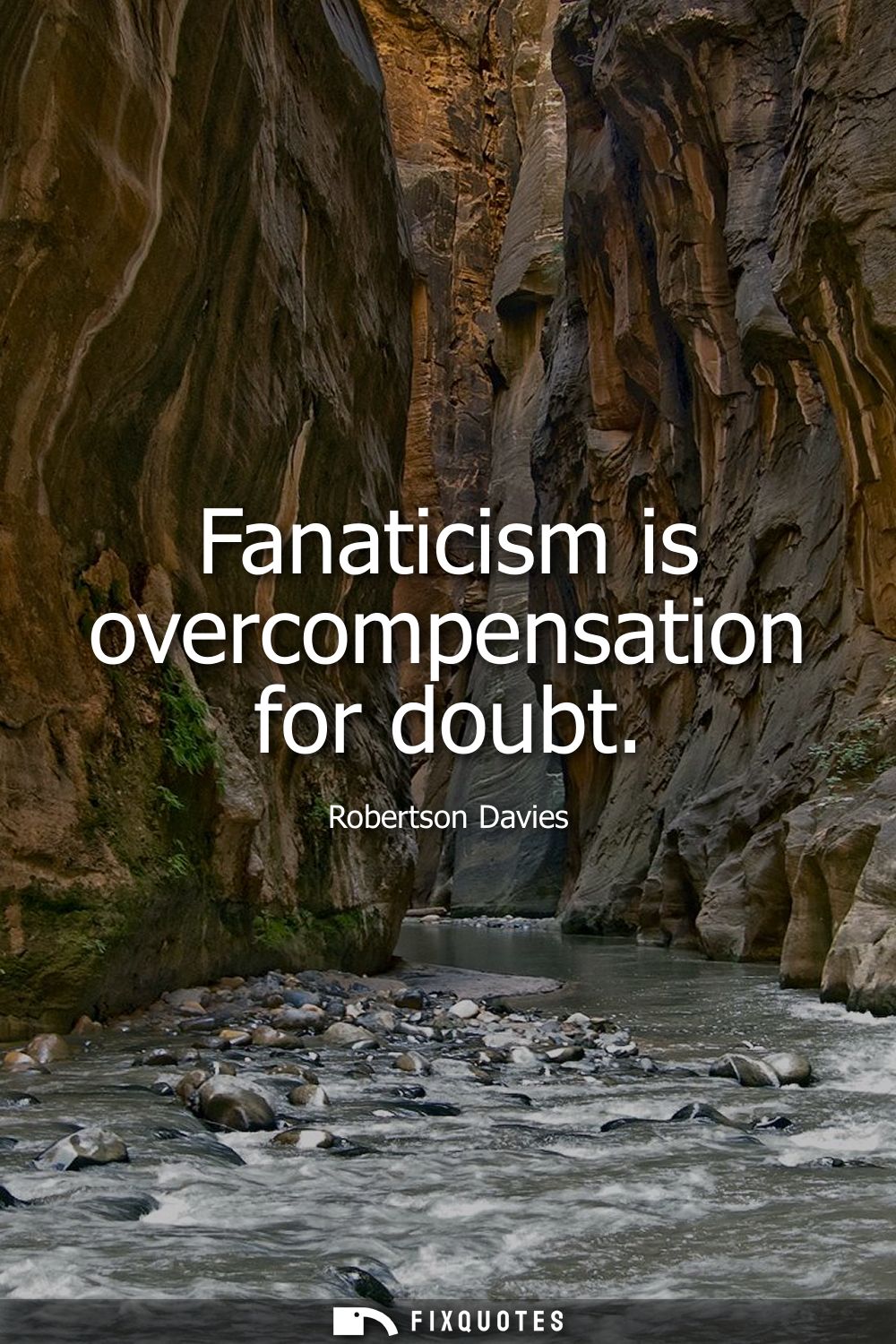
"Fanaticism is overcompensation for doubt"
About this Quote
Fanaticism doesn’t grow out of certainty, Davies suggests; it grows out of panic. The line snaps a favorite self-image of the zealot: the person so sure they’d stake their life on it. Instead, he reframes the fanatic as an anxious overachiever of belief, turning volume into proof. “Overcompensation” is a loaded, almost clinical word. It implies performance, a strain, a tell. Like someone laughing too hard at a joke they didn’t get, the fanatic signals the very insecurity they’re trying to hide.
The subtext is psychological but also social. Fanaticism isn’t only an interior condition; it’s a public strategy. Doubt is messy, private, hard to tweet, hard to build institutions around. Fanaticism, by contrast, is legible: slogans, rituals, enemies, purity tests. The movement supplies what the self lacks. If doubt is a crack in the foundation, fanaticism is the frantic architectural overbuild that keeps everyone from noticing the shift.
Davies, writing as a 20th-century novelist steeped in the aftermath of ideologies that promised salvation and delivered carnage, puts his finger on the emotional engine of absolutism. This is less a condemnation of conviction than a warning about the theatrics of certainty: the louder the insistence, the more it may be trying to drown out an internal argument. The line works because it’s accusatory without being moralizing. It doesn’t claim fanatics are evil; it claims they’re afraid. That’s a more unsettling diagnosis, because it makes fanaticism feel less like an alien pathology and more like a human temptation under pressure.
The subtext is psychological but also social. Fanaticism isn’t only an interior condition; it’s a public strategy. Doubt is messy, private, hard to tweet, hard to build institutions around. Fanaticism, by contrast, is legible: slogans, rituals, enemies, purity tests. The movement supplies what the self lacks. If doubt is a crack in the foundation, fanaticism is the frantic architectural overbuild that keeps everyone from noticing the shift.
Davies, writing as a 20th-century novelist steeped in the aftermath of ideologies that promised salvation and delivered carnage, puts his finger on the emotional engine of absolutism. This is less a condemnation of conviction than a warning about the theatrics of certainty: the louder the insistence, the more it may be trying to drown out an internal argument. The line works because it’s accusatory without being moralizing. It doesn’t claim fanatics are evil; it claims they’re afraid. That’s a more unsettling diagnosis, because it makes fanaticism feel less like an alien pathology and more like a human temptation under pressure.
Quote Details
| Topic | Wisdom |
|---|---|
| Source | Help us find the source |
| Cite |
Citation Formats
APA Style (7th ed.)
Davies, Robertson. (2026, January 16). Fanaticism is overcompensation for doubt. FixQuotes. https://fixquotes.com/quotes/fanaticism-is-overcompensation-for-doubt-83801/
Chicago Style
Davies, Robertson. "Fanaticism is overcompensation for doubt." FixQuotes. January 16, 2026. https://fixquotes.com/quotes/fanaticism-is-overcompensation-for-doubt-83801/.
MLA Style (9th ed.)
"Fanaticism is overcompensation for doubt." FixQuotes, 16 Jan. 2026, https://fixquotes.com/quotes/fanaticism-is-overcompensation-for-doubt-83801/. Accessed 12 Feb. 2026.
More Quotes by Robertson
Add to List