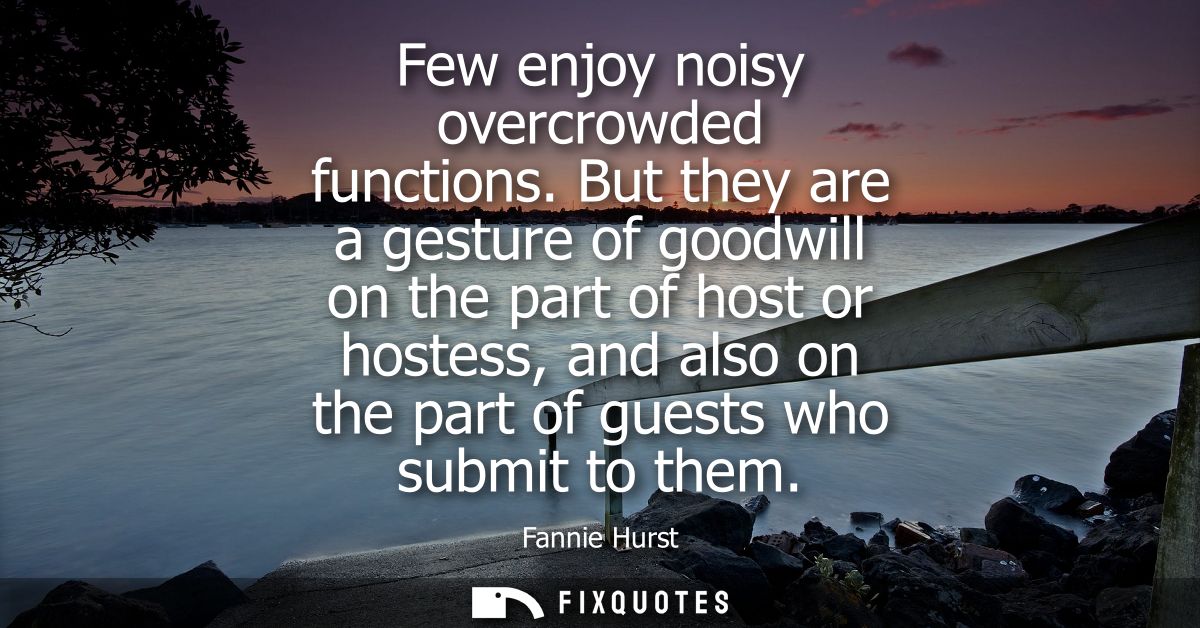
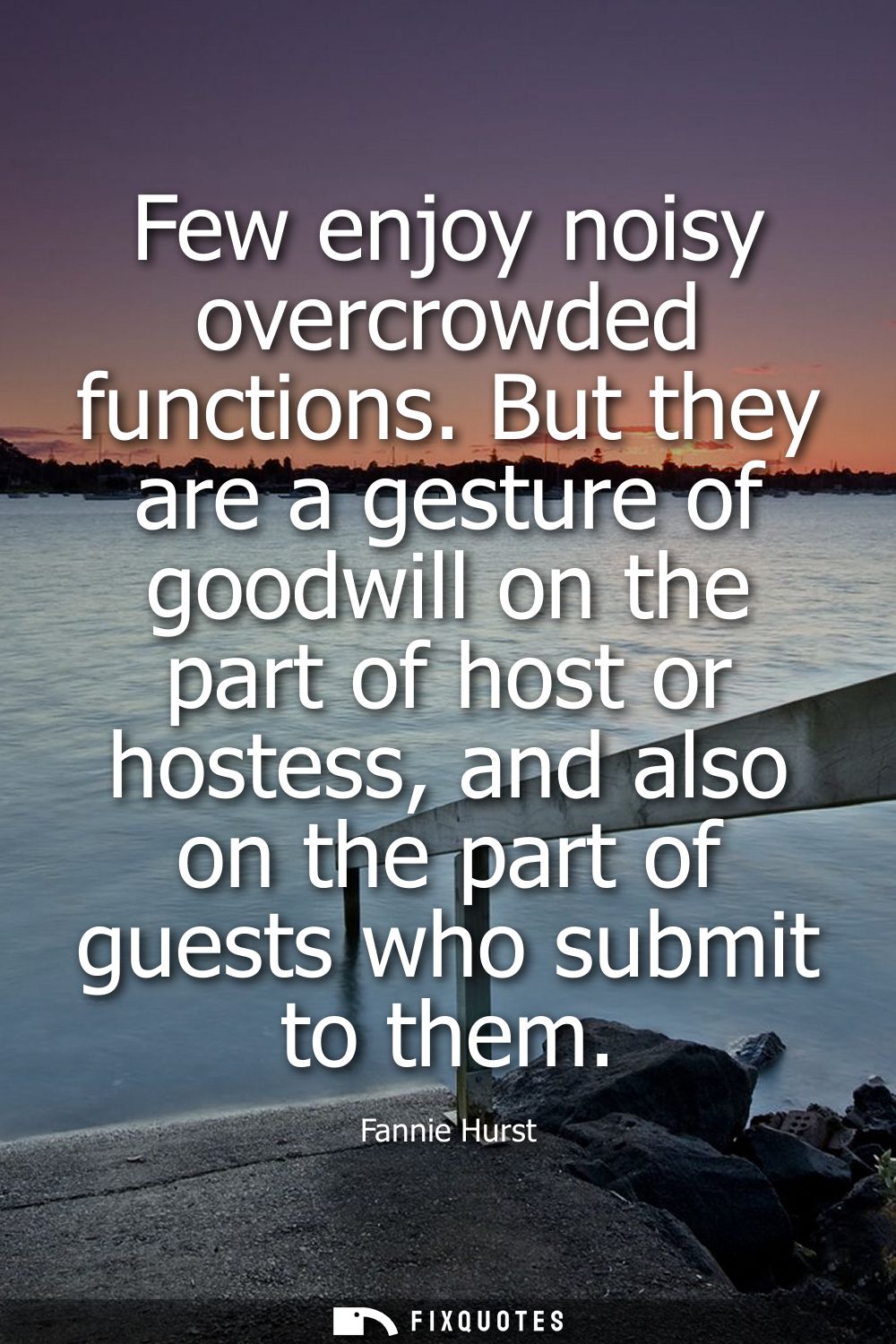
"Few enjoy noisy overcrowded functions. But they are a gesture of goodwill on the part of host or hostess, and also on the part of guests who submit to them"
About this Quote
The intent isn’t to sneer at community; it’s to expose the mechanics of it. Hurst treats social life as a ritual economy: affection is expressed less through private sincerity than through public performance, preferably in a room too loud to permit real conversation. Overcrowding becomes the point. A packed function signals you’re connected, you’re generous, you’re in demand. Even discomfort reads as evidence of a thriving network.
Context matters: Hurst’s career spans the era of mass urbanization, department-store modernity, and the rise of women as professional social managers. “Host or hostess” carries the gendered labor embedded in entertaining, while “guests who submit” hints at the pressure to reciprocate invitations, keep up appearances, and be seen being friendly. The line holds up because it doesn’t romanticize manners; it frames them as mutual concessions that keep the social machine running.
Quote Details
| Topic | Kindness |
|---|---|
| Source | Help us find the source |
| Cite |
Citation Formats
APA Style (7th ed.)
Hurst, Fannie. (2026, January 16). Few enjoy noisy overcrowded functions. But they are a gesture of goodwill on the part of host or hostess, and also on the part of guests who submit to them. FixQuotes. https://fixquotes.com/quotes/few-enjoy-noisy-overcrowded-functions-but-they-120213/
Chicago Style
Hurst, Fannie. "Few enjoy noisy overcrowded functions. But they are a gesture of goodwill on the part of host or hostess, and also on the part of guests who submit to them." FixQuotes. January 16, 2026. https://fixquotes.com/quotes/few-enjoy-noisy-overcrowded-functions-but-they-120213/.
MLA Style (9th ed.)
"Few enjoy noisy overcrowded functions. But they are a gesture of goodwill on the part of host or hostess, and also on the part of guests who submit to them." FixQuotes, 16 Jan. 2026, https://fixquotes.com/quotes/few-enjoy-noisy-overcrowded-functions-but-they-120213/. Accessed 31 Mar. 2026.