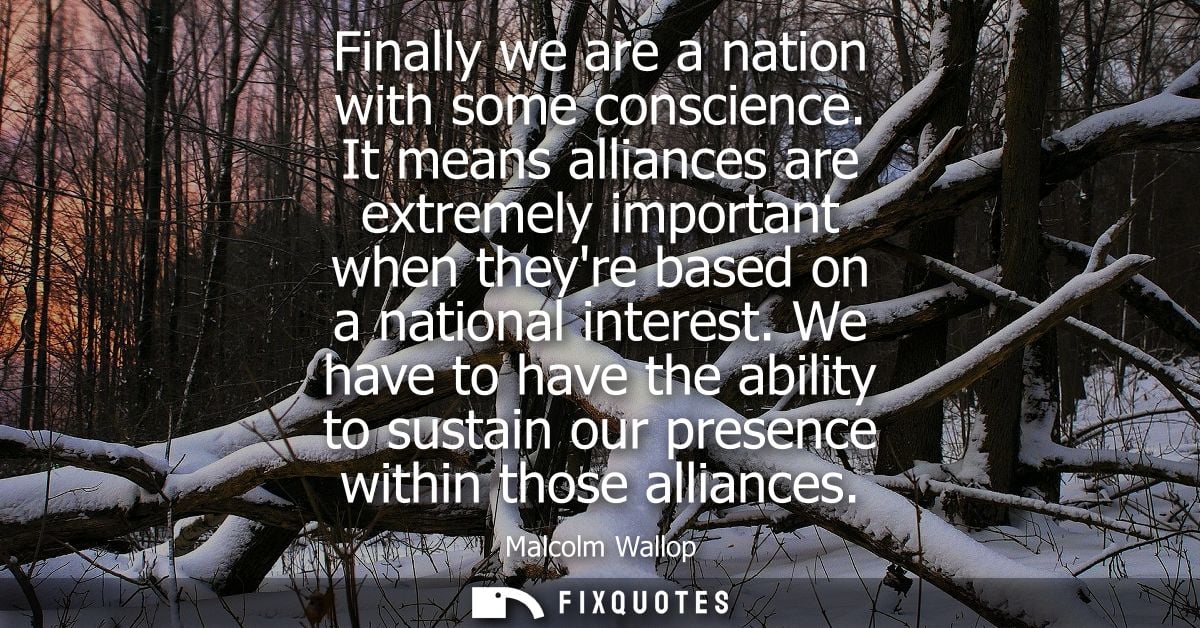
"Finally we are a nation with some conscience. It means alliances are extremely important when they're based on a national interest. We have to have the ability to sustain our presence within those alliances"
About this Quote
A politician’s favorite magic trick is to dress self-interest up as moral awakening, and Malcolm Wallop does it in three brisk moves. "Finally we are a nation with some conscience" opens with a triumphal verdict, as if the country has crossed a clear ethical threshold. The vagueness is the point: "conscience" floats above particulars, letting listeners project Vietnam, the Cold War, humanitarian interventions, or any convenient sin and redemption narrative onto it. It’s a cleansing phrase, an absolution without confession.
Then Wallop snaps the frame back to power. Conscience, he implies, doesn’t negate national interest; it legitimizes it. "Alliances are extremely important when they're based on a national interest" reads like sobriety, but it’s also a warning shot at sentimental foreign policy. Allies aren’t family; they’re instruments. The subtext is transactional: commitments are virtuous only when they pay.
The final line - "We have to have the ability to sustain our presence within those alliances" - supplies the hard requirement behind the soft language. "Presence" is a euphemism that can mean bases, troops, money, intelligence sharing, or the political will to stay entangled. Sustain is the operative word: not dramatic intervention, but durable capacity. In Cold War-era rhetoric especially, this is the pitch for readiness and continuity, selling the infrastructure of hegemony as responsible adulthood. Wallop’s intent is to reassure skeptics of global commitments while reminding idealists that morality, in Washington’s dialect, travels on logistics and leverage.
Then Wallop snaps the frame back to power. Conscience, he implies, doesn’t negate national interest; it legitimizes it. "Alliances are extremely important when they're based on a national interest" reads like sobriety, but it’s also a warning shot at sentimental foreign policy. Allies aren’t family; they’re instruments. The subtext is transactional: commitments are virtuous only when they pay.
The final line - "We have to have the ability to sustain our presence within those alliances" - supplies the hard requirement behind the soft language. "Presence" is a euphemism that can mean bases, troops, money, intelligence sharing, or the political will to stay entangled. Sustain is the operative word: not dramatic intervention, but durable capacity. In Cold War-era rhetoric especially, this is the pitch for readiness and continuity, selling the infrastructure of hegemony as responsible adulthood. Wallop’s intent is to reassure skeptics of global commitments while reminding idealists that morality, in Washington’s dialect, travels on logistics and leverage.
Quote Details
| Topic | Vision & Strategy |
|---|
More Quotes by Malcolm
Add to List