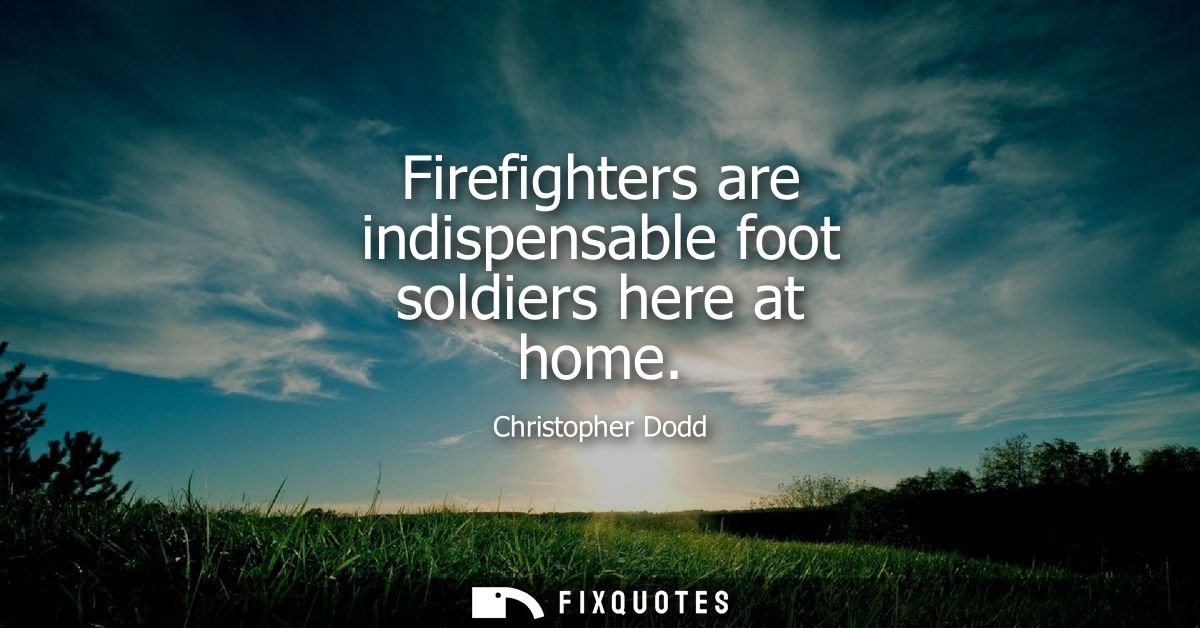
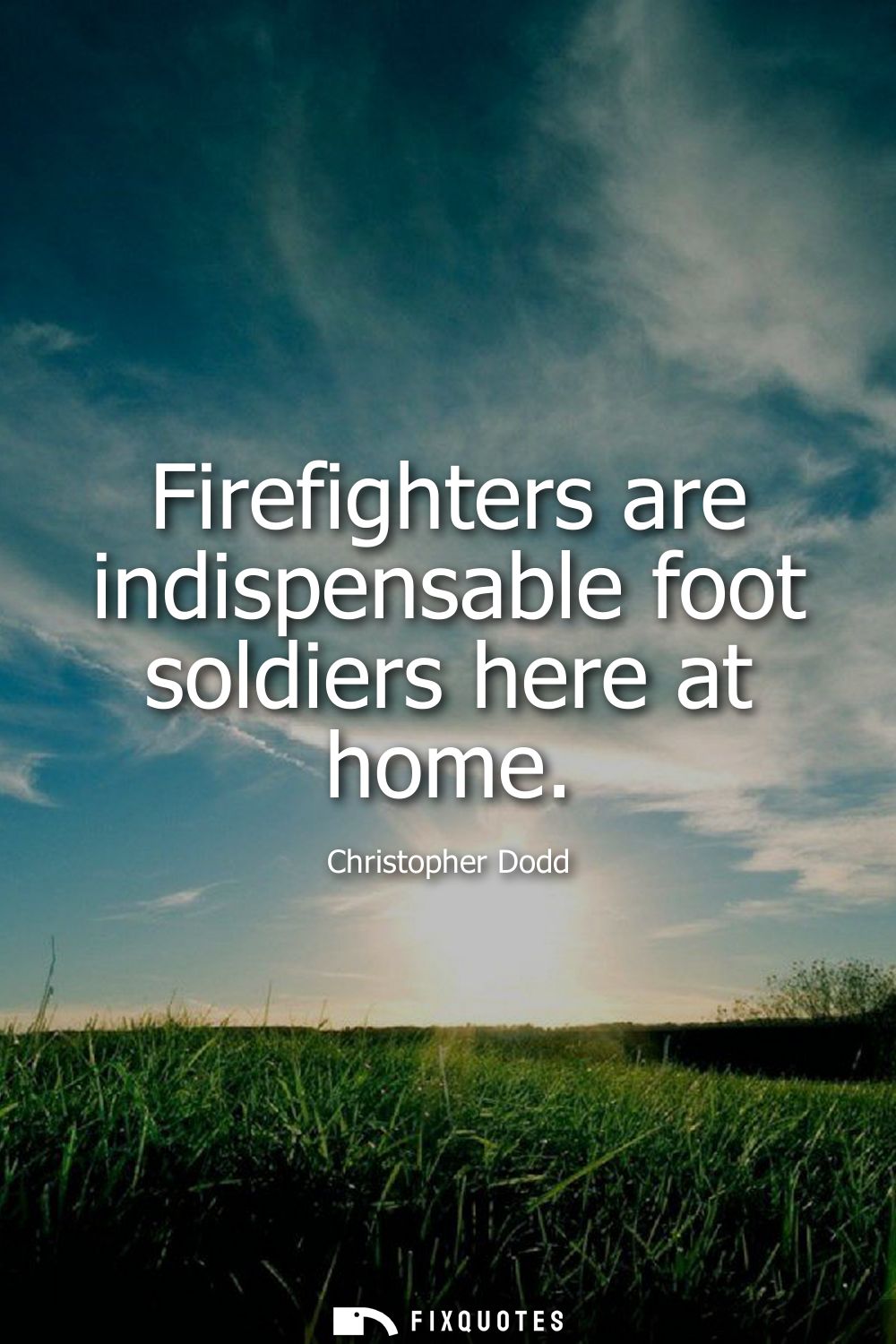
"Firefighters are indispensable foot soldiers here at home"
About this Quote
Calling firefighters "indispensable foot soldiers" is a politician’s neat act of rhetorical cross-dressing: it wraps civic labor in the language of war, then brings it safely back home. Christopher Dodd isn’t merely praising first responders; he’s drafting them into a national story of service that Americans already know how to revere. "Indispensable" shuts down debate before it starts. You don’t negotiate over what you can’t do without.
The phrase "foot soldiers" matters because it’s both flattering and quietly strategic. It elevates firefighters into the moral high ground usually reserved for troops, while implying a chain of command and collective mission. It suggests discipline, sacrifice, and frontline risk, without invoking the messier politics of actual warfare. Add "here at home", and the metaphor becomes a bridge between external conflict and domestic security: the battlefield is now the neighborhood, the enemy is fire, disaster, terror, or chaos itself.
Contextually, this kind of language surged in the post-9/11 era, when firefighters (especially in New York) became national symbols and policymakers sought to justify expanded homeland security funding. The subtext is legislative as much as emotional: if firefighters are "soldiers", then resources for them become a form of defense spending, and questioning budgets can be framed as undermining the nation.
It’s effective because it compresses gratitude, fear, and patriotism into six words, turning a local profession into a civic talisman - and giving elected officials a clean, unimpeachable constituency to stand beside.
The phrase "foot soldiers" matters because it’s both flattering and quietly strategic. It elevates firefighters into the moral high ground usually reserved for troops, while implying a chain of command and collective mission. It suggests discipline, sacrifice, and frontline risk, without invoking the messier politics of actual warfare. Add "here at home", and the metaphor becomes a bridge between external conflict and domestic security: the battlefield is now the neighborhood, the enemy is fire, disaster, terror, or chaos itself.
Contextually, this kind of language surged in the post-9/11 era, when firefighters (especially in New York) became national symbols and policymakers sought to justify expanded homeland security funding. The subtext is legislative as much as emotional: if firefighters are "soldiers", then resources for them become a form of defense spending, and questioning budgets can be framed as undermining the nation.
It’s effective because it compresses gratitude, fear, and patriotism into six words, turning a local profession into a civic talisman - and giving elected officials a clean, unimpeachable constituency to stand beside.
Quote Details
| Topic | Police & Firefighter |
|---|---|
| Source | Help us find the source |
| Cite |
Citation Formats
APA Style (7th ed.)
Dodd, Christopher. (2026, January 15). Firefighters are indispensable foot soldiers here at home. FixQuotes. https://fixquotes.com/quotes/firefighters-are-indispensable-foot-soldiers-here-86085/
Chicago Style
Dodd, Christopher. "Firefighters are indispensable foot soldiers here at home." FixQuotes. January 15, 2026. https://fixquotes.com/quotes/firefighters-are-indispensable-foot-soldiers-here-86085/.
MLA Style (9th ed.)
"Firefighters are indispensable foot soldiers here at home." FixQuotes, 15 Jan. 2026, https://fixquotes.com/quotes/firefighters-are-indispensable-foot-soldiers-here-86085/. Accessed 30 Mar. 2026.
More Quotes by Christopher
Add to List