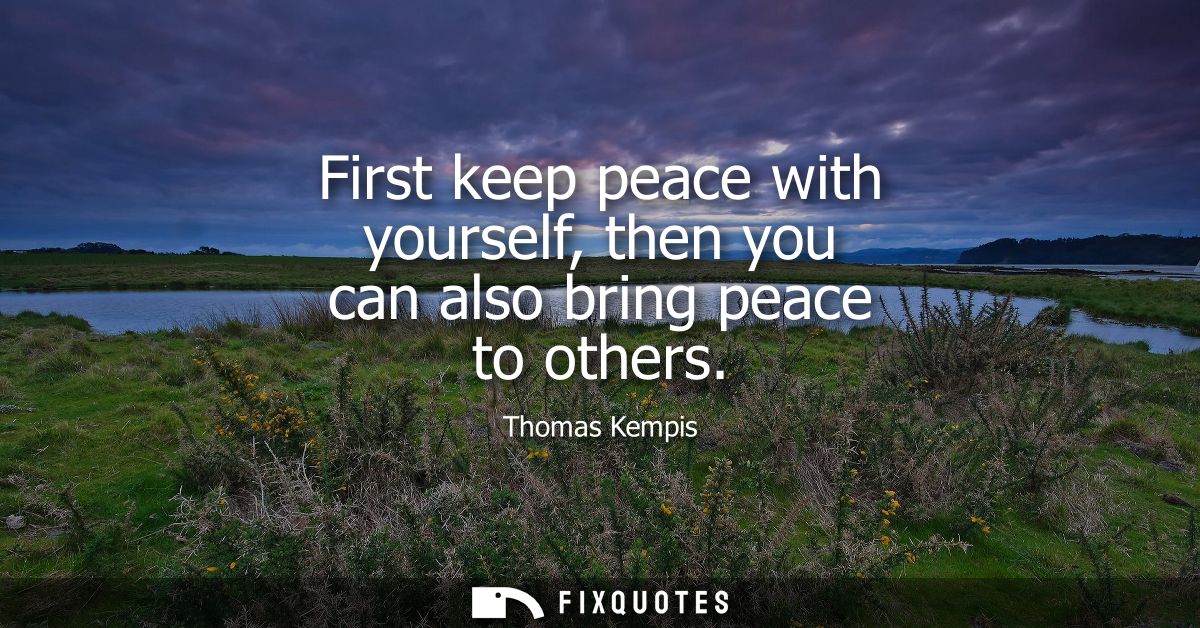
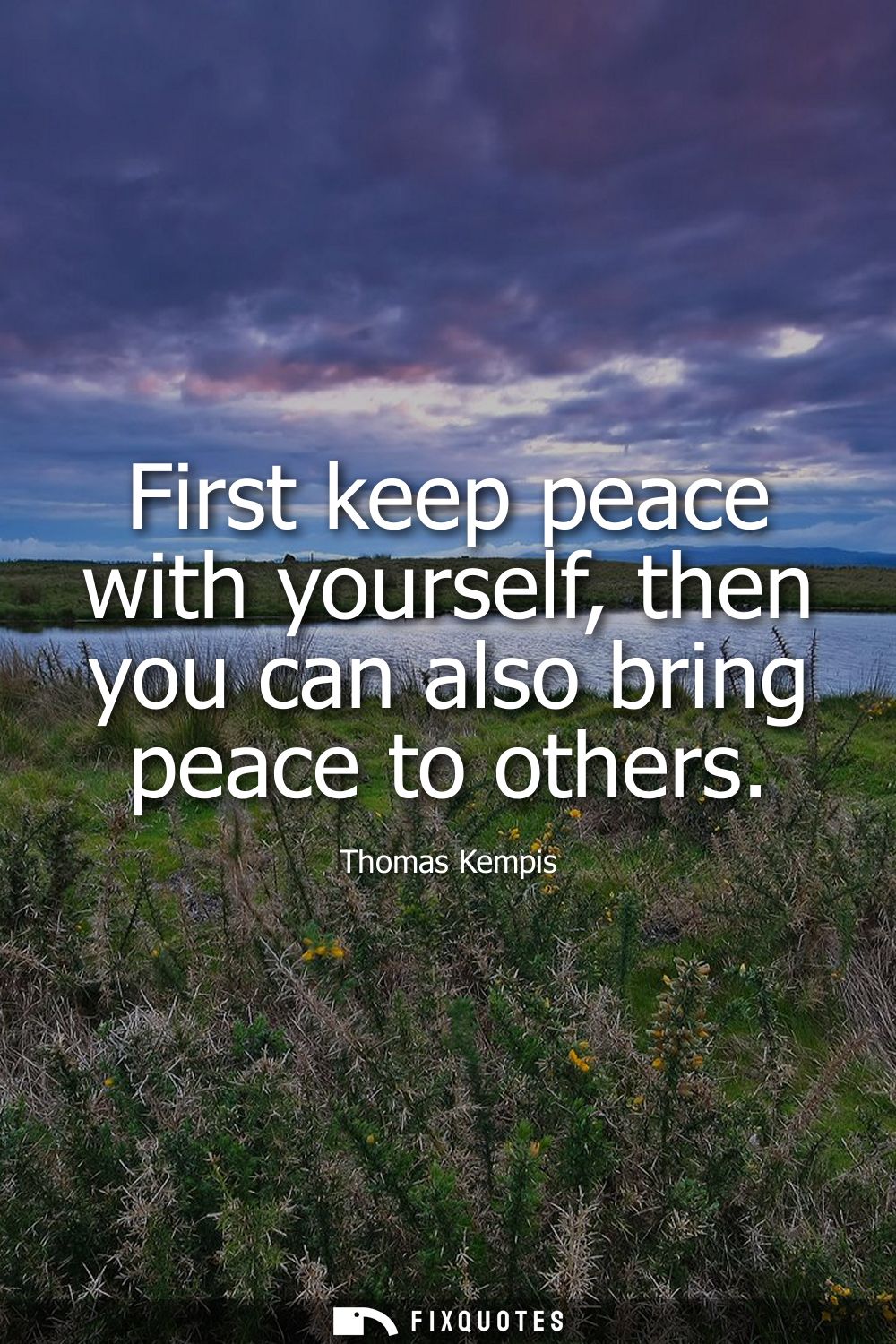
"First, keep peace with yourself, then you can also bring peace to others"
About this Quote
The intent is corrective. In a religious culture tempted by outward piety - fasting, moral posturing, loud certainty - Kempis insists on order of operations. “First” matters. It demotes activism, advice-giving, even righteous indignation until the self is stabilized. That’s not selfishness; it’s quality control. If your motives are tangled with resentment, insecurity, or the hunger to be seen as virtuous, your attempt to “bring peace” becomes another form of domination, dressed up as care.
The subtext is almost diagnostic: your relationships are mirrors of your inner life. When your mind is restless, you recruit others to soothe it; you pick fights, demand reassurance, micromanage outcomes. Kempis, writing for monks and laypeople seeking spiritual clarity, offers a preventative ethic: cultivate inner stillness so you don’t turn the world into your coping mechanism.
In today’s culture of hot takes and instant advocacy, the line lands as a rebuke. Not to compassion, but to the chaos we smuggle into it.
Quote Details
| Topic | Peace |
|---|---|
| Source | Help us find the source |
| Cite |
Citation Formats
APA Style (7th ed.)
Kempis, Thomas. (2026, February 20). First, keep peace with yourself, then you can also bring peace to others. FixQuotes. https://fixquotes.com/quotes/first-keep-peace-with-yourself-then-you-can-also-3902/
Chicago Style
Kempis, Thomas. "First, keep peace with yourself, then you can also bring peace to others." FixQuotes. February 20, 2026. https://fixquotes.com/quotes/first-keep-peace-with-yourself-then-you-can-also-3902/.
MLA Style (9th ed.)
"First, keep peace with yourself, then you can also bring peace to others." FixQuotes, 20 Feb. 2026, https://fixquotes.com/quotes/first-keep-peace-with-yourself-then-you-can-also-3902/. Accessed 27 Mar. 2026.