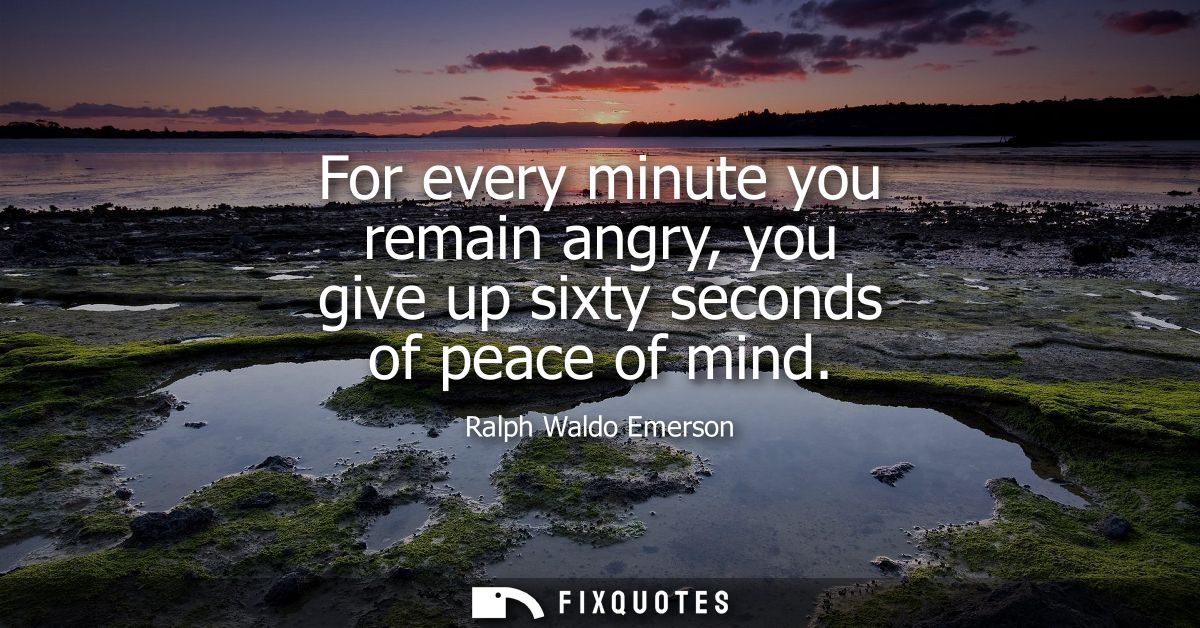
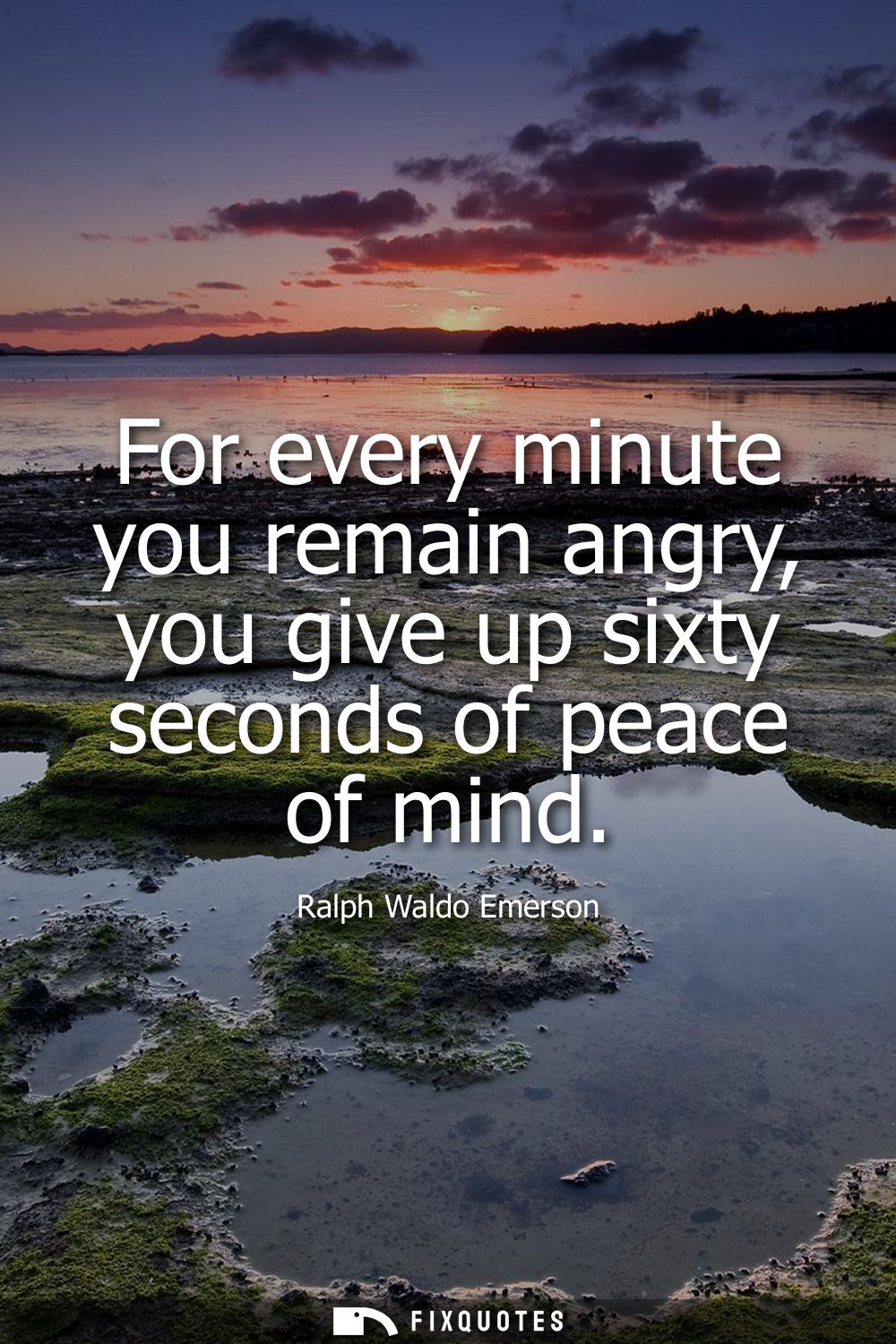
"For every minute you remain angry, you give up sixty seconds of peace of mind"
About this Quote
The intent isnt to shame anger so much as to strip it of its glamour. Anger pretends to be power; Emerson rebrands it as forfeiture. The subtext is almost clinical: staying mad rarely punishes the offender, it taxes the person carrying it. By insisting on a one-to-one exchange, he blocks the comforting lie that anger is productive simply because it feels active. You may be right, you may be wrong, but either way youre paying.
Context matters. Emerson is writing out of a 19th-century American project that prized the sovereign individual - morally, spiritually, psychologically. His era was loud with reform movements and political heat; transcendentalism offered a counterweight, a method for preserving interior freedom amid social friction. The quote fits that worldview: the final frontier isnt society, its the self. Peace of mind becomes not a passive gift but a resource you can defend or squander, minute by minute.
Quote Details
| Topic | Anger |
|---|---|
| Source | Help us find the source |
| Cite |
Citation Formats
APA Style (7th ed.)
Emerson, Ralph Waldo. (2026, January 17). For every minute you remain angry, you give up sixty seconds of peace of mind. FixQuotes. https://fixquotes.com/quotes/for-every-minute-you-remain-angry-you-give-up-33754/
Chicago Style
Emerson, Ralph Waldo. "For every minute you remain angry, you give up sixty seconds of peace of mind." FixQuotes. January 17, 2026. https://fixquotes.com/quotes/for-every-minute-you-remain-angry-you-give-up-33754/.
MLA Style (9th ed.)
"For every minute you remain angry, you give up sixty seconds of peace of mind." FixQuotes, 17 Jan. 2026, https://fixquotes.com/quotes/for-every-minute-you-remain-angry-you-give-up-33754/. Accessed 4 Apr. 2026.