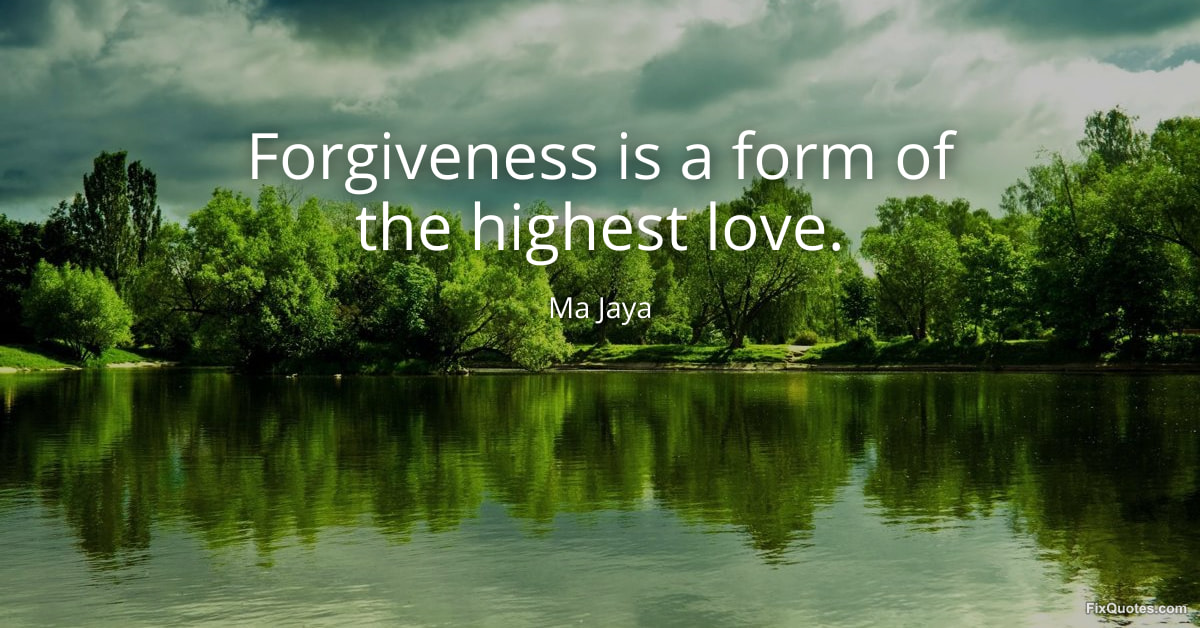
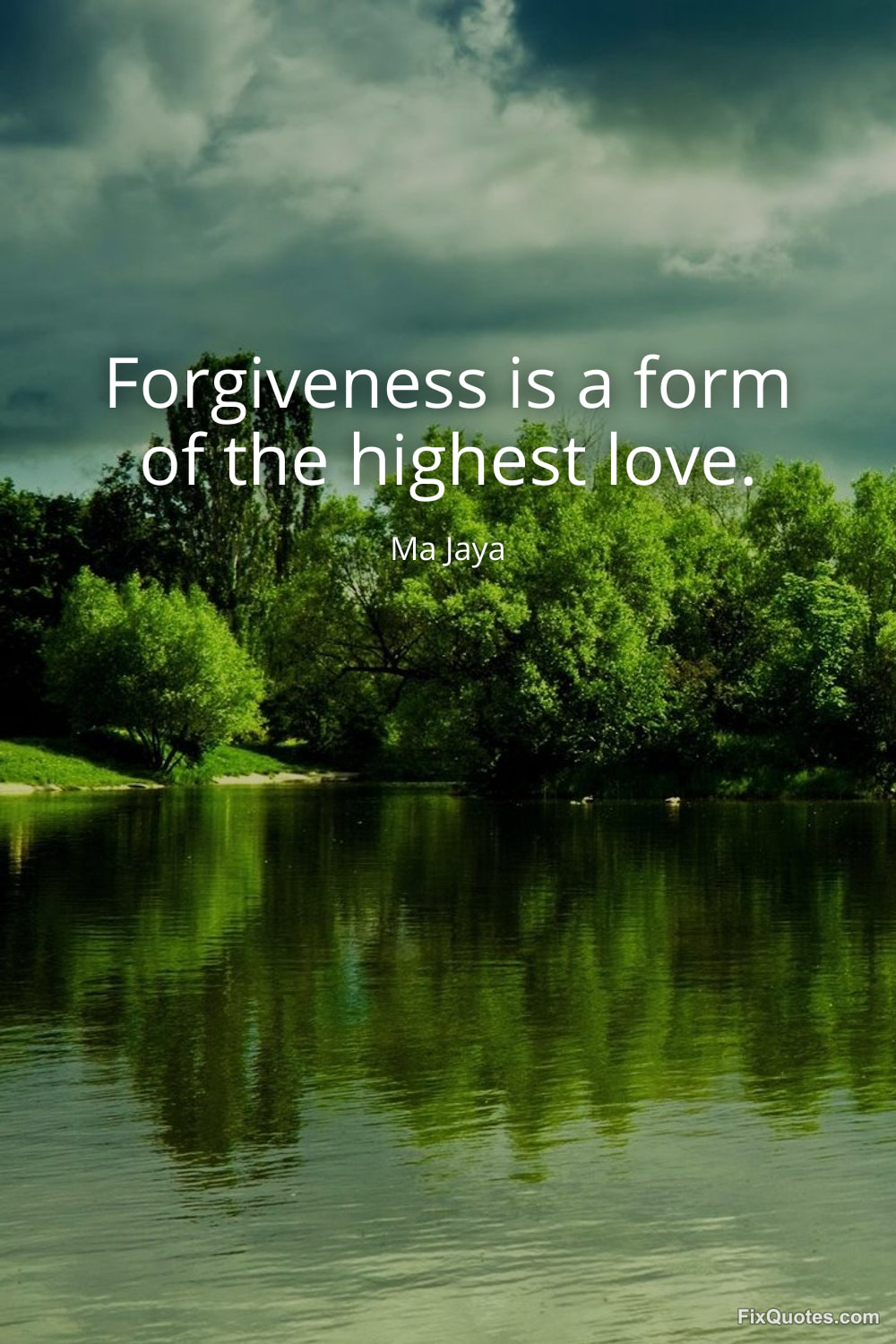
"Forgiveness is a form of the highest love"
About this Quote
“Forgiveness is a form of the highest love” doesn’t flatter forgiveness as a polite social virtue; it recasts it as a radical practice. Coming from Ma Jaya, a teacher steeped in spiritual community rather than podium politics, the line reads like instruction more than inspiration: love isn’t just what you feel when things are easy, it’s what you choose when you’ve been injured, disappointed, or humiliated.
The phrasing does quiet rhetorical work. “A form” implies forgiveness isn’t the whole of love, but one of its most demanding expressions, a particular posture of the heart. “Highest” is deliberately hierarchical: it nudges the listener away from romance-as-proof and toward mercy-as-proof. In that framework, affection is entry-level; forgiveness is graduate school. The subtext is also corrective: if you can’t forgive, your love may be real, but it’s still tethered to control, ego, and scorekeeping.
Context matters because Ma Jaya’s teaching tradition often treats suffering as material for awakening. Forgiveness becomes less about excusing harm and more about refusing to let harm keep authoring your inner life. That’s the part that lands in a modern culture fluent in boundaries but sometimes addicted to permanent indictment. The quote doesn’t ask you to stay, reconcile, or forget; it asks you to stop outsourcing your peace to someone else’s apology.
It’s a tough-love definition of love itself: not a mood, not a brand, but a disciplined act of freedom.
The phrasing does quiet rhetorical work. “A form” implies forgiveness isn’t the whole of love, but one of its most demanding expressions, a particular posture of the heart. “Highest” is deliberately hierarchical: it nudges the listener away from romance-as-proof and toward mercy-as-proof. In that framework, affection is entry-level; forgiveness is graduate school. The subtext is also corrective: if you can’t forgive, your love may be real, but it’s still tethered to control, ego, and scorekeeping.
Context matters because Ma Jaya’s teaching tradition often treats suffering as material for awakening. Forgiveness becomes less about excusing harm and more about refusing to let harm keep authoring your inner life. That’s the part that lands in a modern culture fluent in boundaries but sometimes addicted to permanent indictment. The quote doesn’t ask you to stay, reconcile, or forget; it asks you to stop outsourcing your peace to someone else’s apology.
It’s a tough-love definition of love itself: not a mood, not a brand, but a disciplined act of freedom.
Quote Details
| Topic | Forgiveness |
|---|---|
| Source | Help us find the source |
| Cite |
Citation Formats
APA Style (7th ed.)
Jaya, Ma. (2026, January 11). Forgiveness is a form of the highest love. FixQuotes. https://fixquotes.com/quotes/forgiveness-is-a-form-of-the-highest-love-183900/
Chicago Style
Jaya, Ma. "Forgiveness is a form of the highest love." FixQuotes. January 11, 2026. https://fixquotes.com/quotes/forgiveness-is-a-form-of-the-highest-love-183900/.
MLA Style (9th ed.)
"Forgiveness is a form of the highest love." FixQuotes, 11 Jan. 2026, https://fixquotes.com/quotes/forgiveness-is-a-form-of-the-highest-love-183900/. Accessed 13 Mar. 2026.
More Quotes by Ma
Add to List