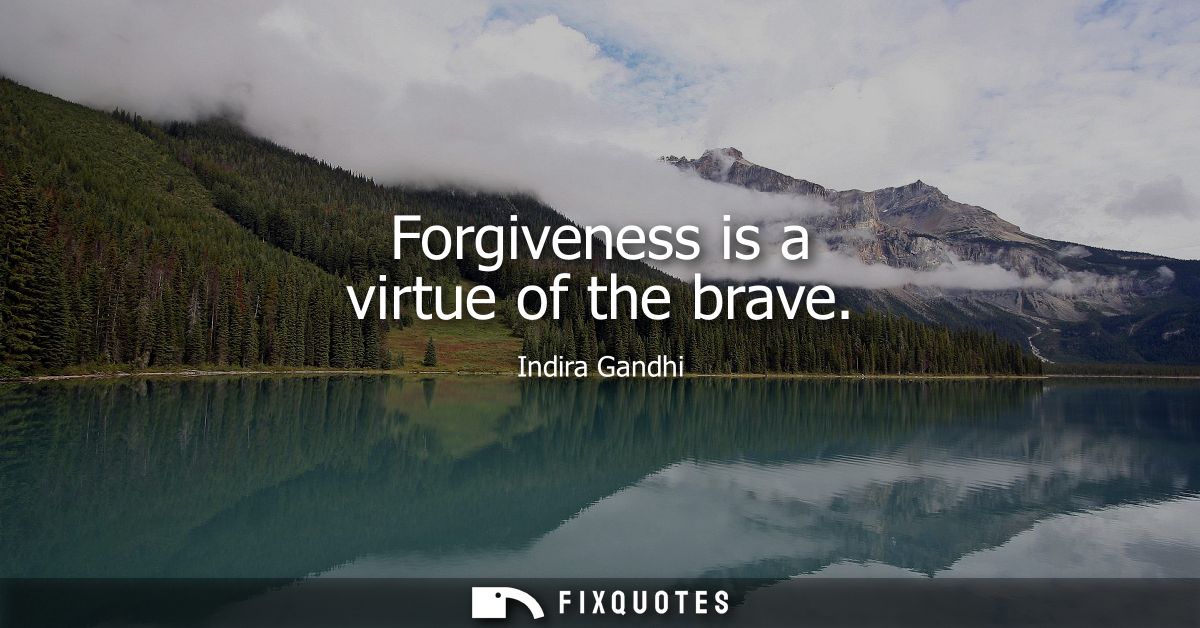
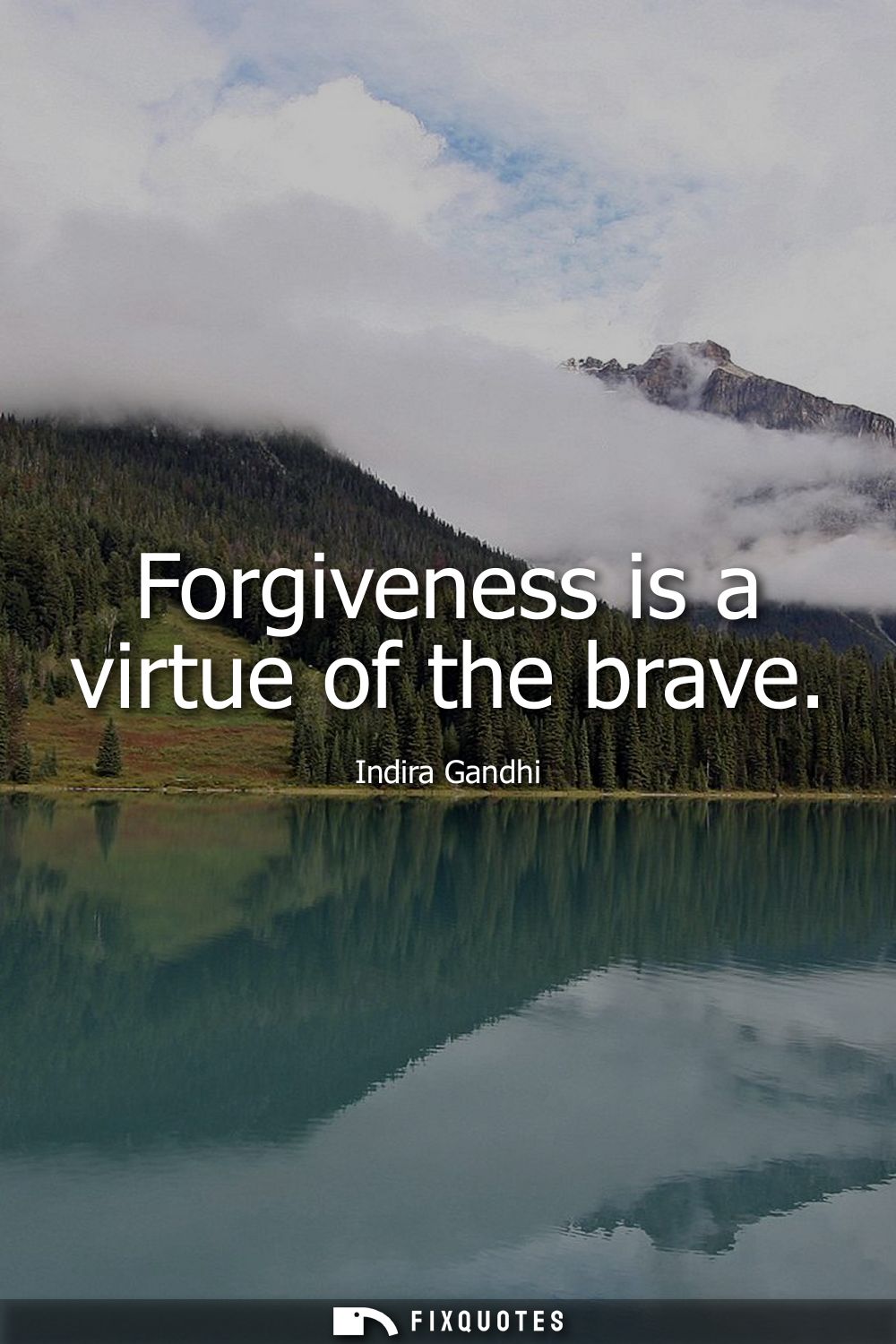
"Forgiveness is a virtue of the brave"
About this Quote
“Forgiveness is a virtue of the brave” reads like moral advice, but it’s also a political weapon: a way of recasting restraint as strength. Coming from Indira Gandhi, it carries the weight of governance in a country where every conciliatory gesture risked being mistaken for softness, and every hard line carried the shadow of overreach. In that world, forgiveness isn’t a private spiritual exercise. It’s a public act with consequences.
The line works because it reverses the usual hierarchy. People assume forgiveness is what you do when you’re cornered, when you can’t retaliate. Gandhi flips it: the truly powerful can afford mercy. That’s the subtext - pardon as a kind of luxury good, available only to those with enough authority (or self-command) to absorb the costs. “Brave” is doing a lot of labor here. It’s not just battlefield courage; it’s the courage to endure criticism, to resist vengeance, to accept that compromise will look ugly in the moment.
There’s also a warning embedded in the compliment. If forgiveness is bravery, then refusal to forgive is a confession of fear: fear of losing face, fear of appearing weak, fear of letting an enemy survive long enough to matter. For a leader navigating insurgencies, factionalism, and the high-stakes theater of national unity, that framing becomes a strategic moral claim. It asks citizens and rivals to see clemency not as capitulation, but as the harder, riskier choice - the one that signals control rather than impulse.
The line works because it reverses the usual hierarchy. People assume forgiveness is what you do when you’re cornered, when you can’t retaliate. Gandhi flips it: the truly powerful can afford mercy. That’s the subtext - pardon as a kind of luxury good, available only to those with enough authority (or self-command) to absorb the costs. “Brave” is doing a lot of labor here. It’s not just battlefield courage; it’s the courage to endure criticism, to resist vengeance, to accept that compromise will look ugly in the moment.
There’s also a warning embedded in the compliment. If forgiveness is bravery, then refusal to forgive is a confession of fear: fear of losing face, fear of appearing weak, fear of letting an enemy survive long enough to matter. For a leader navigating insurgencies, factionalism, and the high-stakes theater of national unity, that framing becomes a strategic moral claim. It asks citizens and rivals to see clemency not as capitulation, but as the harder, riskier choice - the one that signals control rather than impulse.
Quote Details
| Topic | Forgiveness |
|---|---|
| Source | Help us find the source |
| Cite |
Citation Formats
APA Style (7th ed.)
Gandhi, Indira. (2026, January 15). Forgiveness is a virtue of the brave. FixQuotes. https://fixquotes.com/quotes/forgiveness-is-a-virtue-of-the-brave-163423/
Chicago Style
Gandhi, Indira. "Forgiveness is a virtue of the brave." FixQuotes. January 15, 2026. https://fixquotes.com/quotes/forgiveness-is-a-virtue-of-the-brave-163423/.
MLA Style (9th ed.)
"Forgiveness is a virtue of the brave." FixQuotes, 15 Jan. 2026, https://fixquotes.com/quotes/forgiveness-is-a-virtue-of-the-brave-163423/. Accessed 18 Feb. 2026.
More Quotes by Indira
Add to List