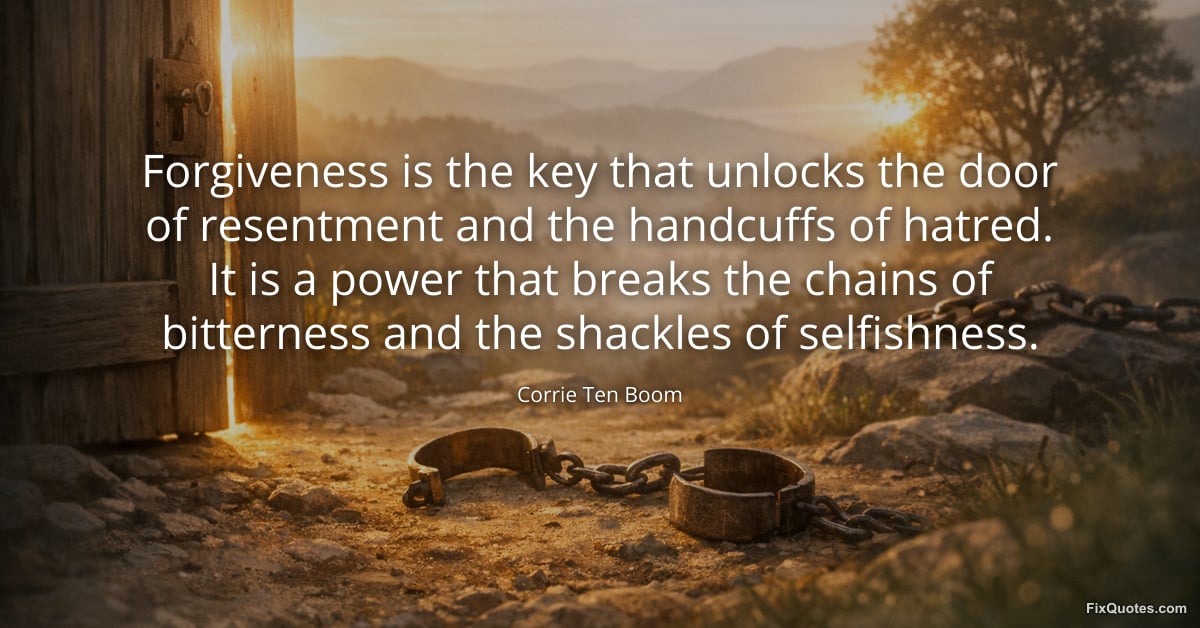
"Forgiveness is the key that unlocks the door of resentment and the handcuffs of hatred. It is a power that breaks the chains of bitterness and the shackles of selfishness"
About this Quote
The subtext is practical, almost survivalist. Ten Boom isn’t offering forgiveness as an elegant virtue for well-adjusted people; she presents it as leverage for those trapped in the afterlife of harm. “Power” is the tell. Forgiveness is not soft, not passive, not a sentimental pardon. It’s an act of agency that interrupts the addictive circuitry of grievance. The line also slyly narrows the debate: if bitterness is a chain, then “justice” that leaves you bound starts to look less like righteousness and more like self-sabotage.
Context sharpens the stakes. Ten Boom’s public persona is inseparable from her real history of Nazi occupation, imprisonment, and loss; her Christian witness was forged in a place where forgiveness is not a dinner-party ethic but a scandal. Calling her a “celebrity” misses the point: she became famous because she insisted that spiritual language has to operate under extreme conditions. The quote doesn’t erase atrocity; it argues that hatred extends it, renting it room inside you. Forgiveness, in her telling, is not forgetting. It’s refusing to remain captive to what happened.
Quote Details
| Topic | Forgiveness |
|---|---|
| Source | Later attribution: The Healing Power of Forgiveness (JOHN JAMES ABEKAH, 2024) modern compilationID: GYIVEQAAQBAJ
Evidence:
... Corrie Ten Boom: Corrie Ten Boom was a Christian woman who ... Forgiveness is the key that unlocks the door of resentment and the handcuffs of hatred. It is a power that breaks the chains of bitterness and the shackles of selfishness ... |
| Cite |
Citation Formats
APA Style (7th ed.)
Boom, Corrie ten. (2026, February 18). Forgiveness is the key that unlocks the door of resentment and the handcuffs of hatred. It is a power that breaks the chains of bitterness and the shackles of selfishness. FixQuotes. https://fixquotes.com/quotes/forgiveness-is-the-key-that-unlocks-the-door-of-172860/
Chicago Style
Boom, Corrie ten. "Forgiveness is the key that unlocks the door of resentment and the handcuffs of hatred. It is a power that breaks the chains of bitterness and the shackles of selfishness." FixQuotes. February 18, 2026. https://fixquotes.com/quotes/forgiveness-is-the-key-that-unlocks-the-door-of-172860/.
MLA Style (9th ed.)
"Forgiveness is the key that unlocks the door of resentment and the handcuffs of hatred. It is a power that breaks the chains of bitterness and the shackles of selfishness." FixQuotes, 18 Feb. 2026, https://fixquotes.com/quotes/forgiveness-is-the-key-that-unlocks-the-door-of-172860/. Accessed 31 Mar. 2026.