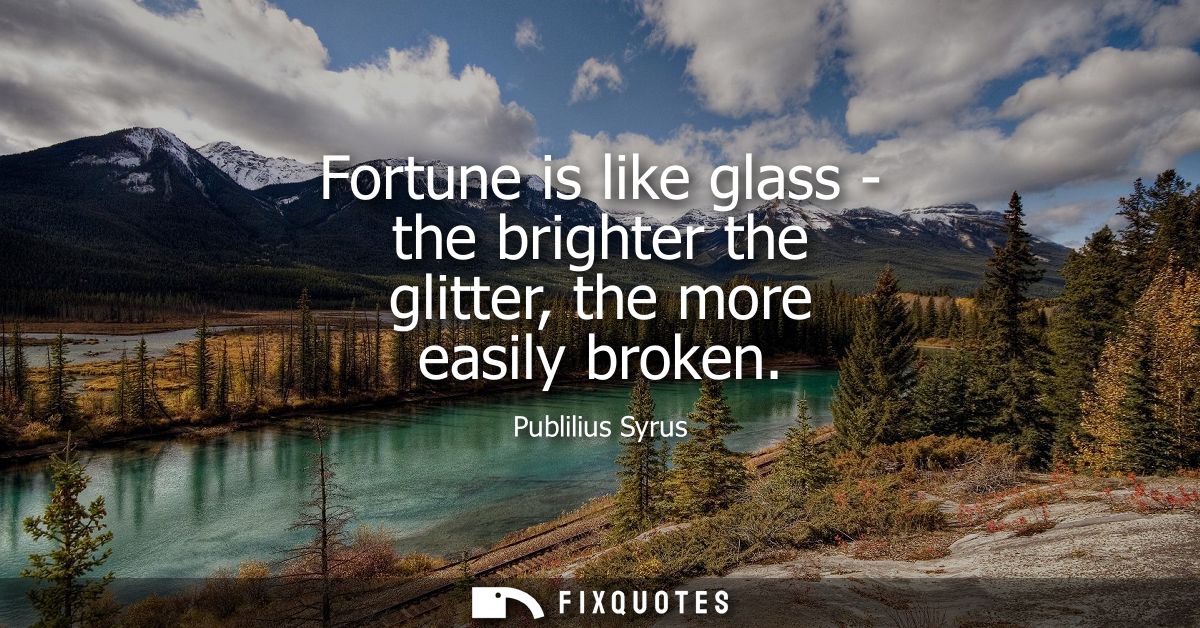
"Fortune is like glass - the brighter the glitter, the more easily broken"
About this Quote
Syrus, a writer of sententiae (those sharp, portable maxims Romans loved), crafts a warning that travels well because it flatters the listener into feeling savvy. If you can see that glitter is a liability, you’re already ahead of the gullible. Subtext: admiration is a kind of stress test. The more conspicuous your good luck, the more it invites envy, political suspicion, or sheer randomness to take a swing at it. “Broken” also hints at shame, not just loss; glass shatters loudly, publicly, irreversibly.
Context matters here: Syrus was a former slave turned celebrated author, someone who knew that social elevation could be real and still precarious. His fortune wasn’t inherited stone; it was earned glass. The intent is pragmatic: enjoy what you have, but don’t confuse shine for strength. In a culture that treated fate as capricious and power as transactional, this is less a spiritual lesson than a survival tip.
Quote Details
| Topic | Latin Phrases |
|---|---|
| Source | Publilius Syrus (1st century BC), Sententiae (Maxims) — commonly translated as: "Fortune is like glass; the brighter the glitter, the more easily broken." |
| Cite |
Citation Formats
APA Style (7th ed.)
Syrus, Publilius. (2026, January 14). Fortune is like glass - the brighter the glitter, the more easily broken. FixQuotes. https://fixquotes.com/quotes/fortune-is-like-glass-the-brighter-the-glitter-34353/
Chicago Style
Syrus, Publilius. "Fortune is like glass - the brighter the glitter, the more easily broken." FixQuotes. January 14, 2026. https://fixquotes.com/quotes/fortune-is-like-glass-the-brighter-the-glitter-34353/.
MLA Style (9th ed.)
"Fortune is like glass - the brighter the glitter, the more easily broken." FixQuotes, 14 Jan. 2026, https://fixquotes.com/quotes/fortune-is-like-glass-the-brighter-the-glitter-34353/. Accessed 10 Feb. 2026.