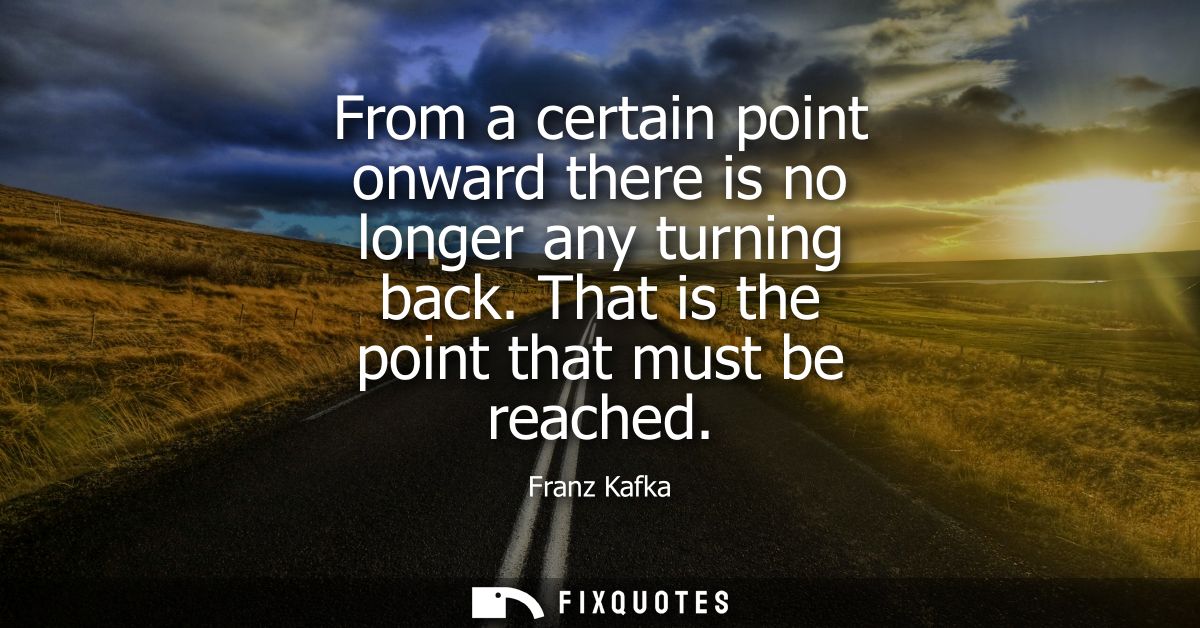
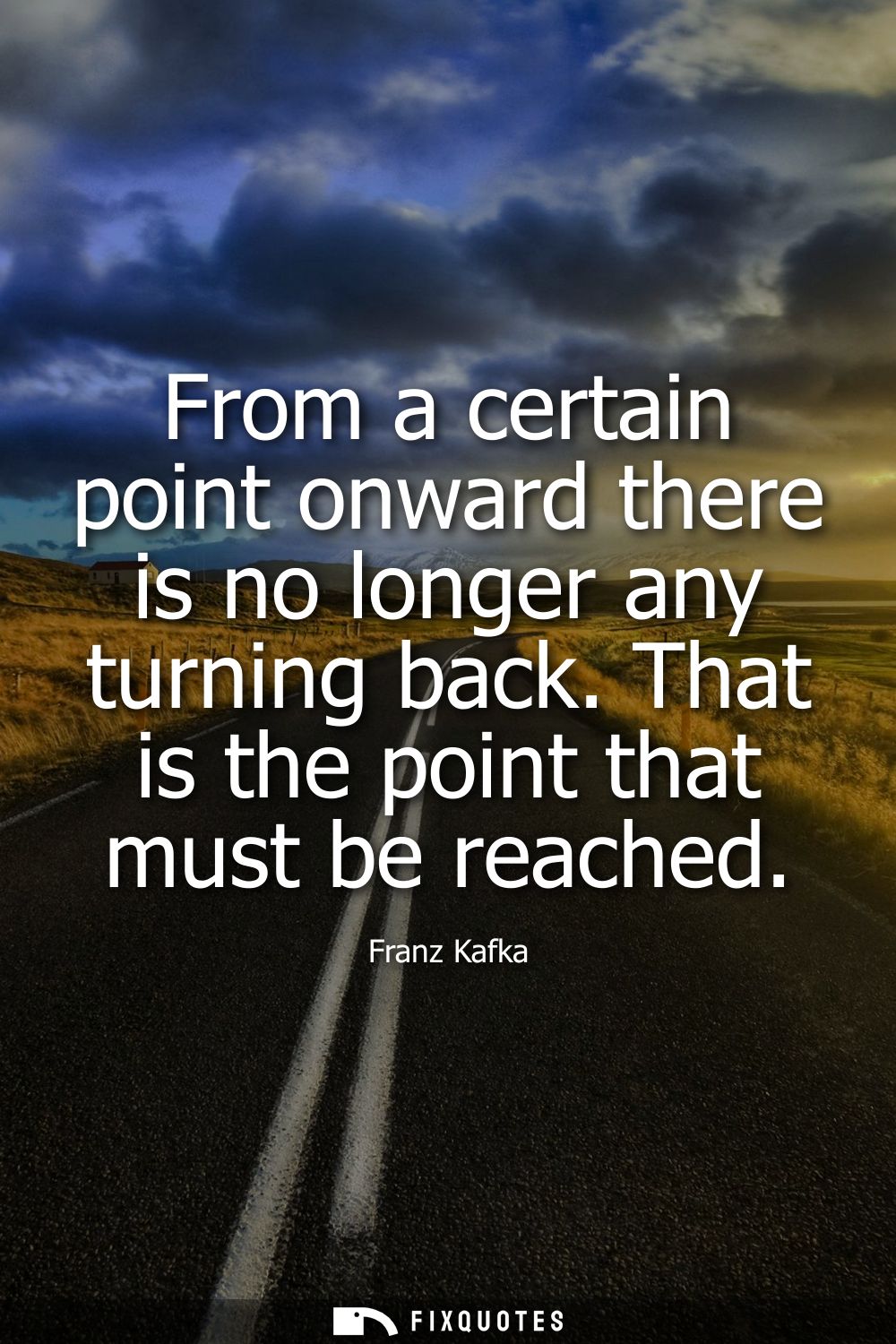
"From a certain point onward there is no longer any turning back. That is the point that must be reached"
About this Quote
The intent isn’t motivational so much as diagnostic. Kafka is describing a psychological kink in modern life, where hesitation becomes its own prison. Bureaucracy, guilt, illness, ambition, desire: these are forces that swell while you negotiate with them. His narrators are always waiting for permission, for an appeal, for the right stamp. Here, the subtext is that waiting is the true trap; the only escape is an irreversible commitment that ends the fantasy of control.
Context matters: Kafka wrote from inside the machinery of an empire and an office, in a world that prized procedure over personhood. "No turning back" sounds like doom in a legal file, but he reframes it as a threshold. The sentence mimics the logic of his fiction: the moment you recognize the system is inescapable, you stop pretending it’s negotiable. That recognition is brutal, but it’s also clarifying. Kafka’s bleakest joke is that freedom may arrive only when the exit signs go dark.
Quote Details
| Topic | Embrace Change |
|---|---|
| Source | Help us find the source |
| Cite |
Citation Formats
APA Style (7th ed.)
Kafka, Franz. (2026, January 17). From a certain point onward there is no longer any turning back. That is the point that must be reached. FixQuotes. https://fixquotes.com/quotes/from-a-certain-point-onward-there-is-no-longer-31247/
Chicago Style
Kafka, Franz. "From a certain point onward there is no longer any turning back. That is the point that must be reached." FixQuotes. January 17, 2026. https://fixquotes.com/quotes/from-a-certain-point-onward-there-is-no-longer-31247/.
MLA Style (9th ed.)
"From a certain point onward there is no longer any turning back. That is the point that must be reached." FixQuotes, 17 Jan. 2026, https://fixquotes.com/quotes/from-a-certain-point-onward-there-is-no-longer-31247/. Accessed 2 Apr. 2026.