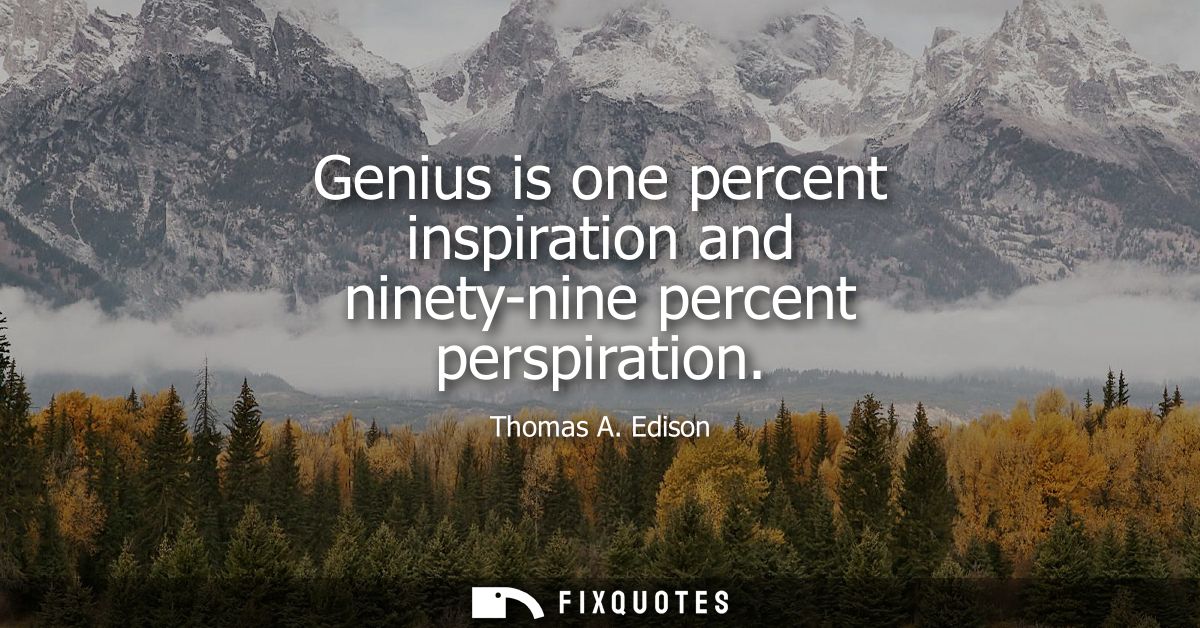
"Genius is one percent inspiration and ninety-nine percent perspiration"
About this Quote
The subtext is also brand management. Edison wasn’t just an inventor; he was an industrial operator running a lab like a production line, filing patents at scale, directing teams, optimizing processes. Framing genius as perspiration legitimizes that system. It turns collaborative, capital-intensive research into a moral story about effort, blurring the difference between solitary brilliance and organized R&D. If genius is mostly work, then the winners deserve to win because they outworked you; the messy advantages of money, staff, and infrastructure fade into the background.
There’s a quiet argument here about democracy and discipline. Edison sells the idea that greatness is accessible, not hereditary or mystical, but he does it with a caveat: access requires submission to labor. That’s why the quote endures in American business culture. It flatters the striver while setting a demanding standard that conveniently matches the rhythms of industry: long hours, iteration, and the willingness to fail in bulk.
Quote Details
| Topic | Work Ethic |
|---|---|
| Source | Help us find the source |
| Cite |
Citation Formats
APA Style (7th ed.)
Edison, Thomas. (2026, January 15). Genius is one percent inspiration and ninety-nine percent perspiration. FixQuotes. https://fixquotes.com/quotes/genius-is-one-percent-inspiration-and-ninety-nine-1997/
Chicago Style
Edison, Thomas. "Genius is one percent inspiration and ninety-nine percent perspiration." FixQuotes. January 15, 2026. https://fixquotes.com/quotes/genius-is-one-percent-inspiration-and-ninety-nine-1997/.
MLA Style (9th ed.)
"Genius is one percent inspiration and ninety-nine percent perspiration." FixQuotes, 15 Jan. 2026, https://fixquotes.com/quotes/genius-is-one-percent-inspiration-and-ninety-nine-1997/. Accessed 28 Mar. 2026.