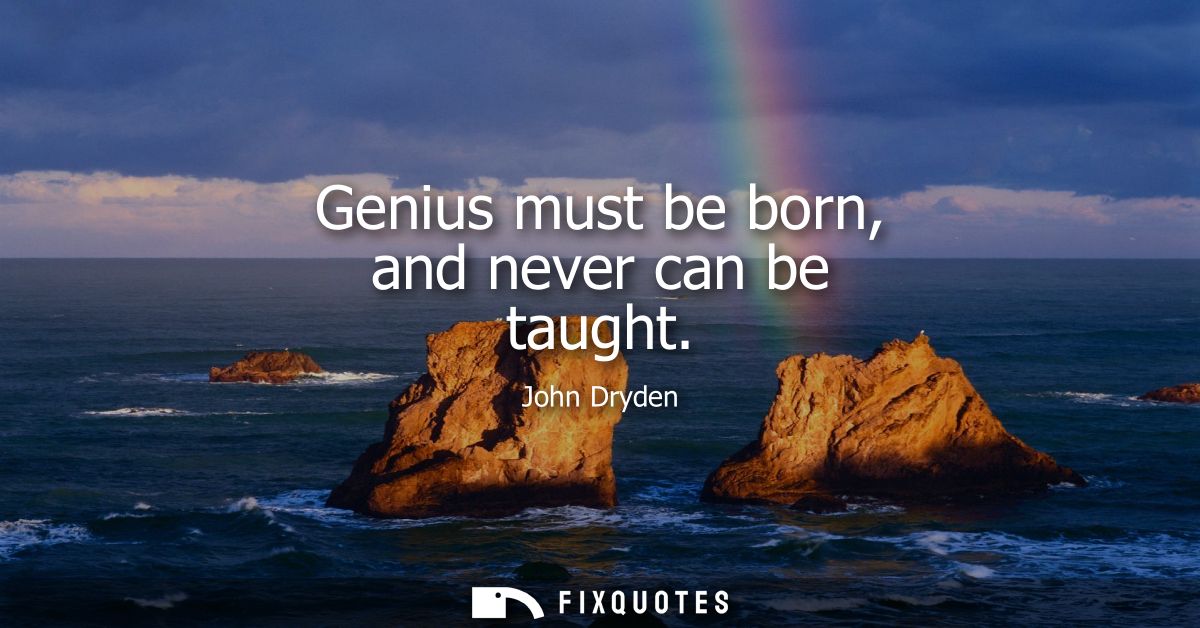
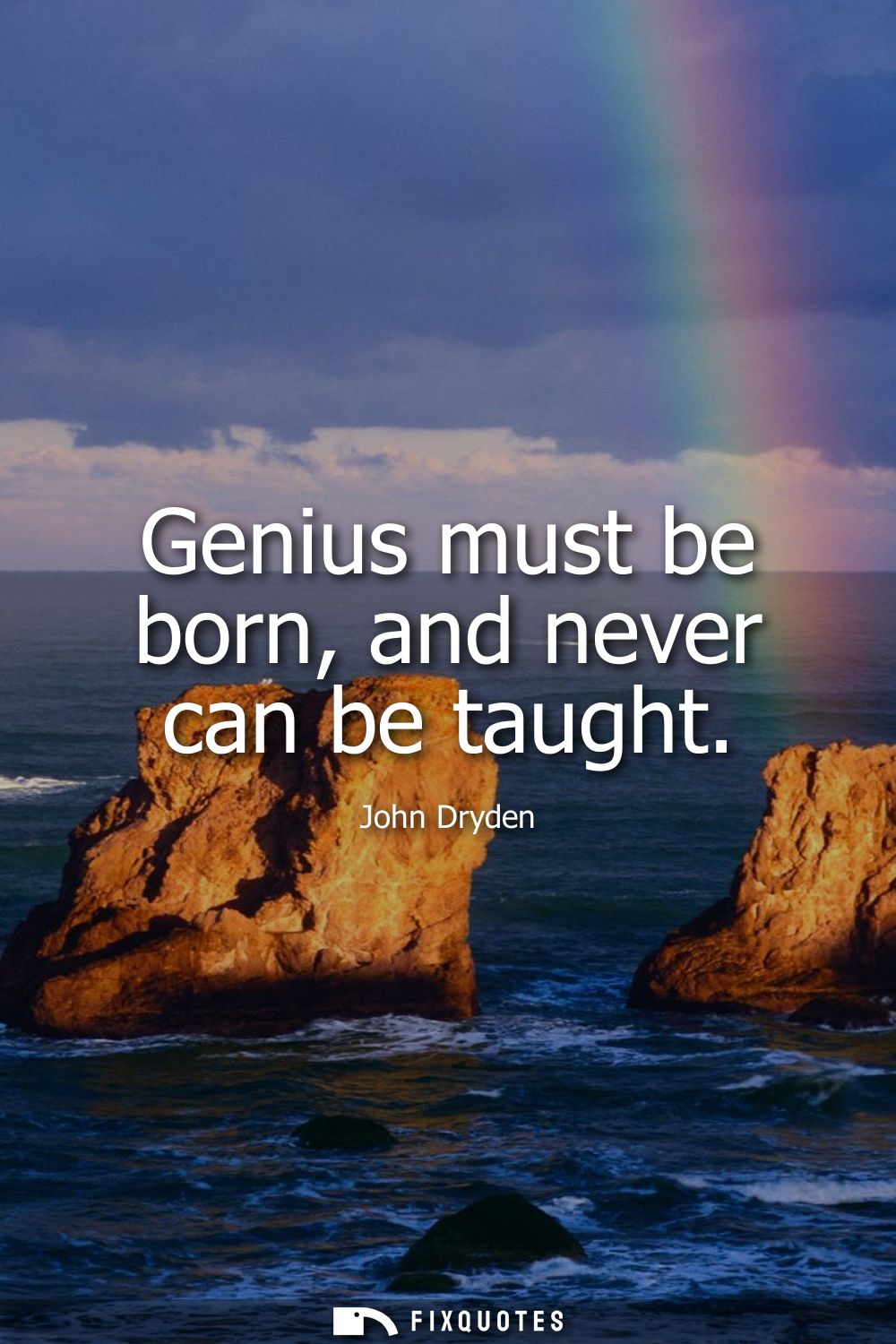
"Genius must be born, and never can be taught"
About this Quote
Dryden’s line is a gate slammed politely but firmly in the face of self-improvement. “Genius must be born” isn’t just a claim about talent; it’s a social sorting mechanism dressed up as aesthetic wisdom. In Restoration England, where taste was becoming a kind of currency and literary culture was entangled with patronage and rank, declaring genius innate flatters the people already positioned to be recognized as exceptional. If genius can’t be taught, then institutions, tutors, and upward strivers can’t manufacture rivals. The ladder is there, but the top rung is reserved for those “born” with the right spark - and, quietly, the right circumstances.
The sentence works because it’s absolutist in a way that sounds like common sense. “Must” shuts down debate; “never” forecloses hope. Dryden compresses a whole worldview into two blunt verbs: born/taught. That binary makes the idea feel clean, even moral, as if nature itself has issued a verdict. Subtext: craft matters, education matters, but only up to the ceiling of your inheritance - biological, yes, but also cultural and economic. It’s a line that protects the mystique of great art by insisting on mystery.
Dryden, a poet and critic who helped shape English literary standards, also benefits from the aura this creates. If genius is unteachable, then the critic’s role shifts from explaining how art is made to identifying who has “it.” The quote performs authority by pretending it’s merely observing nature.
The sentence works because it’s absolutist in a way that sounds like common sense. “Must” shuts down debate; “never” forecloses hope. Dryden compresses a whole worldview into two blunt verbs: born/taught. That binary makes the idea feel clean, even moral, as if nature itself has issued a verdict. Subtext: craft matters, education matters, but only up to the ceiling of your inheritance - biological, yes, but also cultural and economic. It’s a line that protects the mystique of great art by insisting on mystery.
Dryden, a poet and critic who helped shape English literary standards, also benefits from the aura this creates. If genius is unteachable, then the critic’s role shifts from explaining how art is made to identifying who has “it.” The quote performs authority by pretending it’s merely observing nature.
Quote Details
| Topic | Teaching |
|---|---|
| Source | Help us find the source |
| Cite |
Citation Formats
APA Style (7th ed.)
Dryden, John. (2026, January 15). Genius must be born, and never can be taught. FixQuotes. https://fixquotes.com/quotes/genius-must-be-born-and-never-can-be-taught-151596/
Chicago Style
Dryden, John. "Genius must be born, and never can be taught." FixQuotes. January 15, 2026. https://fixquotes.com/quotes/genius-must-be-born-and-never-can-be-taught-151596/.
MLA Style (9th ed.)
"Genius must be born, and never can be taught." FixQuotes, 15 Jan. 2026, https://fixquotes.com/quotes/genius-must-be-born-and-never-can-be-taught-151596/. Accessed 11 Feb. 2026.
More Quotes by John
Add to List