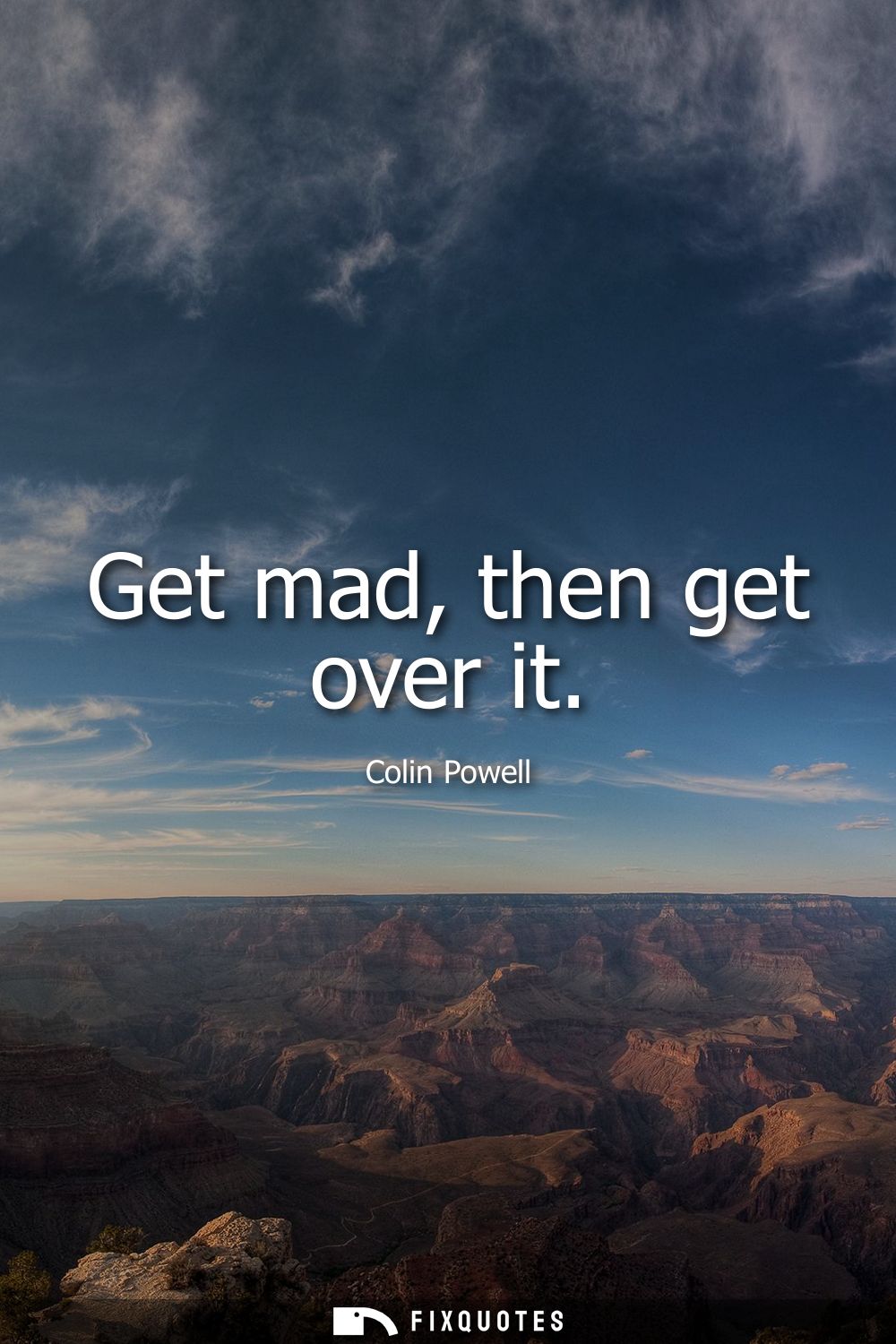
"Get mad, then get over it"
About this Quote
Anger gets one line here, recovery gets the rest. "Get mad, then get over it" is Colin Powell compressing a whole governing philosophy into eight words: emotion is allowed, even useful, but it cannot be the boss. The rhythm matters. The first clause is blunt permission, a nod to the reality that setbacks and injustices should sting. The second clause snaps shut like a command brief: move on, reorient, execute.
Coming from a statesman who built his reputation on disciplined process and crisis management, the subtext is less self-help than operational doctrine. Powell isn’t romanticizing outrage; he’s treating it as a diagnostic flare. Anger tells you something is wrong - in the plan, the chain of command, the assumptions, the people. Then you deliberately downgrade it, because leaders who stay angry start making decisions to satisfy their mood instead of the mission. In politics and military life alike, prolonged fury is a resource drain: it narrows attention, invites grudges, and turns problem-solving into score-settling.
The line also carries a quiet critique of cultures that reward perpetual indignation. It’s not "don’t feel"; it’s "don’t perform". Powell’s restraint reads as a moral stance, but it’s also pragmatic: credibility comes from steadiness, not heat. The quote works because it offers a hard bargain: you can have your human reaction, but you owe the world your competence.
Coming from a statesman who built his reputation on disciplined process and crisis management, the subtext is less self-help than operational doctrine. Powell isn’t romanticizing outrage; he’s treating it as a diagnostic flare. Anger tells you something is wrong - in the plan, the chain of command, the assumptions, the people. Then you deliberately downgrade it, because leaders who stay angry start making decisions to satisfy their mood instead of the mission. In politics and military life alike, prolonged fury is a resource drain: it narrows attention, invites grudges, and turns problem-solving into score-settling.
The line also carries a quiet critique of cultures that reward perpetual indignation. It’s not "don’t feel"; it’s "don’t perform". Powell’s restraint reads as a moral stance, but it’s also pragmatic: credibility comes from steadiness, not heat. The quote works because it offers a hard bargain: you can have your human reaction, but you owe the world your competence.
Quote Details
| Topic | Anger |
|---|
More Quotes by Colin
Add to List