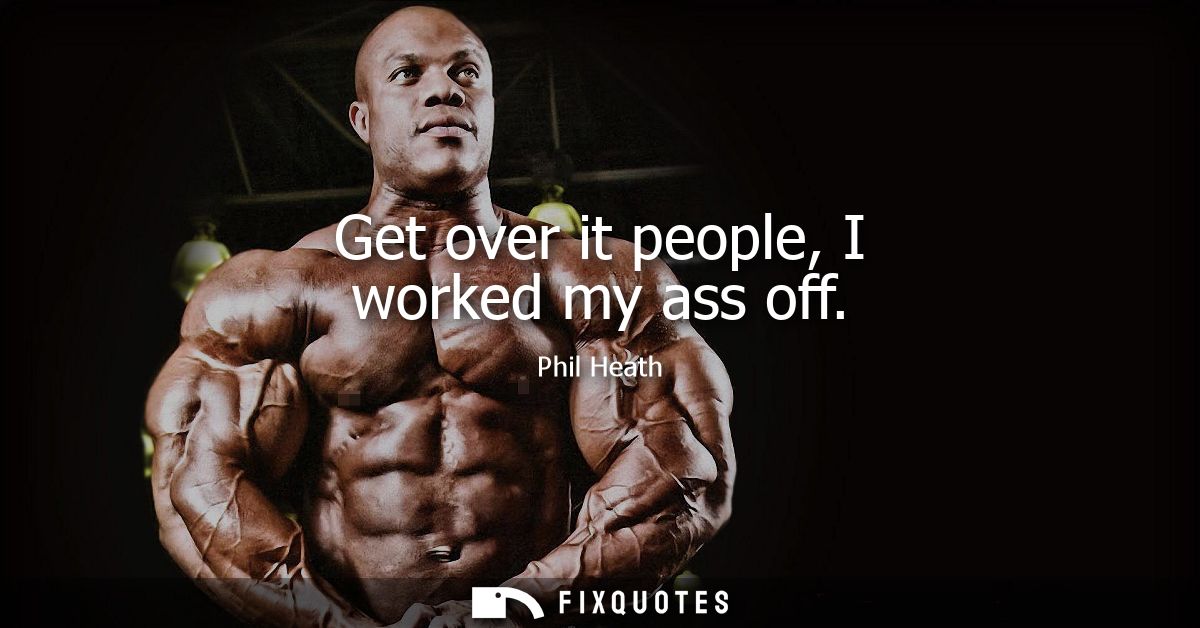
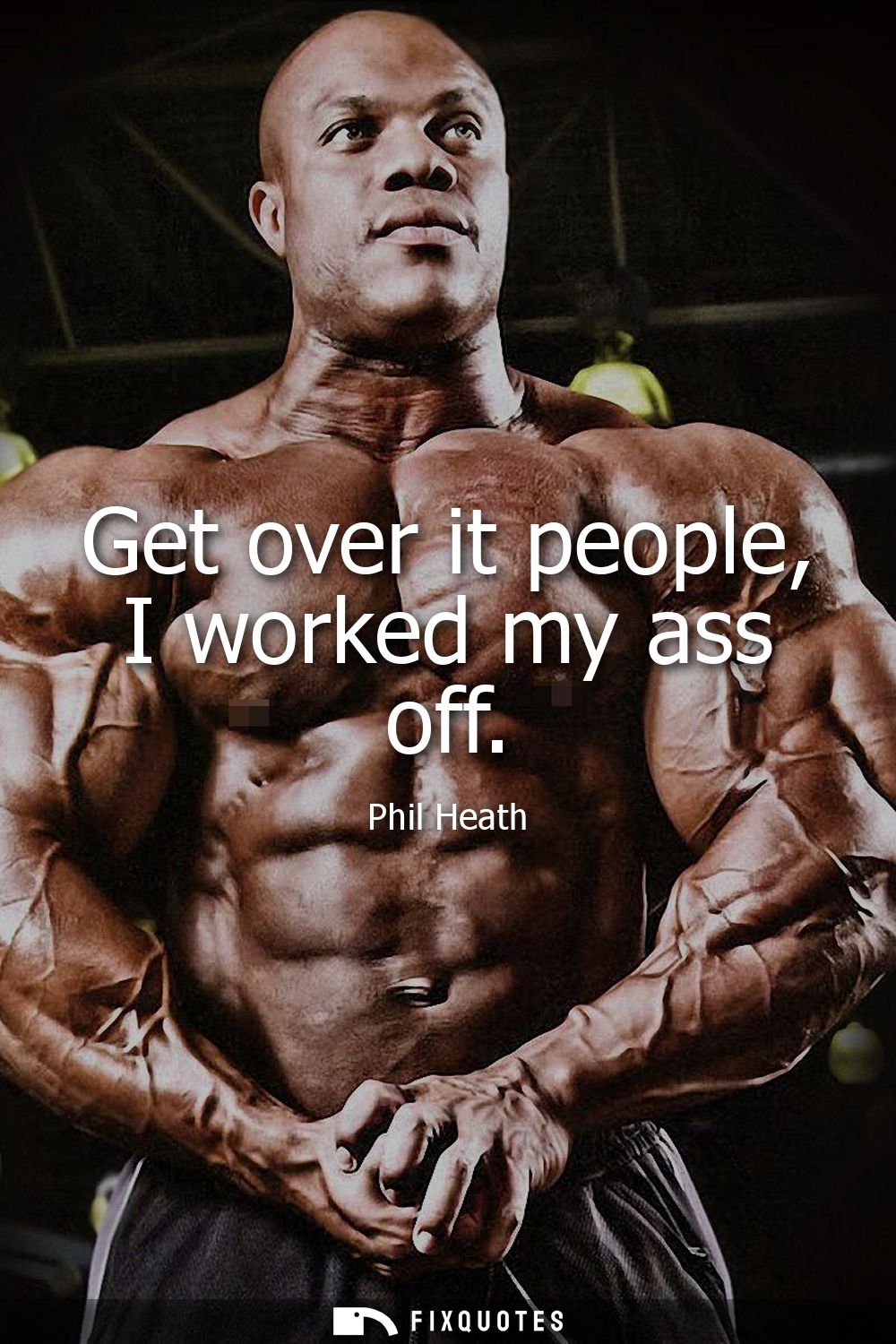
"Get over it, people, I worked my ass off"
About this Quote
There’s no poetry here, and that’s the point. Phil Heath’s “Get over it people, I worked my ass off” lands like a slammed door on a comment section: blunt, a little pissed off, and calibrated to shut down the favorite pastime of sports spectatorship - explaining away someone else’s dominance.
The intent is defensive but also preemptive. Heath isn’t asking for admiration; he’s demanding recognition of labor as the only acceptable explanation for his success. In bodybuilding, where genetics are constantly weaponized (“he’s just a freak”) and enhancement rumors hover over every physique, “worked my ass off” is a refusal to let the story drift into luck, biology, or conspiracy. It’s a claim to moral ownership. You can dislike the outcome, but you don’t get to strip him of the effort that produced it.
The subtext is a cultural argument about entitlement. “Get over it” isn’t directed at rivals in the gym as much as at audiences who feel authorized to police merit from the couch: fans, critics, internet judges. Heath is asserting a boundary between spectatorship and participation. If you want to speak with authority, step under the lights, count the meals, take the Ls, live the repetition.
Context matters: Heath’s era was peak social media, when greatness is instantly met with backlash, nitpicking, and fatigue. The line reads like an athlete’s antidote to that churn - not an attempt to be likable, but a reminder that excellence is often unromantic, accumulative, and earned the hard way.
The intent is defensive but also preemptive. Heath isn’t asking for admiration; he’s demanding recognition of labor as the only acceptable explanation for his success. In bodybuilding, where genetics are constantly weaponized (“he’s just a freak”) and enhancement rumors hover over every physique, “worked my ass off” is a refusal to let the story drift into luck, biology, or conspiracy. It’s a claim to moral ownership. You can dislike the outcome, but you don’t get to strip him of the effort that produced it.
The subtext is a cultural argument about entitlement. “Get over it” isn’t directed at rivals in the gym as much as at audiences who feel authorized to police merit from the couch: fans, critics, internet judges. Heath is asserting a boundary between spectatorship and participation. If you want to speak with authority, step under the lights, count the meals, take the Ls, live the repetition.
Context matters: Heath’s era was peak social media, when greatness is instantly met with backlash, nitpicking, and fatigue. The line reads like an athlete’s antidote to that churn - not an attempt to be likable, but a reminder that excellence is often unromantic, accumulative, and earned the hard way.
Quote Details
| Topic | Work Ethic |
|---|---|
| Source | Help us find the source |
| Featured | This quote was our Quote of the Day on August 5, 2023 |
| Cite |
Citation Formats
APA Style (7th ed.)
Heath, Phil. (2026, February 16). Get over it, people, I worked my ass off. FixQuotes. https://fixquotes.com/quotes/get-over-it-people-i-worked-my-ass-off-172971/
Chicago Style
Heath, Phil. "Get over it, people, I worked my ass off." FixQuotes. February 16, 2026. https://fixquotes.com/quotes/get-over-it-people-i-worked-my-ass-off-172971/.
MLA Style (9th ed.)
"Get over it, people, I worked my ass off." FixQuotes, 16 Feb. 2026, https://fixquotes.com/quotes/get-over-it-people-i-worked-my-ass-off-172971/. Accessed 30 Mar. 2026.
More Quotes by Phil
Add to List