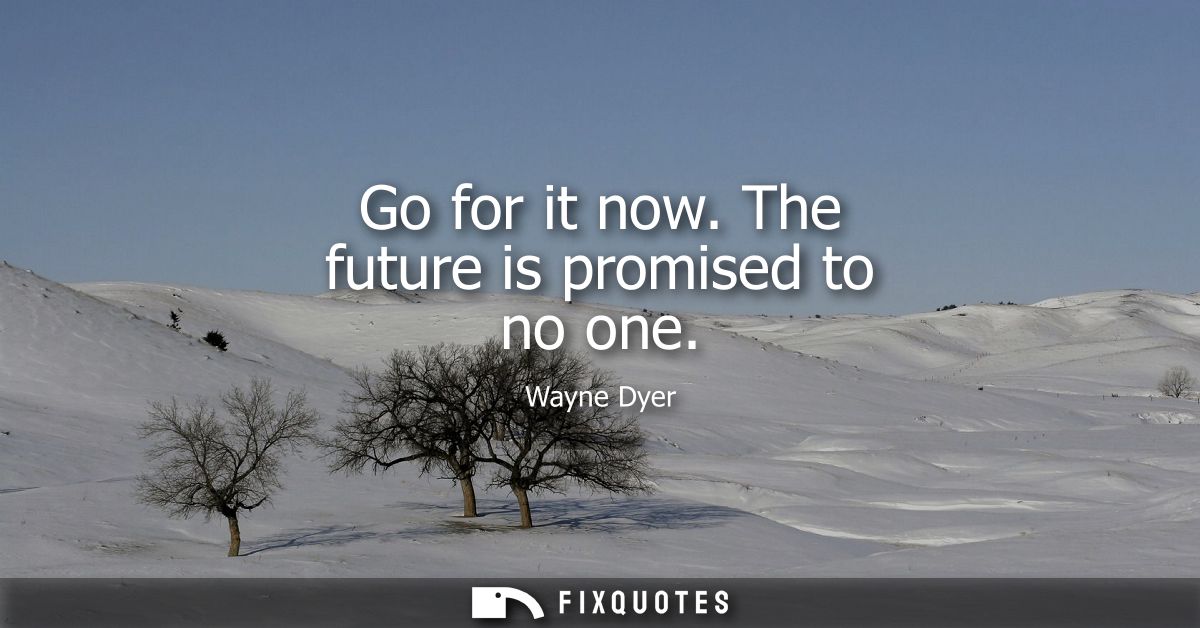
"Go for it now. The future is promised to no one"
About this Quote
Dyer’s line lands like a benevolent shove: stop negotiating with your own hesitation. “Go for it now” isn’t motivational confetti; it’s an intervention aimed at the most common self-sabotage dressed up as prudence. He’s targeting the internal bureaucracy of later: the imagined day when you’ll have more confidence, fewer responsibilities, a clearer plan, better timing. The sentence is short because the argument is meant to bypass the overthinking mind and hit the body - that visceral sense that time is already moving.
“The future is promised to no one” does two jobs at once. On the surface it’s a memento mori, a reminder of mortality that adds urgency. Underneath, it’s a critique of entitlement: the quiet assumption that we’ll get extensions, that opportunities will wait, that health and stability are default settings. Dyer, writing from a late-20th-century self-help tradition but trained as a psychologist, understood how people use “someday” as a psychological sedative. It calms anxiety in the short term while quietly inflating regret.
The rhetoric is also carefully non-specific. He never names the thing you’re avoiding, so the listener supplies their own: the breakup, the novel, the career shift, the apology. That blank space is the hook; it makes the quote feel personally addressed.
Culturally, it fits an era increasingly defined by choice overload and delayed adulthood. Dyer offers a simple counterspell: urgency as clarity. Not reckless abandon, but a refusal to let fear masquerade as patience.
“The future is promised to no one” does two jobs at once. On the surface it’s a memento mori, a reminder of mortality that adds urgency. Underneath, it’s a critique of entitlement: the quiet assumption that we’ll get extensions, that opportunities will wait, that health and stability are default settings. Dyer, writing from a late-20th-century self-help tradition but trained as a psychologist, understood how people use “someday” as a psychological sedative. It calms anxiety in the short term while quietly inflating regret.
The rhetoric is also carefully non-specific. He never names the thing you’re avoiding, so the listener supplies their own: the breakup, the novel, the career shift, the apology. That blank space is the hook; it makes the quote feel personally addressed.
Culturally, it fits an era increasingly defined by choice overload and delayed adulthood. Dyer offers a simple counterspell: urgency as clarity. Not reckless abandon, but a refusal to let fear masquerade as patience.
Quote Details
| Topic | Motivational |
|---|
More Quotes by Wayne
Add to List