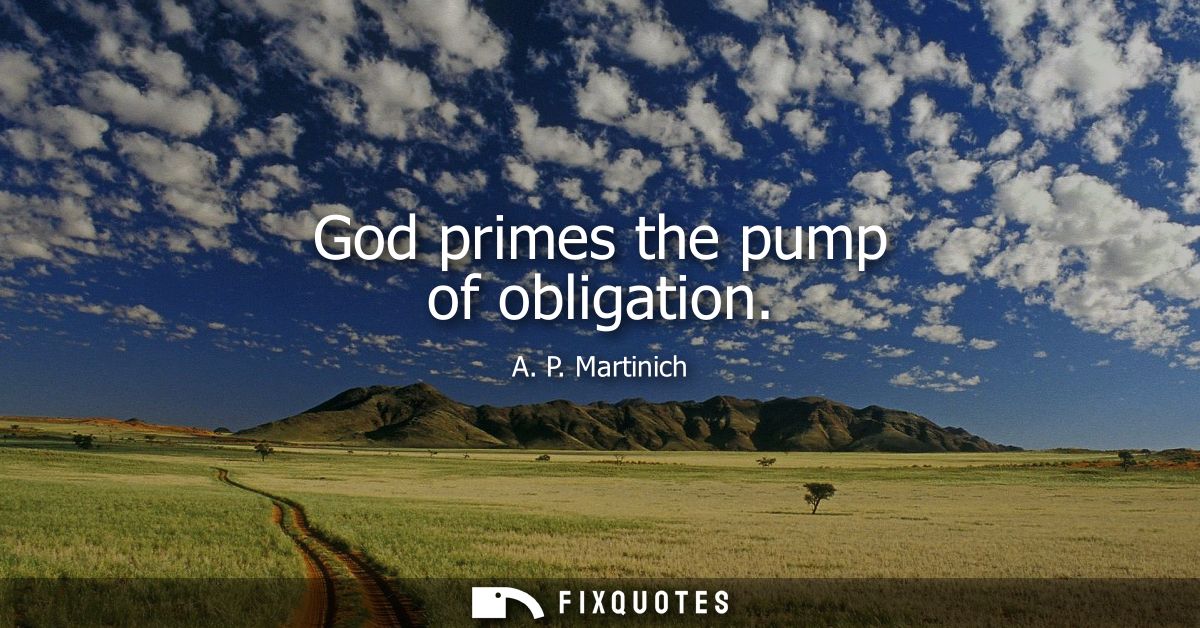
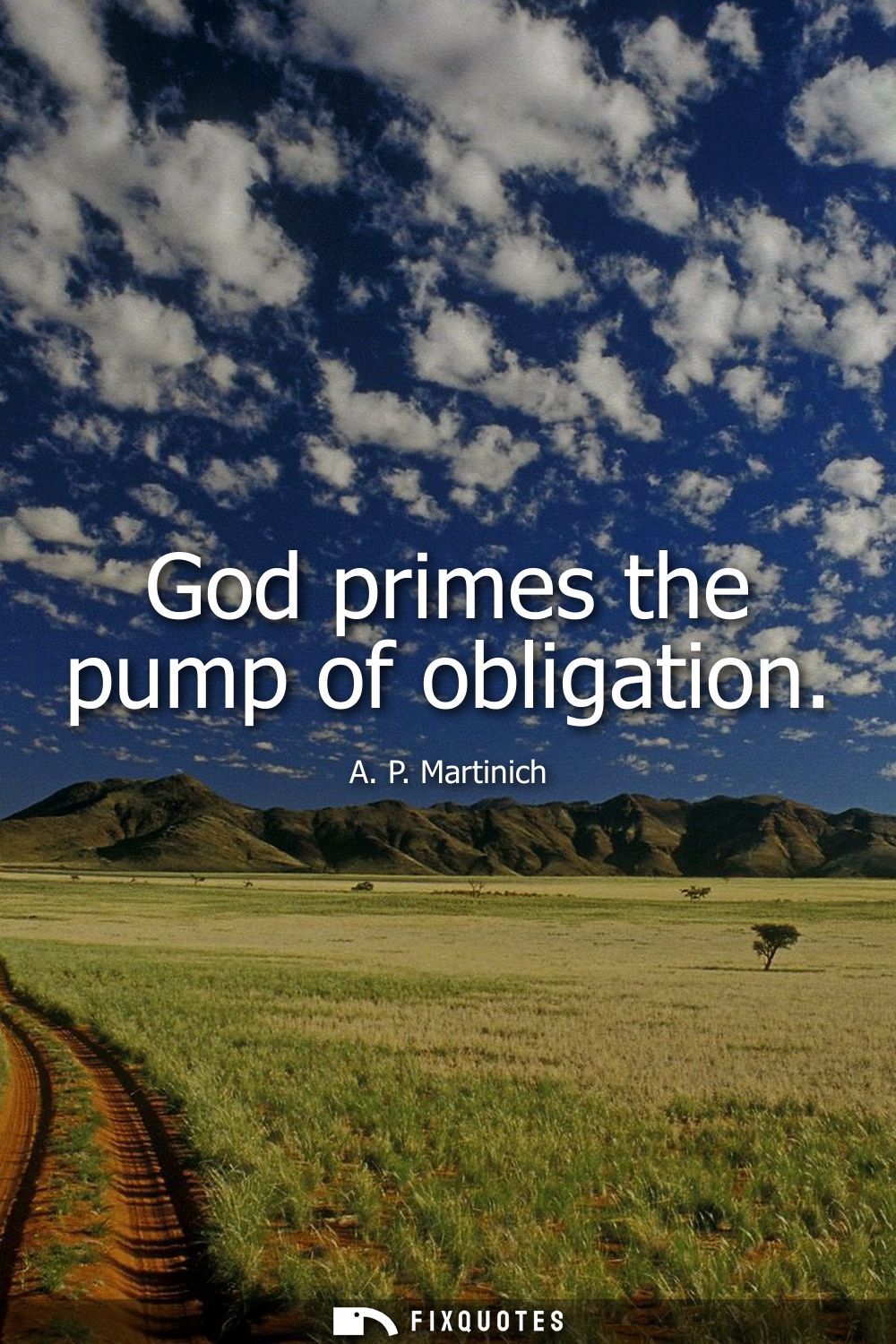
"God primes the pump of obligation"
About this Quote
“God primes the pump of obligation” is philosophy doing what it does best: compressing an entire meta-ethical argument into a homely mechanical image. A pump doesn’t create water; it makes access possible. Likewise, the line suggests God isn’t necessarily the source of moral truth so much as the device that gets moral motivation flowing. The intent reads as diagnostic rather than devotional: it’s less about piety than about explaining why duty feels binding to people who might otherwise treat morality as optional etiquette.
The subtext is a quiet concession to psychology and social glue. “Obligation” is not just a belief that some acts are right; it’s the experienced pressure of “I must.” Martinich’s metaphor implies that for many communities, God functions as the initial push that transforms abstract norms into felt necessity. You can run a pump without priming if the system is already pressurized, but priming is what starts it when nothing’s moving. That nods toward a historically familiar problem: secular moral theories can articulate reasons, but reasons don’t automatically generate compliance. Theism, in this frame, supplies urgency, surveillance, accountability, or a narrative that makes sacrifice intelligible.
Contextually, the quote sits neatly inside debates about divine command theory and its rivals. It’s also a subtle dodge of the Euthyphro trap: instead of claiming God makes actions obligatory by fiat, it hints that God makes obligations motivationally effective, socially legible, and harder to shrug off. The brilliance is its faint cynicism: even if morality has independent standing, the cultural technology that gets people to treat it as non-negotiable has often been God.
The subtext is a quiet concession to psychology and social glue. “Obligation” is not just a belief that some acts are right; it’s the experienced pressure of “I must.” Martinich’s metaphor implies that for many communities, God functions as the initial push that transforms abstract norms into felt necessity. You can run a pump without priming if the system is already pressurized, but priming is what starts it when nothing’s moving. That nods toward a historically familiar problem: secular moral theories can articulate reasons, but reasons don’t automatically generate compliance. Theism, in this frame, supplies urgency, surveillance, accountability, or a narrative that makes sacrifice intelligible.
Contextually, the quote sits neatly inside debates about divine command theory and its rivals. It’s also a subtle dodge of the Euthyphro trap: instead of claiming God makes actions obligatory by fiat, it hints that God makes obligations motivationally effective, socially legible, and harder to shrug off. The brilliance is its faint cynicism: even if morality has independent standing, the cultural technology that gets people to treat it as non-negotiable has often been God.
Quote Details
| Topic | God |
|---|---|
| Source | Help us find the source |
| Cite |
Citation Formats
APA Style (7th ed.)
Martinich, A. P. (2026, January 17). God primes the pump of obligation. FixQuotes. https://fixquotes.com/quotes/god-primes-the-pump-of-obligation-63349/
Chicago Style
Martinich, A. P. "God primes the pump of obligation." FixQuotes. January 17, 2026. https://fixquotes.com/quotes/god-primes-the-pump-of-obligation-63349/.
MLA Style (9th ed.)
"God primes the pump of obligation." FixQuotes, 17 Jan. 2026, https://fixquotes.com/quotes/god-primes-the-pump-of-obligation-63349/. Accessed 28 Mar. 2026.
More Quotes by P. Martinich
Add to List