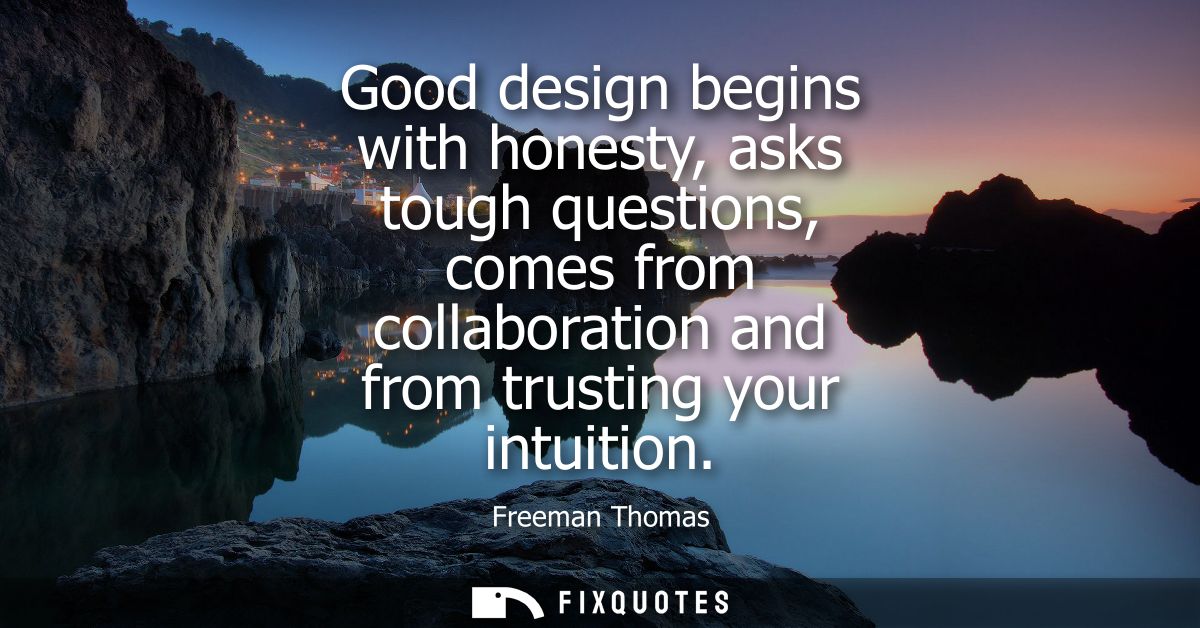
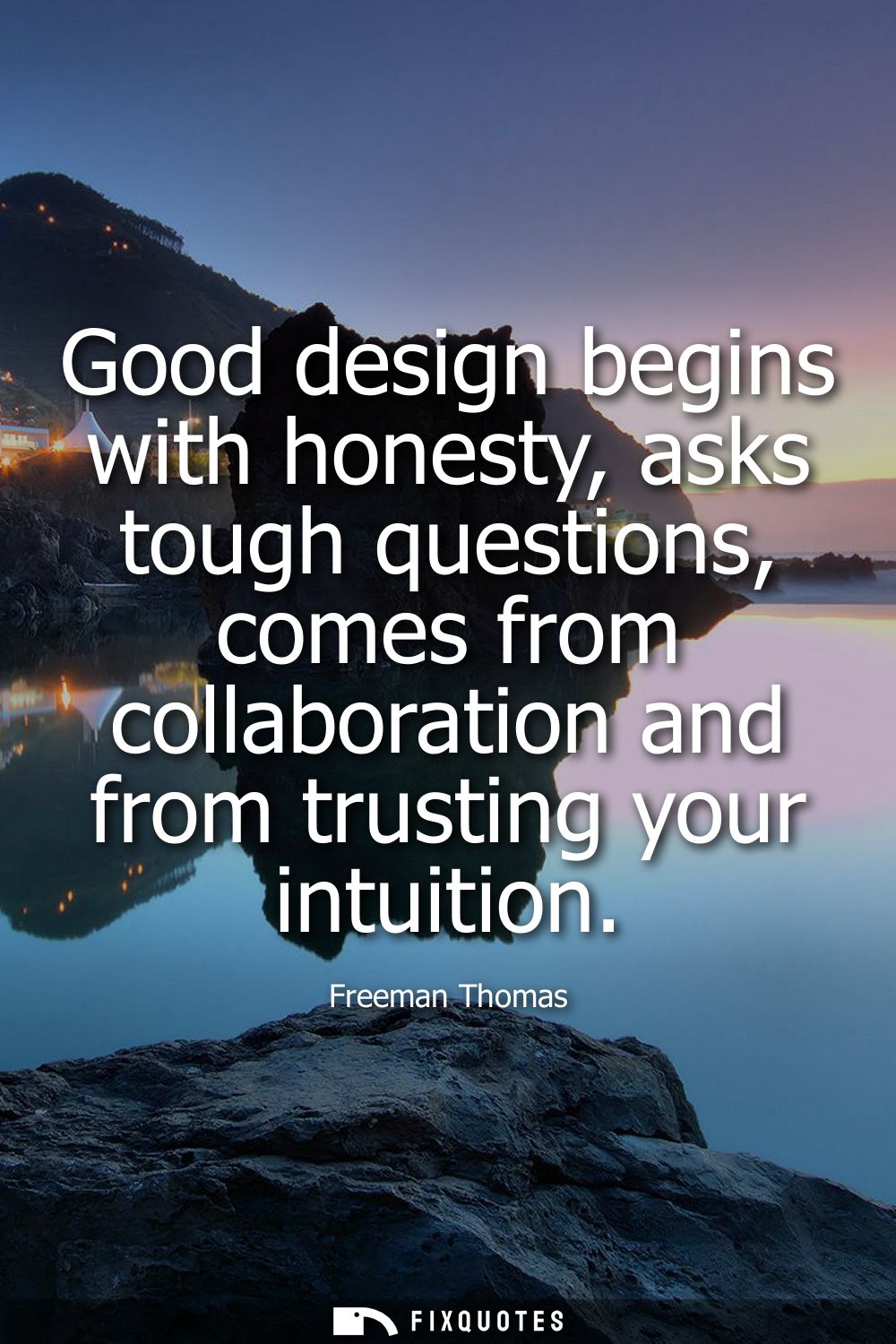
"Good design begins with honesty, asks tough questions, comes from collaboration and from trusting your intuition"
About this Quote
Design, in Freeman Thomas's framing, isn't a vibe or a finishing touch; it's an ethical stance with real-world consequences. "Begins with honesty" is a quiet rebuke to the industry habit of dressing up compromises as "features" and marketing as meaning. He's pointing at the original sin of bad products: they start from a lie about what people need, what the materials can do, or what the budget and timeline will actually allow.
"asks tough questions" shifts design from decoration to interrogation. The subtext: if you aren't uncomfortable at some point, you're probably just styling. Tough questions are the ones that threaten sunk costs and internal politics - Why does this exist? Who does it exclude? What are we optimizing for: delight, safety, margin, status? That line reads like lived experience in rooms where the easiest path is to ship the familiar.
Then he pivots to the social reality: "comes from collaboration". Design culture loves the lone-genius myth, but most meaningful work is negotiated: engineers, manufacturing constraints, brand, user research, deadlines. Collaboration isn't kumbaya here; it's the only way to make honesty survivable inside a business.
The final clause, "trusting your intuition", is the pressure valve. After research, critique, and group consensus, someone still has to make a call. Thomas isn't romanticizing instinct; he's legitimizing the designer's trained gut - pattern recognition built from failure, taste, and an internalized user. The quote works because it balances accountability (honesty, questions, collaboration) with authorship (intuition), insisting that good design is both a team sport and a personal risk.
"asks tough questions" shifts design from decoration to interrogation. The subtext: if you aren't uncomfortable at some point, you're probably just styling. Tough questions are the ones that threaten sunk costs and internal politics - Why does this exist? Who does it exclude? What are we optimizing for: delight, safety, margin, status? That line reads like lived experience in rooms where the easiest path is to ship the familiar.
Then he pivots to the social reality: "comes from collaboration". Design culture loves the lone-genius myth, but most meaningful work is negotiated: engineers, manufacturing constraints, brand, user research, deadlines. Collaboration isn't kumbaya here; it's the only way to make honesty survivable inside a business.
The final clause, "trusting your intuition", is the pressure valve. After research, critique, and group consensus, someone still has to make a call. Thomas isn't romanticizing instinct; he's legitimizing the designer's trained gut - pattern recognition built from failure, taste, and an internalized user. The quote works because it balances accountability (honesty, questions, collaboration) with authorship (intuition), insisting that good design is both a team sport and a personal risk.
Quote Details
| Topic | Art |
|---|
More Quotes by Freeman
Add to List