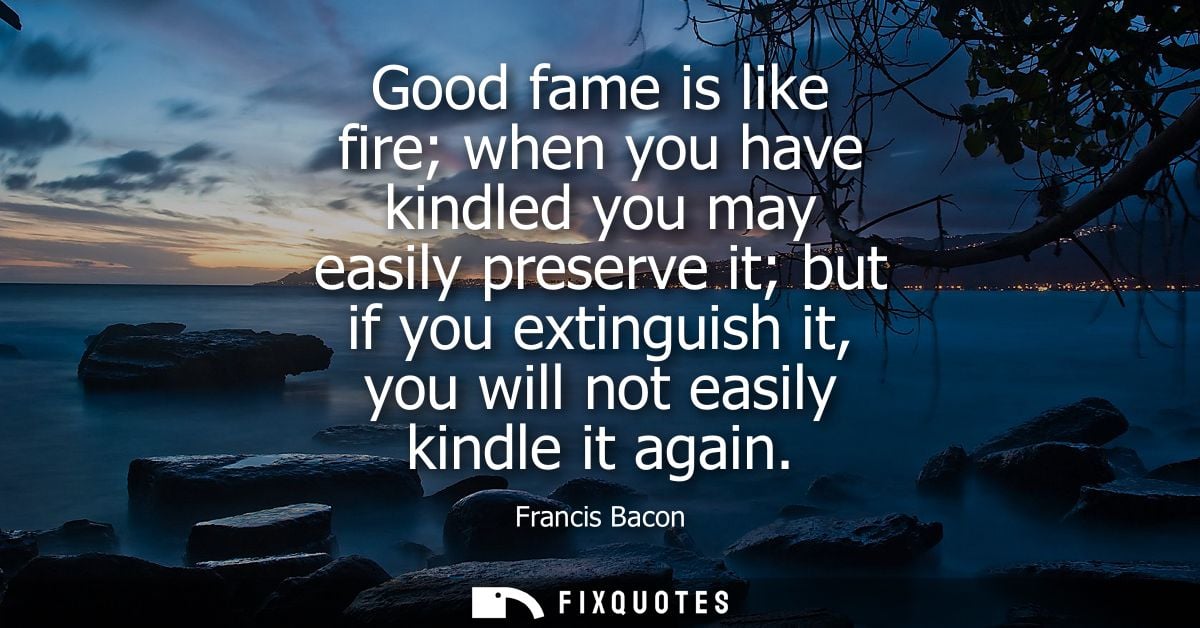
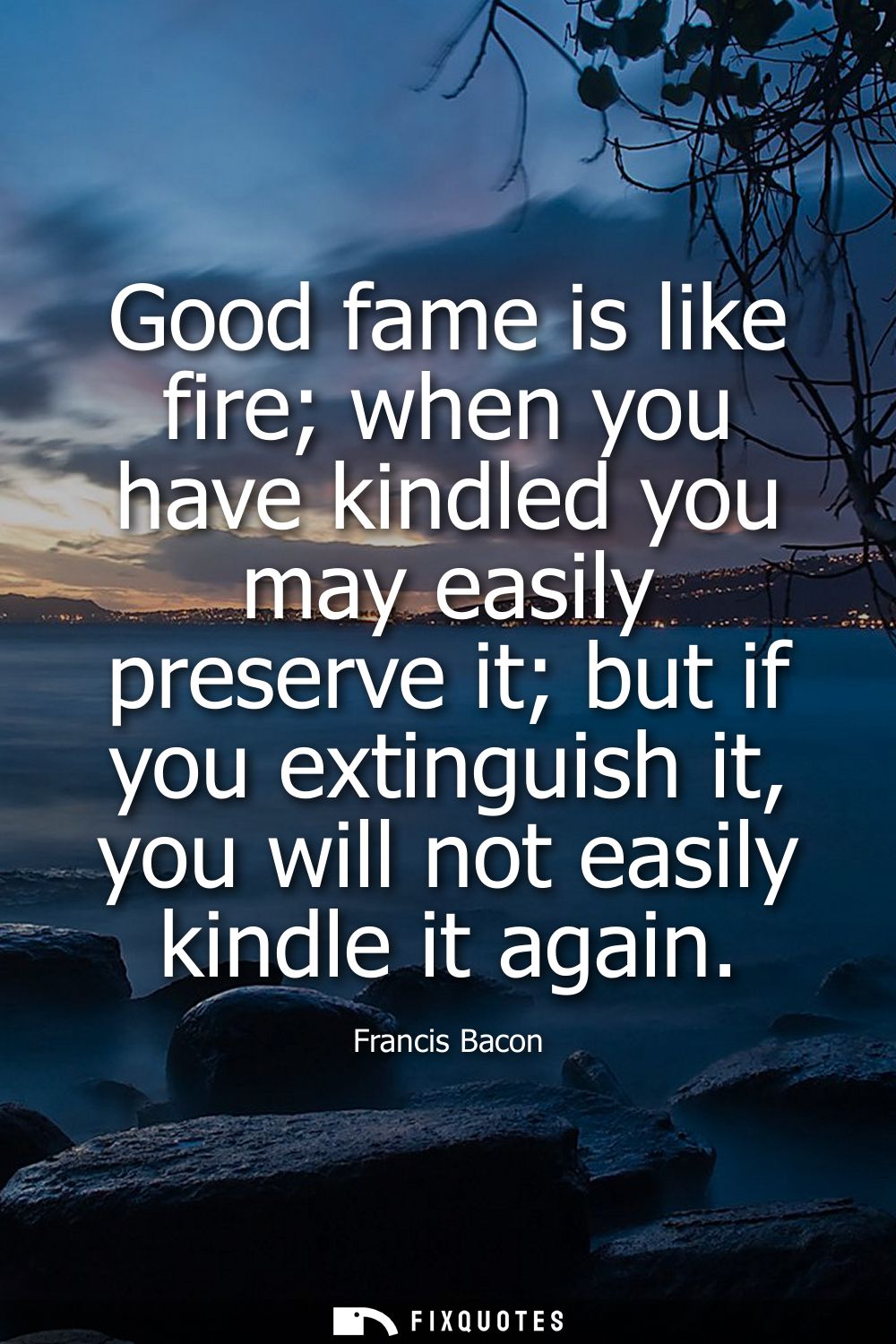
"Good fame is like fire; when you have kindled, you may easily preserve it; but if you extinguish it, you will not easily kindle it again"
About this Quote
Bacon’s intent is practical, almost managerial. Once your public character is “kindled” through consistent performance, alliances, and a few well-timed successes, it can be “easily preserved” with routine maintenance. That’s the cynical edge: fame isn’t portrayed as fragile virtue but as an ongoing burn you feed. The subtext is that reputation is less about who you are than what others can reliably expect from you. Keep giving them the expected signal and the flame holds.
Then comes the threat: extinguishment. Bacon doesn’t say “dim” or “flicker.” He’s warning that scandal, betrayal, or even one conspicuous failure can erase the accumulated narrative. And once the fire is out, relighting requires friction: time, proof, and other people’s willingness to risk being wrong about you.
Context sharpens the counsel. Bacon served in the machinery of power and later fell spectacularly for corruption. Read with that biographical irony, the line becomes both advice and elegy: he understood, too late, that institutions forgive mistakes more readily than they forgive a ruined story.
Quote Details
| Topic | Wisdom |
|---|---|
| Source | Help us find the source |
| Cite |
Citation Formats
APA Style (7th ed.)
Bacon, Francis. (2026, February 19). Good fame is like fire; when you have kindled, you may easily preserve it; but if you extinguish it, you will not easily kindle it again. FixQuotes. https://fixquotes.com/quotes/good-fame-is-like-fire-when-you-have-kindled-you-35969/
Chicago Style
Bacon, Francis. "Good fame is like fire; when you have kindled, you may easily preserve it; but if you extinguish it, you will not easily kindle it again." FixQuotes. February 19, 2026. https://fixquotes.com/quotes/good-fame-is-like-fire-when-you-have-kindled-you-35969/.
MLA Style (9th ed.)
"Good fame is like fire; when you have kindled, you may easily preserve it; but if you extinguish it, you will not easily kindle it again." FixQuotes, 19 Feb. 2026, https://fixquotes.com/quotes/good-fame-is-like-fire-when-you-have-kindled-you-35969/. Accessed 21 Mar. 2026.