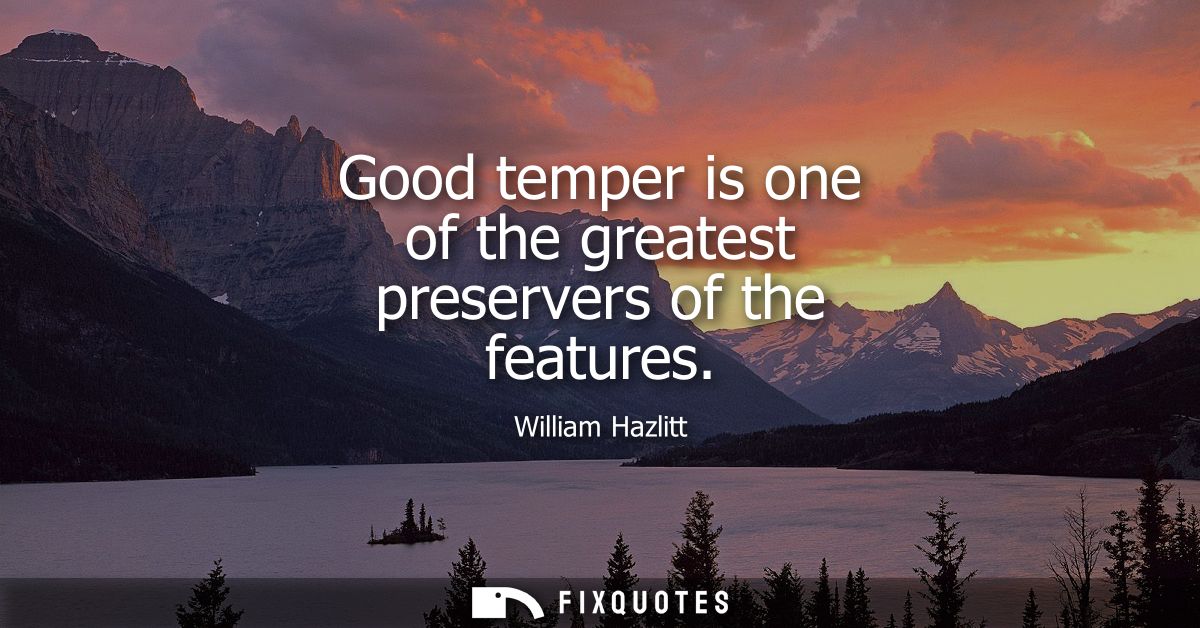
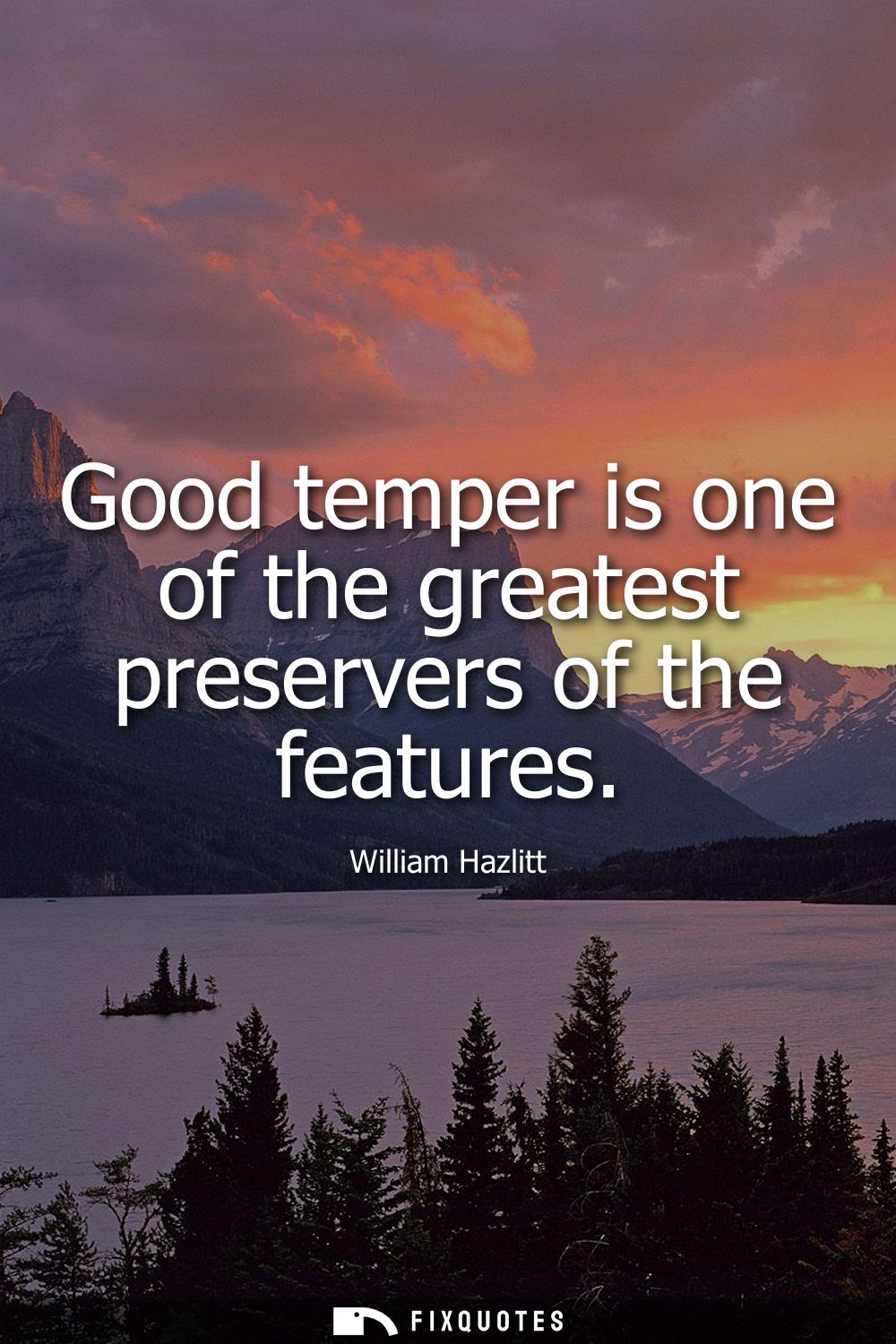
"Good temper is one of the greatest preservers of the features"
About this Quote
Hazlitt slides a vanity fact into a moral argument, and it lands because it flatters while it scolds. "Good temper" sounds like a small, domestic virtue, the kind you can practice without sermons or heroics. Then he makes it anatomical: your mood doesn’t just color your day; it edits your face. The line turns character into skincare, implying that temperament is written over time in the tiny grooves of expression - a frown rehearsed into permanence, a sneer calcified, a softness maintained by habit.
The specific intent is disciplinary, but shrewdly indirect. Hazlitt isn’t praising cheerfulness as a personality type; he’s pitching self-command. In an era obsessed with physiognomy and the legibility of character, "features" weren’t merely looks but social readability - the face as a résumé. Good temper becomes a kind of long-term reputational management: the person who can absorb irritation without broadcasting it keeps not only their beauty but their credibility.
The subtext is also a critique of corrosive intellect. Hazlitt, a critic by trade and a polemicist by instinct, knew how righteous irritation can become a lifestyle. He’s warning his own class - the opinionated, the perpetually offended, the professionally judgmental - that constant contempt has a cost. Not just moral rot, but visible wear.
Contextually, it’s a Romantic-era countermove against melodramatic feeling. Hazlitt champions passion in art, but in life he’s oddly pragmatic: keep your temper, or your temper will keep you - in the mirror, and in the eyes of everyone else.
The specific intent is disciplinary, but shrewdly indirect. Hazlitt isn’t praising cheerfulness as a personality type; he’s pitching self-command. In an era obsessed with physiognomy and the legibility of character, "features" weren’t merely looks but social readability - the face as a résumé. Good temper becomes a kind of long-term reputational management: the person who can absorb irritation without broadcasting it keeps not only their beauty but their credibility.
The subtext is also a critique of corrosive intellect. Hazlitt, a critic by trade and a polemicist by instinct, knew how righteous irritation can become a lifestyle. He’s warning his own class - the opinionated, the perpetually offended, the professionally judgmental - that constant contempt has a cost. Not just moral rot, but visible wear.
Contextually, it’s a Romantic-era countermove against melodramatic feeling. Hazlitt champions passion in art, but in life he’s oddly pragmatic: keep your temper, or your temper will keep you - in the mirror, and in the eyes of everyone else.
Quote Details
| Topic | Happiness |
|---|---|
| Source | Help us find the source |
| Cite |
Citation Formats
APA Style (7th ed.)
Hazlitt, William. (2026, January 17). Good temper is one of the greatest preservers of the features. FixQuotes. https://fixquotes.com/quotes/good-temper-is-one-of-the-greatest-preservers-of-78913/
Chicago Style
Hazlitt, William. "Good temper is one of the greatest preservers of the features." FixQuotes. January 17, 2026. https://fixquotes.com/quotes/good-temper-is-one-of-the-greatest-preservers-of-78913/.
MLA Style (9th ed.)
"Good temper is one of the greatest preservers of the features." FixQuotes, 17 Jan. 2026, https://fixquotes.com/quotes/good-temper-is-one-of-the-greatest-preservers-of-78913/. Accessed 22 Mar. 2026.
More Quotes by William
Add to List