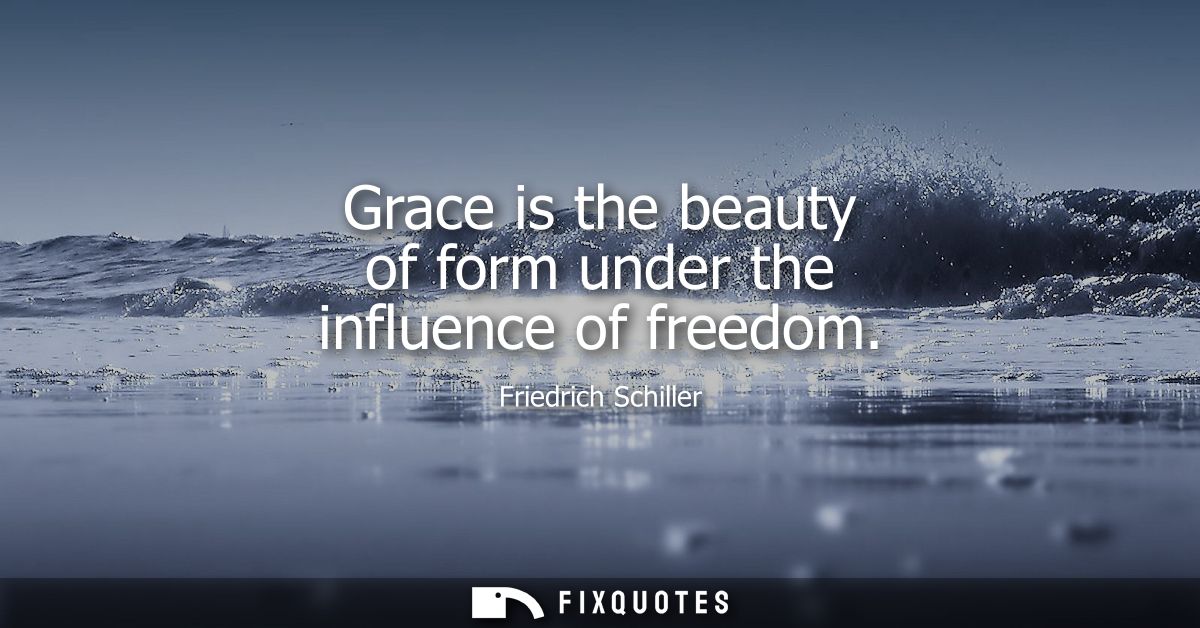
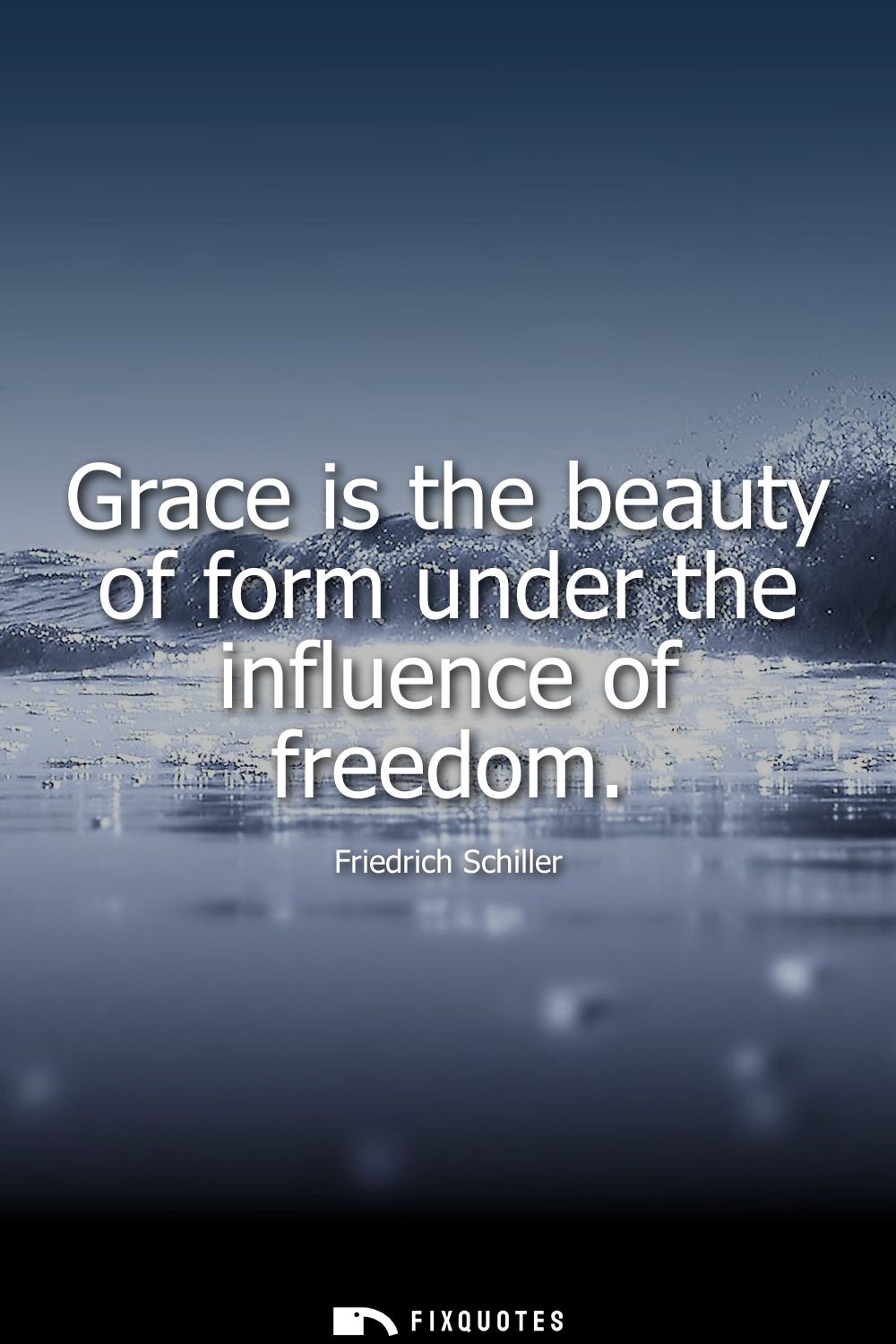
"Grace is the beauty of form under the influence of freedom"
About this Quote
Schiller’s line is a trapdoor under the polite word “grace.” He refuses to treat it as mere prettiness, or even as a natural gift. Grace, for him, is form made livelier by liberty: structure that doesn’t feel like a cage because it’s being chosen, not endured. The phrase “under the influence” is doing quiet work. It suggests freedom as a kind of atmosphere or intoxicant, something that seeps into behavior and makes discipline look effortless. Grace isn’t the absence of rules; it’s rules transformed into style.
That’s a very Schiller move in the late Enlightenment, when German thinkers were trying to solve a problem the French Revolution made unavoidable: how do you reconcile moral autonomy with social order without sliding into either chaos or coercion? As a dramatist and aesthetic theorist, Schiller treats the body as the stage where politics and ethics become visible. A gesture can reveal whether a person is merely trained (obedient, stiff, “correct”) or self-governing (fluid, expressive, at ease).
The subtext is a critique of anything that mimics virtue through pressure: court etiquette, militarized discipline, even moral behavior performed out of fear. Grace is the tell. When freedom is real, form stops announcing itself as form. It becomes beauty precisely because it looks like it could have been otherwise.
That’s a very Schiller move in the late Enlightenment, when German thinkers were trying to solve a problem the French Revolution made unavoidable: how do you reconcile moral autonomy with social order without sliding into either chaos or coercion? As a dramatist and aesthetic theorist, Schiller treats the body as the stage where politics and ethics become visible. A gesture can reveal whether a person is merely trained (obedient, stiff, “correct”) or self-governing (fluid, expressive, at ease).
The subtext is a critique of anything that mimics virtue through pressure: court etiquette, militarized discipline, even moral behavior performed out of fear. Grace is the tell. When freedom is real, form stops announcing itself as form. It becomes beauty precisely because it looks like it could have been otherwise.
Quote Details
| Topic | Art |
|---|---|
| Source | Help us find the source |
| Cite |
Citation Formats
APA Style (7th ed.)
Schiller, Friedrich. (2026, January 16). Grace is the beauty of form under the influence of freedom. FixQuotes. https://fixquotes.com/quotes/grace-is-the-beauty-of-form-under-the-influence-128465/
Chicago Style
Schiller, Friedrich. "Grace is the beauty of form under the influence of freedom." FixQuotes. January 16, 2026. https://fixquotes.com/quotes/grace-is-the-beauty-of-form-under-the-influence-128465/.
MLA Style (9th ed.)
"Grace is the beauty of form under the influence of freedom." FixQuotes, 16 Jan. 2026, https://fixquotes.com/quotes/grace-is-the-beauty-of-form-under-the-influence-128465/. Accessed 28 Mar. 2026.
More Quotes by Friedrich
Add to List