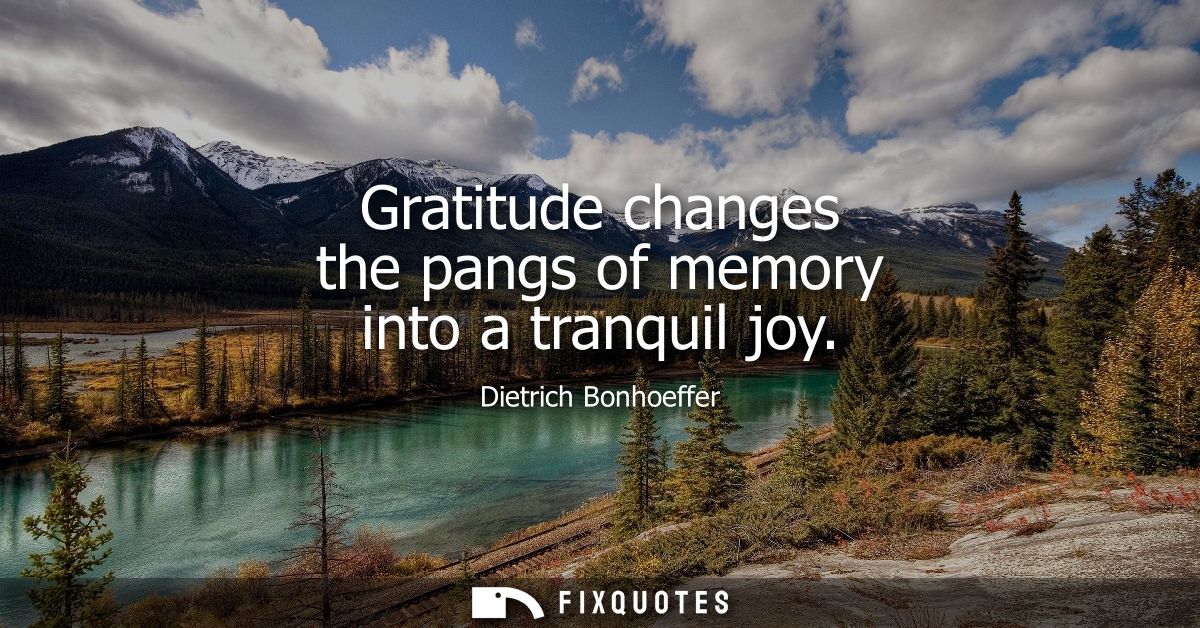
"Gratitude changes the pangs of memory into a tranquil joy"
About this Quote
Bonhoeffer doesn’t offer gratitude as a Hallmark mood boost; he frames it as a disciplined way of handling pain that refuses to go away. “Pangs of memory” is a muscular phrase: memory is not nostalgic, it’s bodily, invasive, something that stabs. The line’s quiet ambition is to suggest that the past can’t be edited, but it can be metabolized. Gratitude, here, isn’t amnesia. It’s a reorientation that keeps the wound visible while changing what the wound does to you.
The subtext is theological without being sentimental. Bonhoeffer, writing out of a Christianity tested under Nazism and, eventually, imprisonment, treats the inner life as a battleground where despair is not just a feeling but a moral and spiritual threat. “Tranquil joy” isn’t giddy happiness; it’s steadiness, the kind of calm that has to be practiced under pressure. The verb “changes” matters: gratitude is active, almost alchemical. It implies work, repetition, and a choice against the default drift of bitterness.
Context sharpens the stakes. Bonhoeffer’s world was full of reasons to let memory curdle into accusation or paralysis. By insisting that gratitude can transfigure recollection, he suggests a form of resistance: reclaiming one’s interior narrative from the tyrannies of regret and terror. The line functions like a small liturgy for survival, proposing that joy is not the reward for a painless life but the product of moral attention to what remains, even when what remains hurts.
The subtext is theological without being sentimental. Bonhoeffer, writing out of a Christianity tested under Nazism and, eventually, imprisonment, treats the inner life as a battleground where despair is not just a feeling but a moral and spiritual threat. “Tranquil joy” isn’t giddy happiness; it’s steadiness, the kind of calm that has to be practiced under pressure. The verb “changes” matters: gratitude is active, almost alchemical. It implies work, repetition, and a choice against the default drift of bitterness.
Context sharpens the stakes. Bonhoeffer’s world was full of reasons to let memory curdle into accusation or paralysis. By insisting that gratitude can transfigure recollection, he suggests a form of resistance: reclaiming one’s interior narrative from the tyrannies of regret and terror. The line functions like a small liturgy for survival, proposing that joy is not the reward for a painless life but the product of moral attention to what remains, even when what remains hurts.
Quote Details
| Topic | Gratitude |
|---|
More Quotes by Dietrich
Add to List