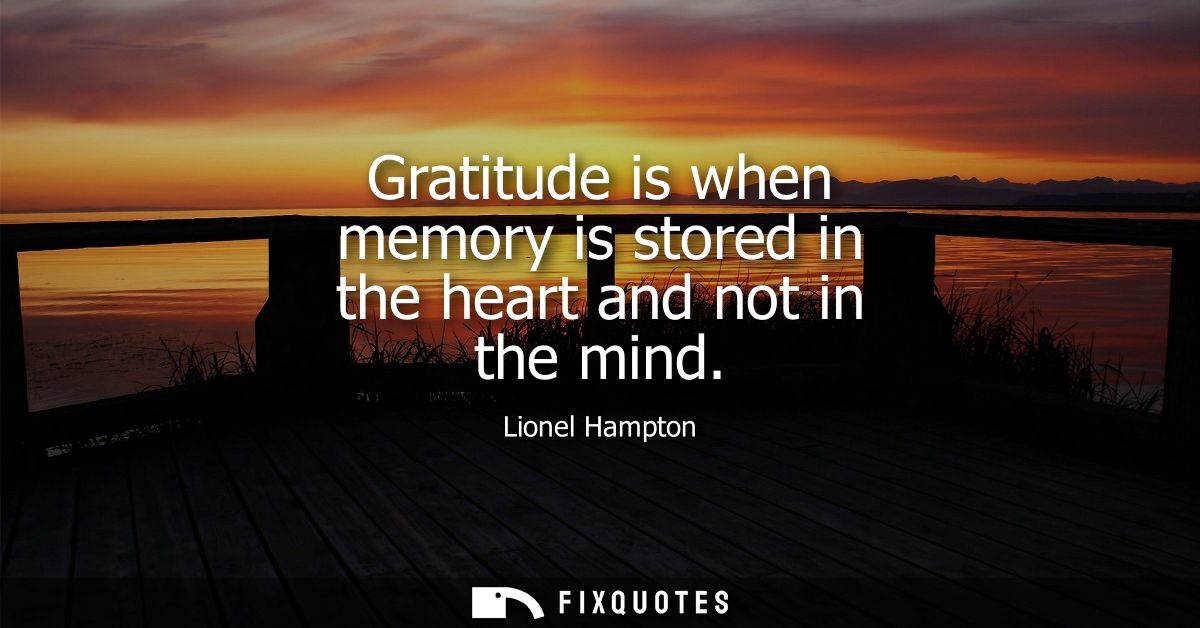
"Gratitude is when memory is stored in the heart and not in the mind"
About this Quote
Gratitude, for Lionel Hampton, isn’t a neat mental filing system. It’s a rhythm you carry. By pushing memory out of the “mind” and into the “heart,” he’s drawing a line between recollection as data and recollection as devotion. The mind catalogs: names, dates, favors owed. The heart keeps tempo: the feeling of being lifted, taught, welcomed, saved. Hampton’s phrasing suggests that real gratitude isn’t transactional or even strictly conscious; it’s embodied, lived out in how you move through the world after someone has changed your sound.
Coming from a jazz musician, the distinction lands with extra punch. Jazz is built on memory, but not the museum kind. Players internalize standards, riffs, and lessons so deeply they stop thinking and start responding. “Stored in the heart” reads like that muscle-memory state where influence becomes instinct. You don’t quote your mentors to show you remember them; you honor them by letting their gifts shape your improvisation.
There’s subtext here about humility and class, too. Hampton came up in a scene where credit is slippery and genius often gets narrated as individual myth. He reframes the story: what matters is not the brag of recall but the ethics of acknowledgment. The line also resists a colder, more managerial idea of gratitude as obligation. Heart-memory isn’t a ledger; it’s a pulse. If you’re truly grateful, you don’t just remember what happened. You become someone who can’t help but pass it on.
Coming from a jazz musician, the distinction lands with extra punch. Jazz is built on memory, but not the museum kind. Players internalize standards, riffs, and lessons so deeply they stop thinking and start responding. “Stored in the heart” reads like that muscle-memory state where influence becomes instinct. You don’t quote your mentors to show you remember them; you honor them by letting their gifts shape your improvisation.
There’s subtext here about humility and class, too. Hampton came up in a scene where credit is slippery and genius often gets narrated as individual myth. He reframes the story: what matters is not the brag of recall but the ethics of acknowledgment. The line also resists a colder, more managerial idea of gratitude as obligation. Heart-memory isn’t a ledger; it’s a pulse. If you’re truly grateful, you don’t just remember what happened. You become someone who can’t help but pass it on.
Quote Details
| Topic | Gratitude |
|---|---|
| Source | Help us find the source |
More Quotes by Lionel
Add to List