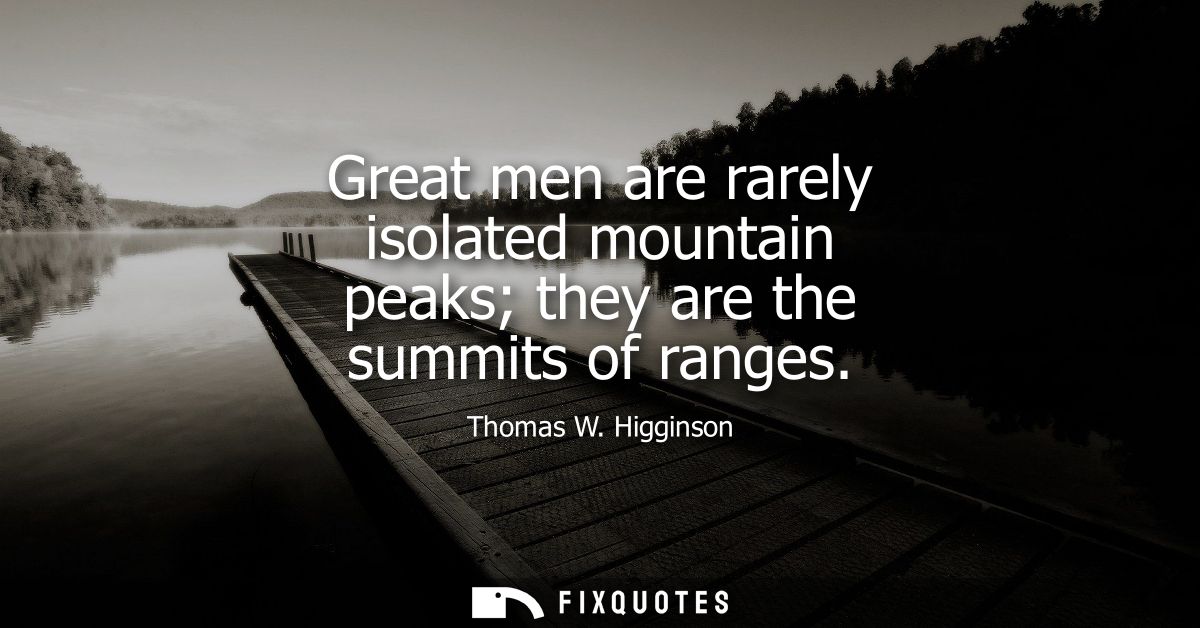
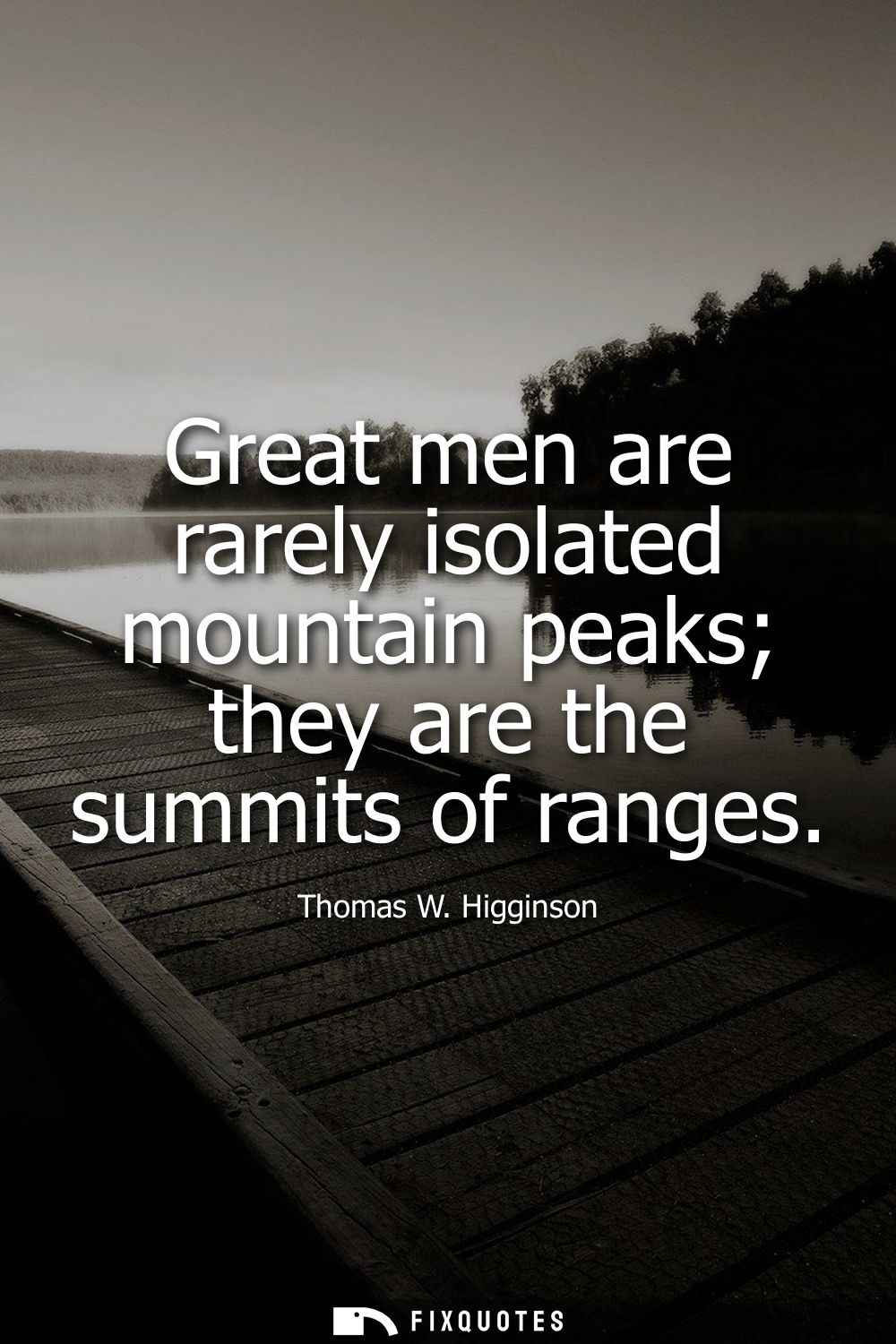
"Great men are rarely isolated mountain peaks; they are the summits of ranges"
About this Quote
That metaphor carries pointed intent from a 19th-century clergyman steeped in moral argument and reform politics. Higginson moved in abolitionist and transcendentalist circles, where social change depended less on singular heroes than on networks of lectures, newspapers, churches, committees, and risk-taking ordinary people. In that context, “great men” reads like a familiar Victorian category, but the sentence quietly sabotages hero worship. If greatness is a geography, not a miracle, then our attention shifts from celebrating icons to cultivating conditions.
The subtext is almost managerial: stop waiting for saviors. If you want a summit, you build a range. That’s a rebuke to institutions that prefer inspiring biographies to uncomfortable histories of collective struggle. It’s also a warning to the “great man” himself: your altitude is contingent. You stand on sediment laid down by others, and the same tectonic forces can raise new summits after you.
What makes the quote work is its compression. One visual swap turns charisma into ecology, fame into infrastructure. In an era that loved monumental individuals, Higginson offers a more unsettling consolation: greatness isn’t rare; recognition is.
Quote Details
| Topic | Leadership |
|---|---|
| Source | Help us find the source |
| Cite |
Citation Formats
APA Style (7th ed.)
Higginson, Thomas W. (2026, January 14). Great men are rarely isolated mountain peaks; they are the summits of ranges. FixQuotes. https://fixquotes.com/quotes/great-men-are-rarely-isolated-mountain-peaks-they-137315/
Chicago Style
Higginson, Thomas W. "Great men are rarely isolated mountain peaks; they are the summits of ranges." FixQuotes. January 14, 2026. https://fixquotes.com/quotes/great-men-are-rarely-isolated-mountain-peaks-they-137315/.
MLA Style (9th ed.)
"Great men are rarely isolated mountain peaks; they are the summits of ranges." FixQuotes, 14 Jan. 2026, https://fixquotes.com/quotes/great-men-are-rarely-isolated-mountain-peaks-they-137315/. Accessed 19 Feb. 2026.