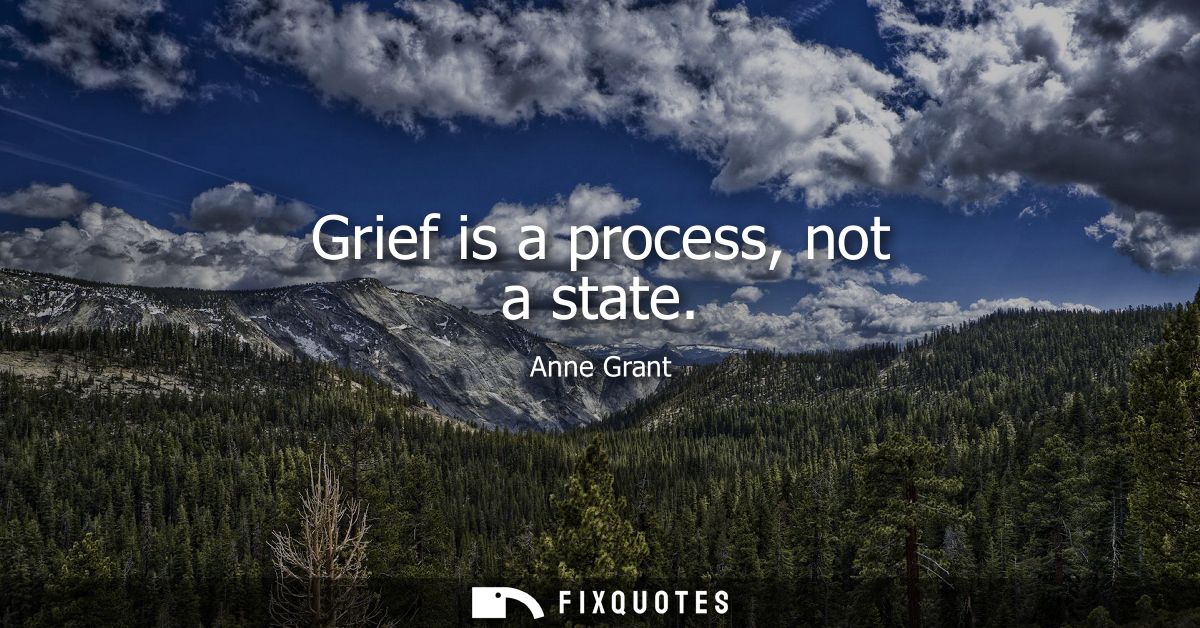
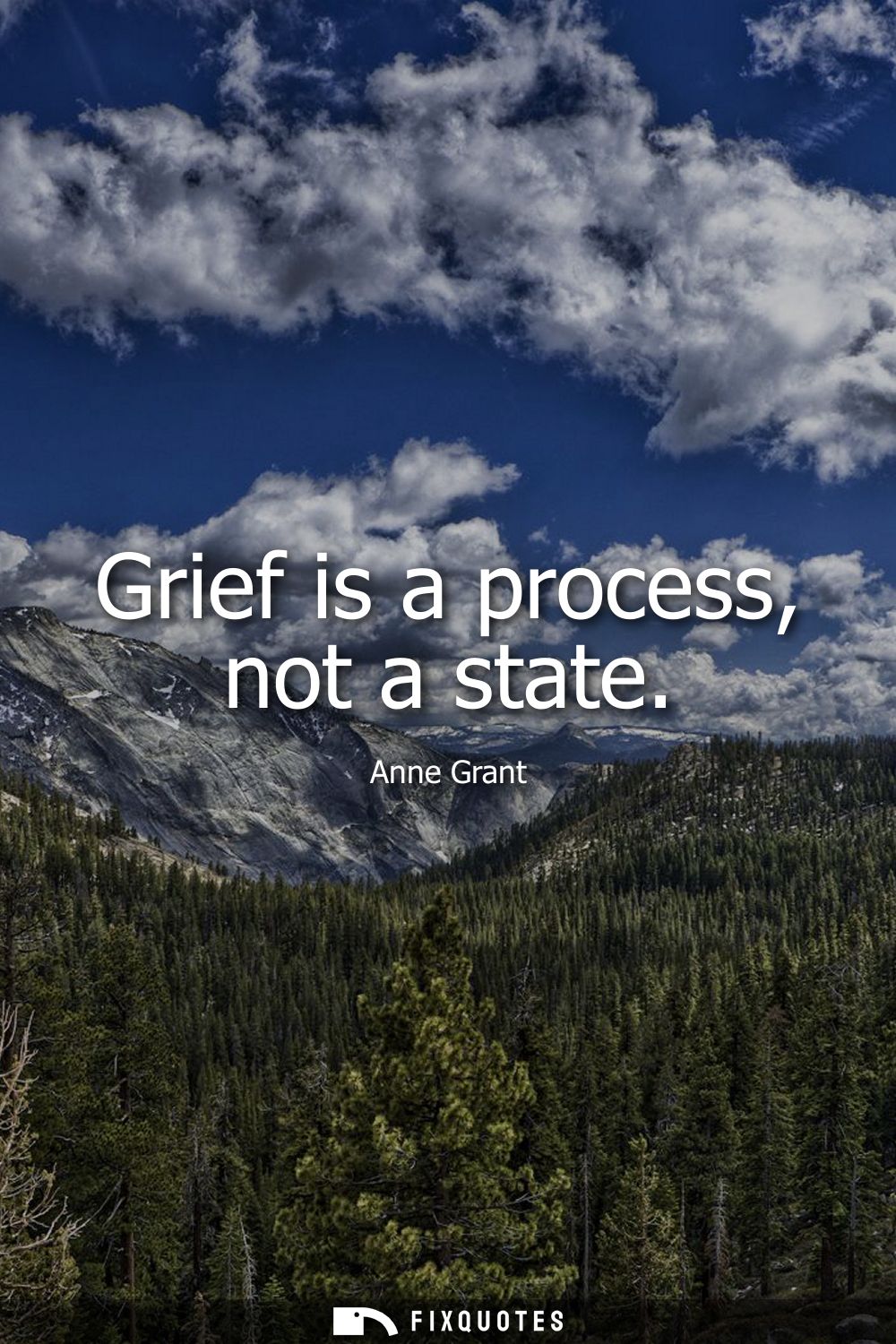
"Grief is a process, not a state"
About this Quote
“Grief is a process, not a state” refuses the easy consolation of either stoicism or melodrama. Anne Grant, writing in an era when death was omnipresent and mourning was both private anguish and public code, strips grief of its costume. In the late 18th and early 19th centuries, bereavement came with rules: prescribed intervals, black clothes, sanctioned displays of sorrow. Calling grief a “state” would flatter that system - a fixed condition you enter, inhabit, then dutifully exit. Grant’s line quietly sabotages that idea.
“Process” is the provocative word. It suggests movement, labor, repetition, and time that refuses neat scheduling. A process can stall, loop, and restart; it doesn’t care about social etiquette or the calendar. The subtext is permission: you aren’t failing if you’re inconsistent, if you laugh and then collapse, if you “should be over it” and aren’t. In a culture that often moralized emotion - praising restraint, pathologizing excess - the line makes grief less a character flaw and more a lived, unfolding experience.
It also carries a poet’s tactical clarity. “State” sounds like identity, something that defines you. “Process” reframes grief as something happening to you and through you. That shift matters: it makes room for agency without demanding mastery. Grant isn’t promising closure; she’s arguing for motion. The intent feels almost modern because it resists the sentimental narrative that mourning is a single chapter. It’s closer to weather than a verdict: changeable, recurring, real.
“Process” is the provocative word. It suggests movement, labor, repetition, and time that refuses neat scheduling. A process can stall, loop, and restart; it doesn’t care about social etiquette or the calendar. The subtext is permission: you aren’t failing if you’re inconsistent, if you laugh and then collapse, if you “should be over it” and aren’t. In a culture that often moralized emotion - praising restraint, pathologizing excess - the line makes grief less a character flaw and more a lived, unfolding experience.
It also carries a poet’s tactical clarity. “State” sounds like identity, something that defines you. “Process” reframes grief as something happening to you and through you. That shift matters: it makes room for agency without demanding mastery. Grant isn’t promising closure; she’s arguing for motion. The intent feels almost modern because it resists the sentimental narrative that mourning is a single chapter. It’s closer to weather than a verdict: changeable, recurring, real.
Quote Details
| Topic | Sadness |
|---|---|
| Source | Help us find the source |
| Cite |
Citation Formats
APA Style (7th ed.)
Grant, Anne. (2026, January 15). Grief is a process, not a state. FixQuotes. https://fixquotes.com/quotes/grief-is-a-process-not-a-state-39573/
Chicago Style
Grant, Anne. "Grief is a process, not a state." FixQuotes. January 15, 2026. https://fixquotes.com/quotes/grief-is-a-process-not-a-state-39573/.
MLA Style (9th ed.)
"Grief is a process, not a state." FixQuotes, 15 Jan. 2026, https://fixquotes.com/quotes/grief-is-a-process-not-a-state-39573/. Accessed 29 Mar. 2026.
More Quotes by Anne
Add to List