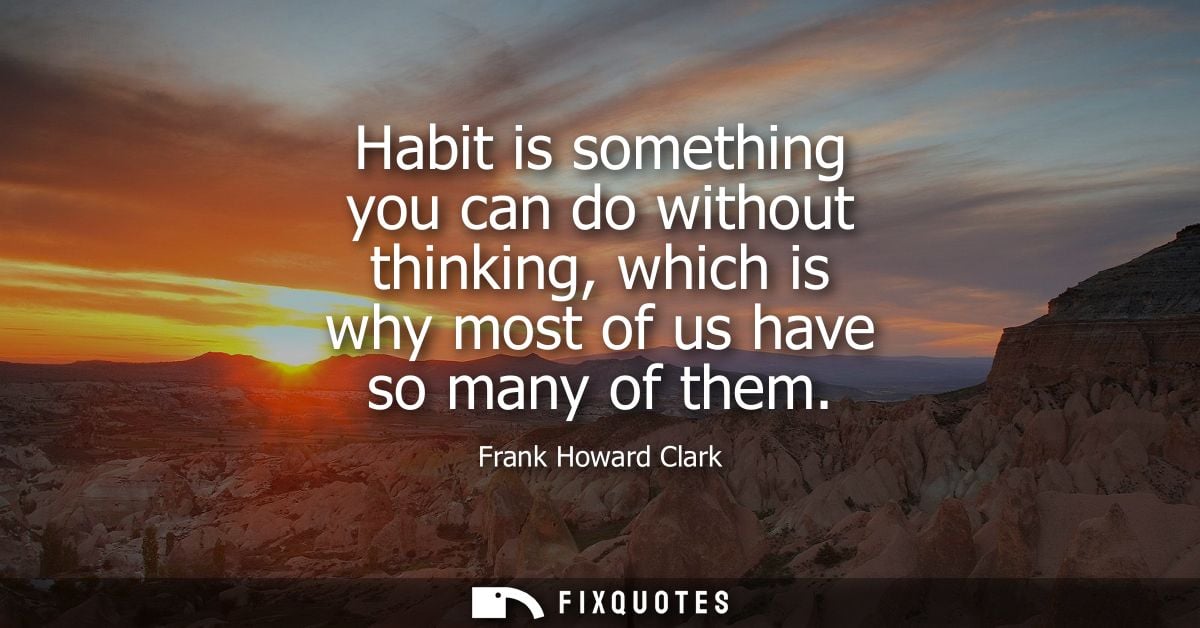
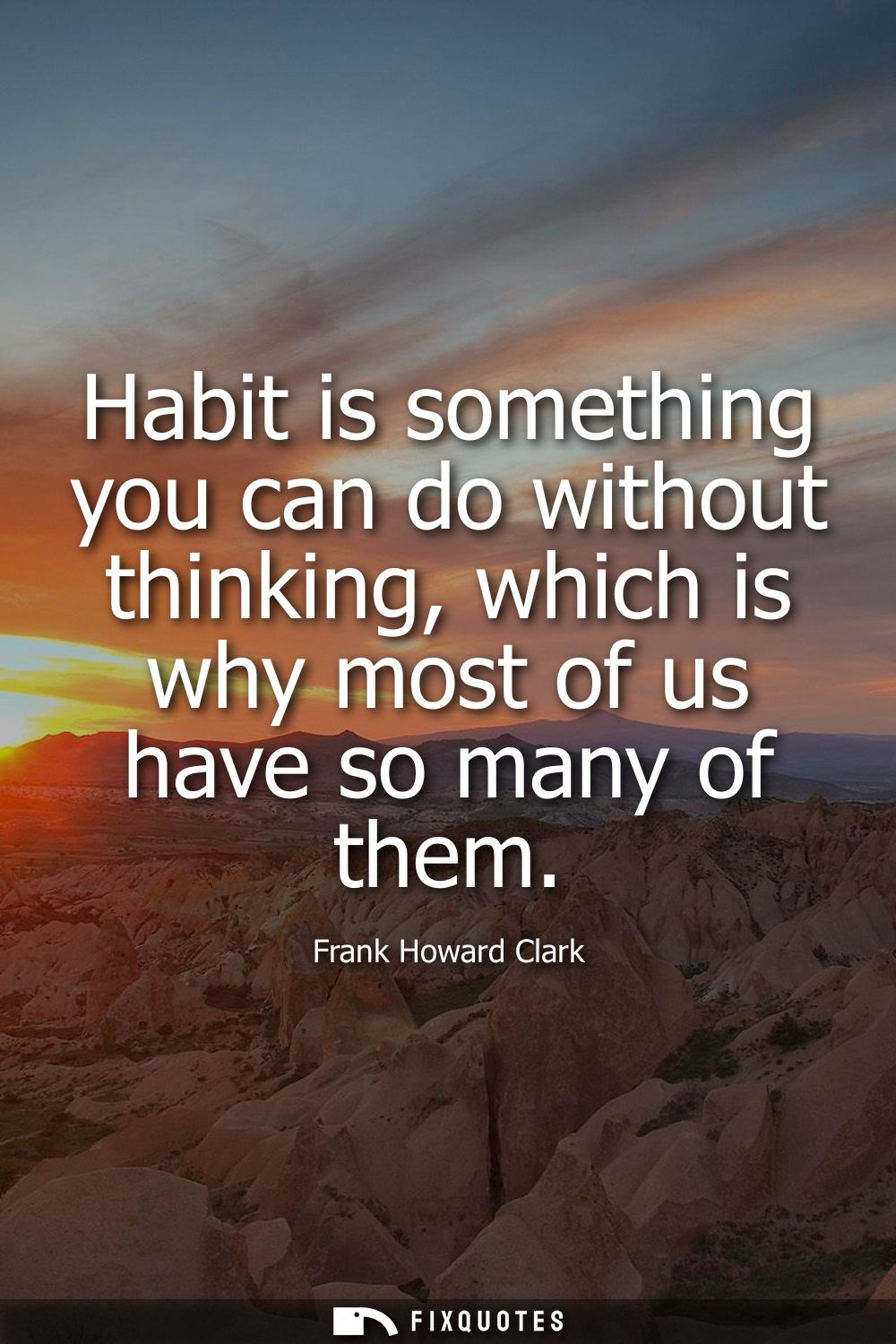
"Habit is something you can do without thinking, which is why most of us have so many of them"
About this Quote
The subtext is less self-help than social critique. In a culture that flatters willpower and “mindset,” Clark points to the unglamorous truth that much of daily life is run by default settings: the same commute, the same coping mechanisms, the same small indulgences that become a personality through repetition. The line’s sly pessimism is that habit accrues faster than intention. You don’t build them one by one like achievements; you collect them like dust.
As a writerly quip, it works by compressing a psychological insight into a reversal. We expect a tribute to habit as virtue (the grit narrative), then get an indictment of mental laziness. The humor is in the soft accusation: “most of us” widens the target so nobody feels singled out, but everyone recognizes themselves. Clark’s intent isn’t to shame; it’s to wake the reader up to the hidden economy of attention. If habit is what you do without thinking, the real scarce resource isn’t time - it’s consciousness.
Quote Details
| Topic | Habits |
|---|---|
| Source | Help us find the source |
| Cite |
Citation Formats
APA Style (7th ed.)
Clark, Frank Howard. (2026, January 17). Habit is something you can do without thinking, which is why most of us have so many of them. FixQuotes. https://fixquotes.com/quotes/habit-is-something-you-can-do-without-thinking-58393/
Chicago Style
Clark, Frank Howard. "Habit is something you can do without thinking, which is why most of us have so many of them." FixQuotes. January 17, 2026. https://fixquotes.com/quotes/habit-is-something-you-can-do-without-thinking-58393/.
MLA Style (9th ed.)
"Habit is something you can do without thinking, which is why most of us have so many of them." FixQuotes, 17 Jan. 2026, https://fixquotes.com/quotes/habit-is-something-you-can-do-without-thinking-58393/. Accessed 5 Mar. 2026.