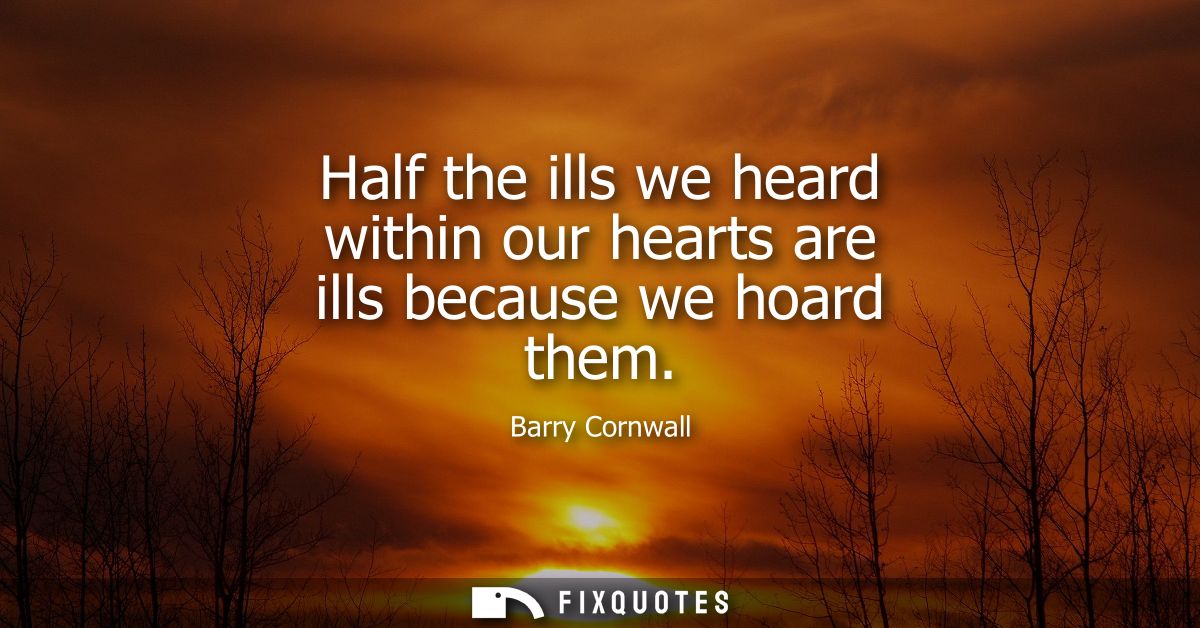
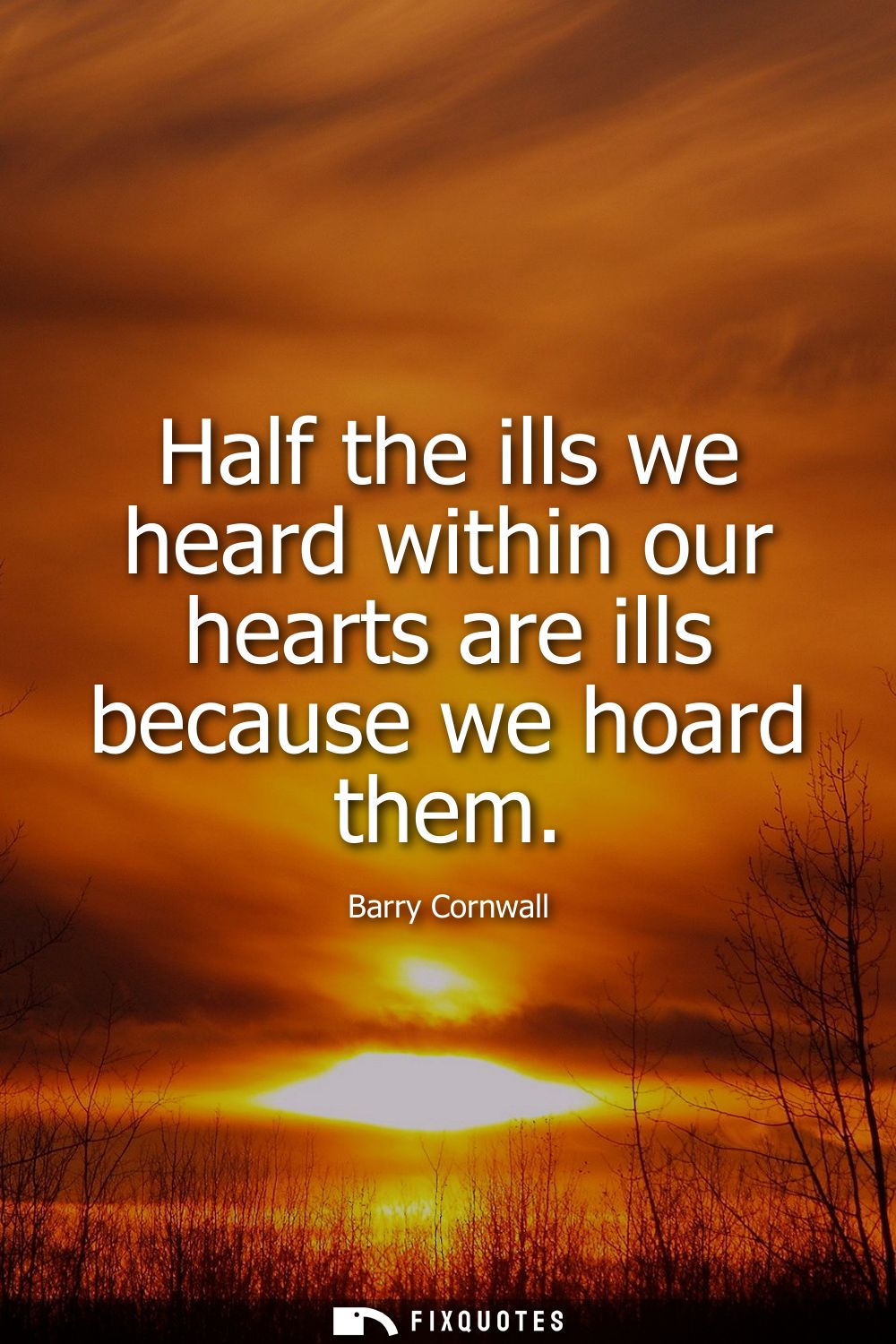
"Half the ills we heard within our hearts are ills because we hoard them"
About this Quote
The key verb is "hoard". Cornwall borrows the language of property and greed to describe emotional secrecy. Hoarding is not simply keeping; it is clutching, stockpiling, refusing circulation. In the 19th-century moral imagination, hoarding was a social sin as much as a personal one: wealth locked away instead of put to use. Apply that ethic to feeling, and the subtext sharpens. Grief, fear, resentment can become a kind of dark treasure, proof that we have been wronged, evidence we are deep, armor against disappointment. If you "hoard" it, you also protect it from being challenged, softened, or shared.
Cornwall wrote in a period that prized restraint and decorum, especially in public life. The line reads like a pressure valve: a gentle rebuke to stoic silence, but also a warning about the romance of melancholia. It works because it refuses self-pity; it admits the ache while insisting we are complicit in its persistence.
Quote Details
| Topic | Letting Go |
|---|---|
| Source | Help us find the source |
| Cite |
Citation Formats
APA Style (7th ed.)
Cornwall, Barry. (2026, January 15). Half the ills we heard within our hearts are ills because we hoard them. FixQuotes. https://fixquotes.com/quotes/half-the-ills-we-heard-within-our-hearts-are-ills-129966/
Chicago Style
Cornwall, Barry. "Half the ills we heard within our hearts are ills because we hoard them." FixQuotes. January 15, 2026. https://fixquotes.com/quotes/half-the-ills-we-heard-within-our-hearts-are-ills-129966/.
MLA Style (9th ed.)
"Half the ills we heard within our hearts are ills because we hoard them." FixQuotes, 15 Jan. 2026, https://fixquotes.com/quotes/half-the-ills-we-heard-within-our-hearts-are-ills-129966/. Accessed 5 Apr. 2026.