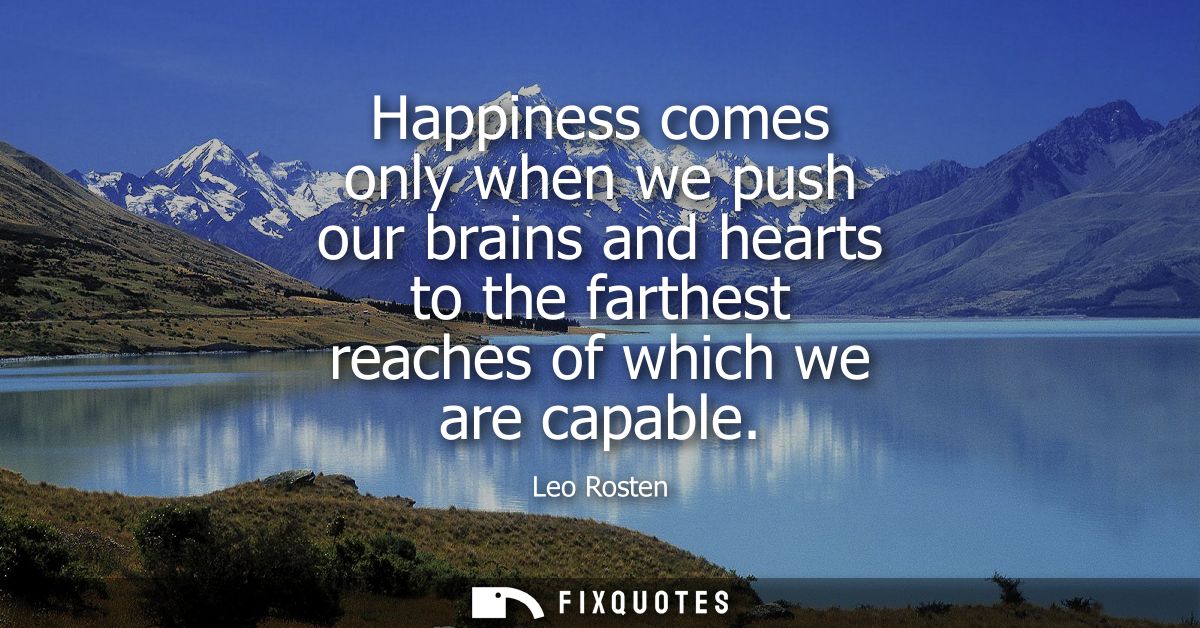
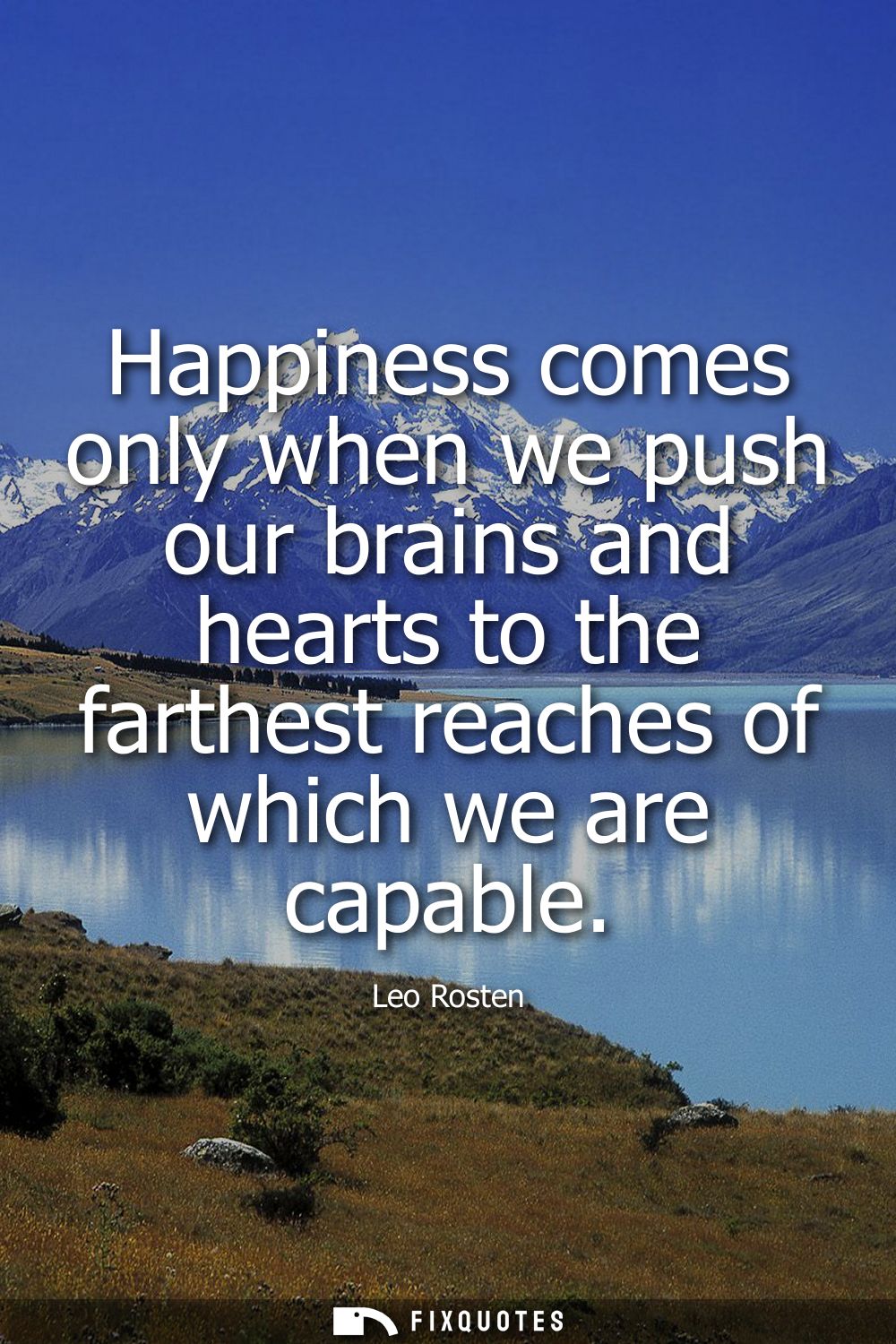
"Happiness comes only when we push our brains and hearts to the farthest reaches of which we are capable"
About this Quote
The subtext is distinctly mid-century American: fulfillment as self-actualization, not mere stability. Rosten wrote in an era when education, psychology, and upward mobility were selling a new secular promise: you can author your own meaning, but you have to do the authoring. “Farthest reaches” borrows the language of frontiers and exploration, turning inner life into a kind of personal expansionism. It’s inspiring, but it’s also a little ruthless. If happiness is only available at your limits, then ordinary days start to look like failure.
That tension is the quote’s engine. It elevates effort into virtue while smuggling in an anxiety: you might be living beneath your capacity. Rosten’s intent isn’t to describe happiness so much as to recruit you into a certain idea of a life worth having - one defined by disciplined aspiration, emotional risk, and the willingness to be stretched.
Quote Details
| Topic | Happiness |
|---|---|
| Source | Help us find the source |
| Cite |
Citation Formats
APA Style (7th ed.)
Rosten, Leo. (2026, January 16). Happiness comes only when we push our brains and hearts to the farthest reaches of which we are capable. FixQuotes. https://fixquotes.com/quotes/happiness-comes-only-when-we-push-our-brains-and-127107/
Chicago Style
Rosten, Leo. "Happiness comes only when we push our brains and hearts to the farthest reaches of which we are capable." FixQuotes. January 16, 2026. https://fixquotes.com/quotes/happiness-comes-only-when-we-push-our-brains-and-127107/.
MLA Style (9th ed.)
"Happiness comes only when we push our brains and hearts to the farthest reaches of which we are capable." FixQuotes, 16 Jan. 2026, https://fixquotes.com/quotes/happiness-comes-only-when-we-push-our-brains-and-127107/. Accessed 12 Feb. 2026.