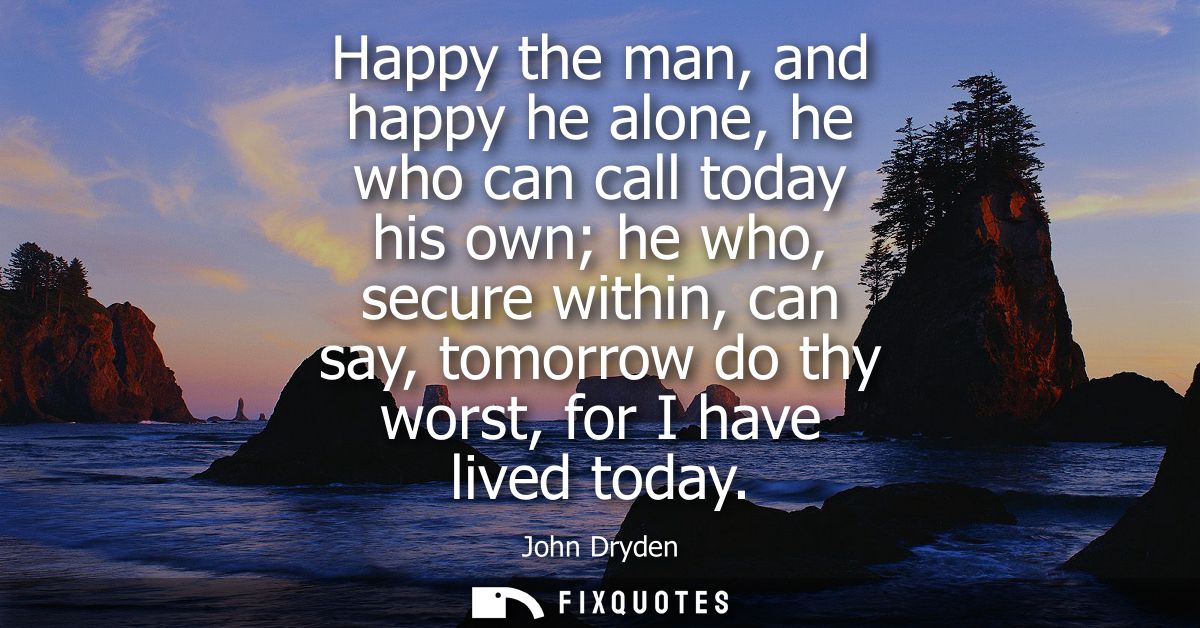
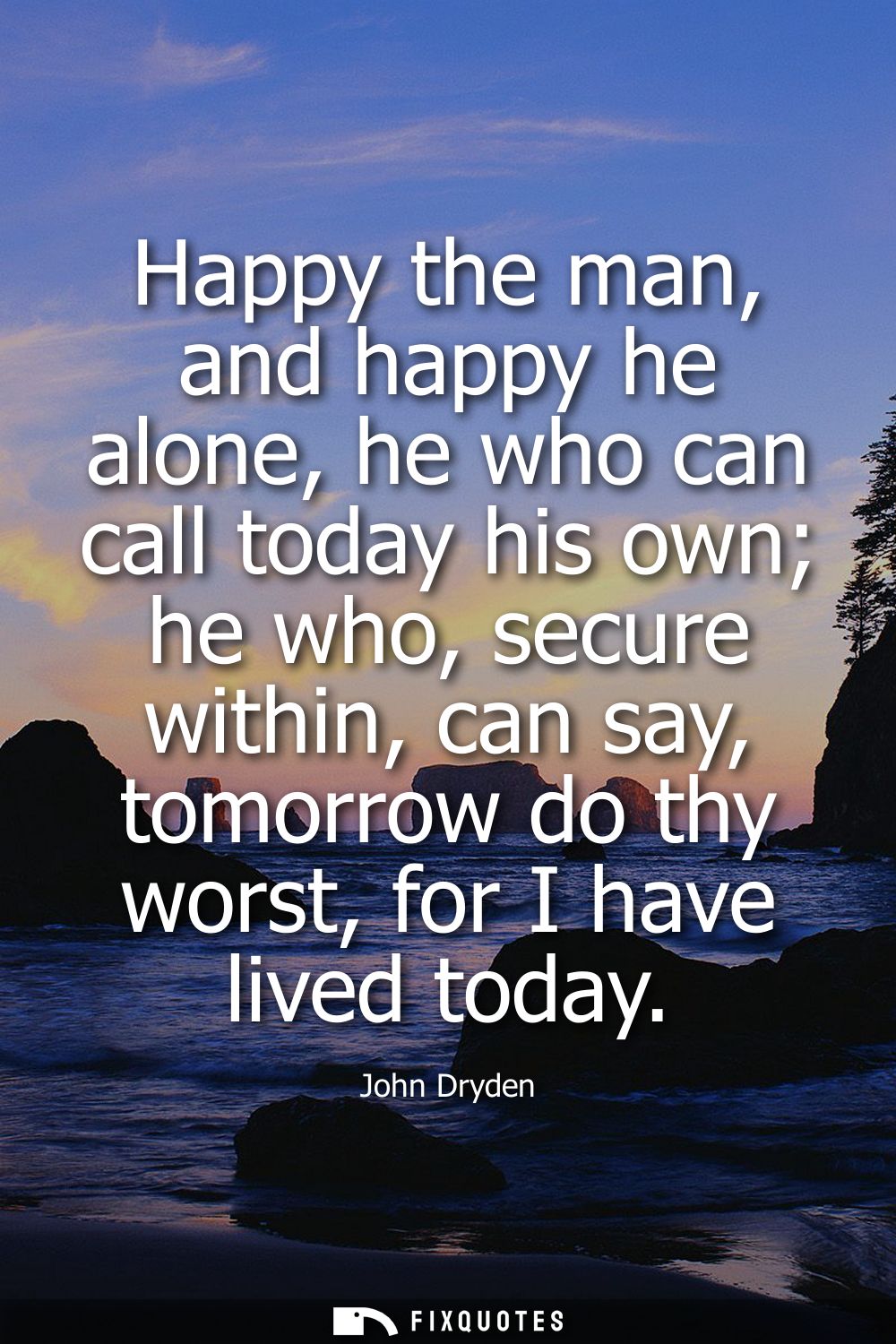
"Happy the man, and happy he alone, he who can call today his own; he who, secure within, can say, tomorrow, do thy worst, for I have lived today"
About this Quote
The bravura of “tomorrow do thy worst” carries the swagger of Restoration confidence, but it’s also a defensive charm against a century that trained writers to expect reversals. Dryden lived through civil war’s aftermath, a monarchy restored, then replaced again; he watched reputations rise and collapse on political tides, including his own. In that context, “today” becomes the only reliable property. Everything else - favor, office, status - is leased from history.
What makes the quote work is its careful trade: it concedes tomorrow’s power while refusing tomorrow’s dominion. The speaker doesn’t deny catastrophe; he denies catastrophe’s ability to retroactively poison a well-lived day. It’s a stoic move without stoic dryness: a compact of defiance and gratitude. Dryden is selling a paradox that feels earned, not inspirational: the future is uncontrollable, so build a self that can’t be repossessed.
Quote Details
| Topic | Live in the Moment |
|---|---|
| Source | John Dryden, "Alexander's Feast; or, The Power of Music" (1697), stanza including the lines beginning "Happy the man, and happy he alone...for I have lived today." |
| Cite |
Citation Formats
APA Style (7th ed.)
Dryden, John. (2026, February 18). Happy the man, and happy he alone, he who can call today his own; he who, secure within, can say, tomorrow, do thy worst, for I have lived today. FixQuotes. https://fixquotes.com/quotes/happy-the-man-and-happy-he-alone-he-who-can-call-68030/
Chicago Style
Dryden, John. "Happy the man, and happy he alone, he who can call today his own; he who, secure within, can say, tomorrow, do thy worst, for I have lived today." FixQuotes. February 18, 2026. https://fixquotes.com/quotes/happy-the-man-and-happy-he-alone-he-who-can-call-68030/.
MLA Style (9th ed.)
"Happy the man, and happy he alone, he who can call today his own; he who, secure within, can say, tomorrow, do thy worst, for I have lived today." FixQuotes, 18 Feb. 2026, https://fixquotes.com/quotes/happy-the-man-and-happy-he-alone-he-who-can-call-68030/. Accessed 6 Apr. 2026.