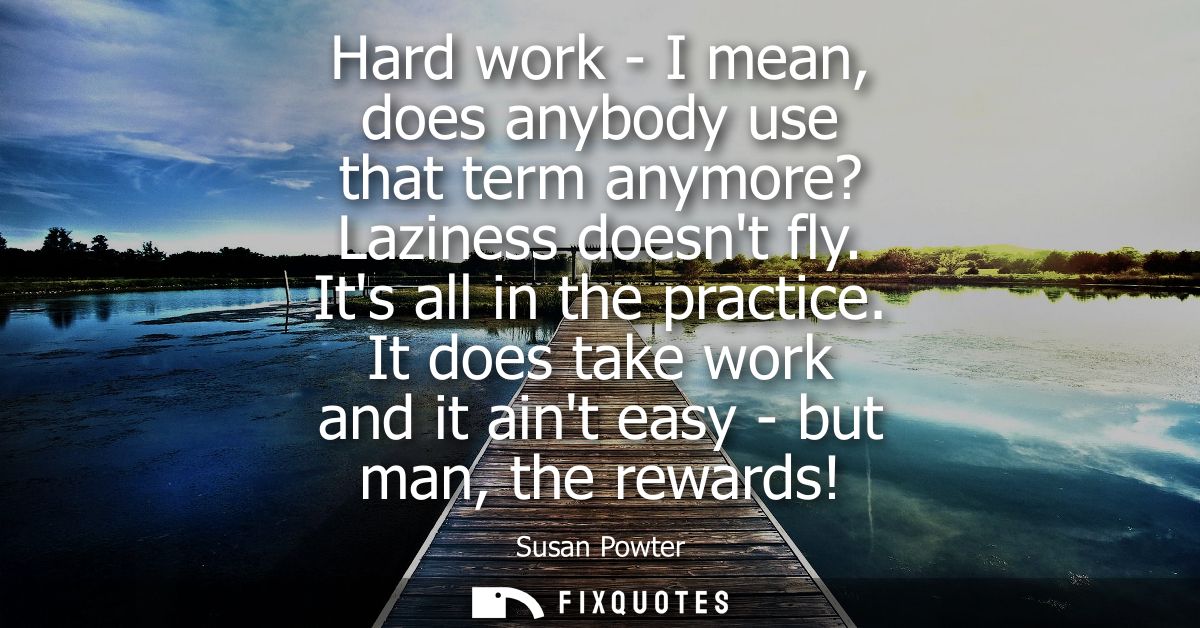
"Hard work - I mean, does anybody use that term anymore? Laziness doesn't fly. It's all in the practice. It does take work and it ain't easy - but man, the rewards!"
About this Quote
Hard work gets framed here as both old-fashioned and nonnegotiable, and that tension is the engine of Susan Powter's voice. The opening aside - "does anybody use that term anymore?" - is a knowing wink at a culture that prefers hacks, shortcuts, and the optics of effortlessness. She’s not merely scolding; she’s pointing out a linguistic shift. When a society stops saying "hard work", it often starts selling substitutes: hustle aesthetics, wellness branding, motivational content that flatters you without asking anything of you.
"Laziness doesn't fly" lands like a bumper-sticker verdict, but the subtext is more specific: there are bodies, careers, and lives that simply don’t respond to vibes. Powter came up in an era when fitness culture was becoming mass entertainment, and her persona traded in bluntness as a kind of empowerment. That matters: she’s speaking to people who’ve been marketed miracles, then blamed when miracles fail. "It’s all in the practice" reframes discipline as repetition, not heroism. Practice is democratic; it suggests you don’t need the perfect genetics, the perfect schedule, the perfect personality. You need the boring part.
"It ain't easy - but man, the rewards!" is the emotional payoff she’s insisting we stop being embarrassed to want. Not virtue for virtue’s sake, but results: strength, competence, self-trust. The quote works because it refuses both extremes - the cruel moralism of grind culture and the cozy fantasy that change happens without friction. Powter’s pitch is sweaty, yes, but also oddly compassionate: your effort counts, and that’s the point.
"Laziness doesn't fly" lands like a bumper-sticker verdict, but the subtext is more specific: there are bodies, careers, and lives that simply don’t respond to vibes. Powter came up in an era when fitness culture was becoming mass entertainment, and her persona traded in bluntness as a kind of empowerment. That matters: she’s speaking to people who’ve been marketed miracles, then blamed when miracles fail. "It’s all in the practice" reframes discipline as repetition, not heroism. Practice is democratic; it suggests you don’t need the perfect genetics, the perfect schedule, the perfect personality. You need the boring part.
"It ain't easy - but man, the rewards!" is the emotional payoff she’s insisting we stop being embarrassed to want. Not virtue for virtue’s sake, but results: strength, competence, self-trust. The quote works because it refuses both extremes - the cruel moralism of grind culture and the cozy fantasy that change happens without friction. Powter’s pitch is sweaty, yes, but also oddly compassionate: your effort counts, and that’s the point.
Quote Details
| Topic | Work Ethic |
|---|
More Quotes by Susan
Add to List