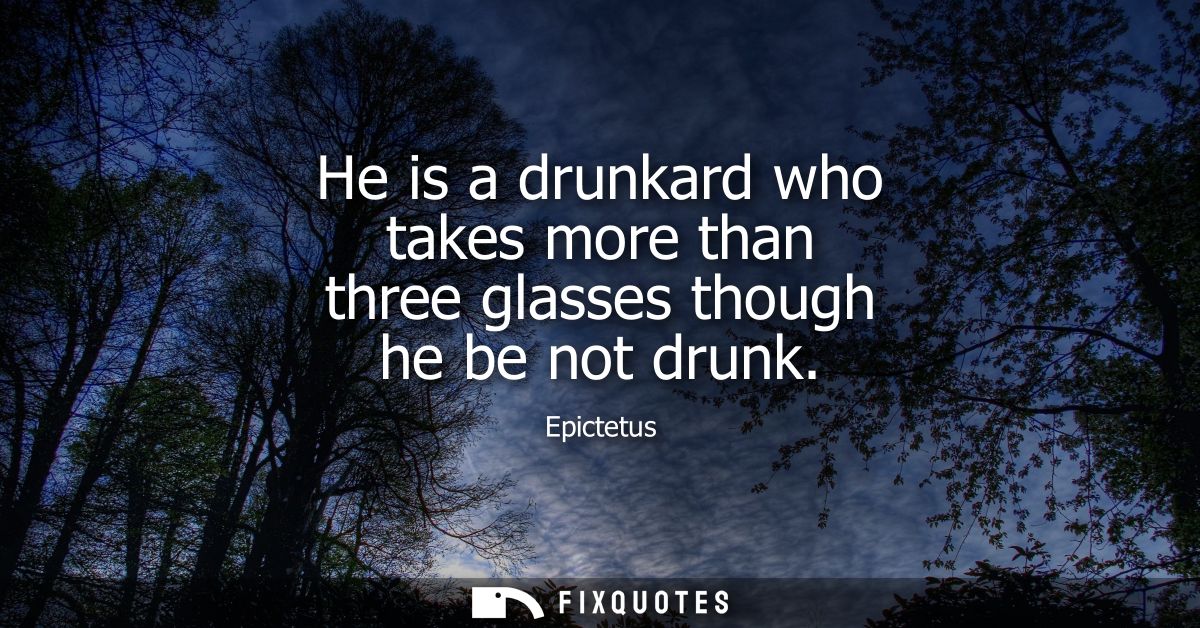
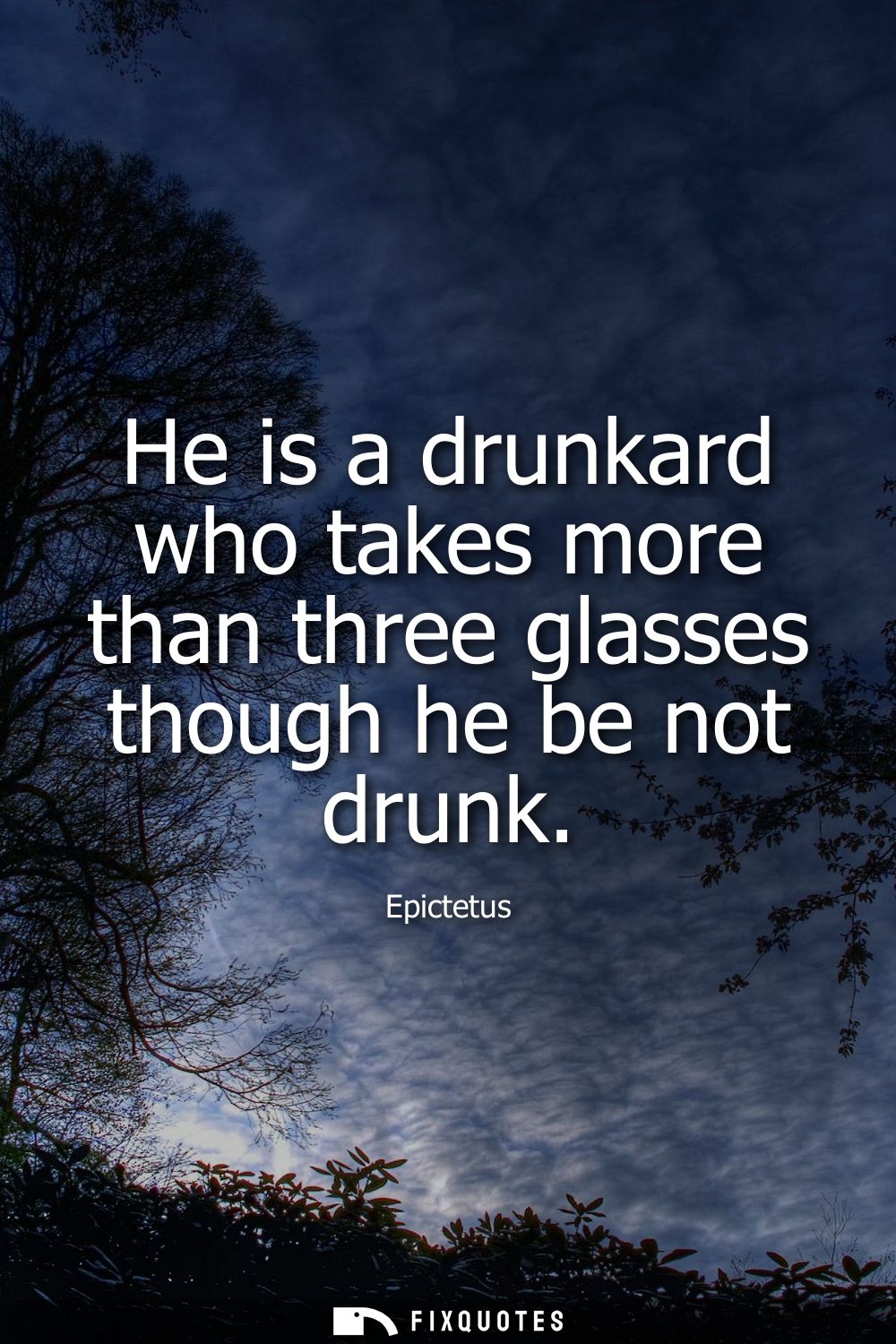
"He is a drunkard who takes more than three glasses, though he be not drunk"
About this Quote
Epictetus isn’t trying to measure blood alcohol content; he’s drawing a moral boundary before the body forces the issue. The line weaponizes a neat Stoic inversion: you don’t become a “drunkard” when you stagger or slur, you become one the moment you choose excess. “Though he be not drunk” punctures the favorite defense of the self-indulgent rational mind: I’m fine, I’m in control, I can stop whenever I want. Epictetus hears that and calls it a category error. The vice is in the voluntary overreach, not the visible symptoms.
The “three glasses” detail matters. It’s not medical advice; it’s a practical threshold, an anchor for people who love to negotiate with themselves. Stoicism is big on precommitment because desire is a slippery lawyer. A fixed limit cuts off the internal debate where appetite always finds new precedent. You can almost see the Roman dinner party behind it: wine flowing, status performed through appetite, the polite culture of “just one more.” Epictetus, an ex-slave turned teacher, treats that scene as a training ground for freedom. If you can’t say no when it’s still easy, you won’t be able to say no when it’s hard.
The subtext is social as much as personal. “Drunkard” is a moral identity label, not a hangover diagnosis. He’s warning that reputations, habits, and character are built on small permissions. Stoic discipline starts where excuses begin.
The “three glasses” detail matters. It’s not medical advice; it’s a practical threshold, an anchor for people who love to negotiate with themselves. Stoicism is big on precommitment because desire is a slippery lawyer. A fixed limit cuts off the internal debate where appetite always finds new precedent. You can almost see the Roman dinner party behind it: wine flowing, status performed through appetite, the polite culture of “just one more.” Epictetus, an ex-slave turned teacher, treats that scene as a training ground for freedom. If you can’t say no when it’s still easy, you won’t be able to say no when it’s hard.
The subtext is social as much as personal. “Drunkard” is a moral identity label, not a hangover diagnosis. He’s warning that reputations, habits, and character are built on small permissions. Stoic discipline starts where excuses begin.
Quote Details
| Topic | Self-Discipline |
|---|---|
| Source | Help us find the source |
| Cite |
Citation Formats
APA Style (7th ed.)
Epictetus. (2026, February 20). He is a drunkard who takes more than three glasses, though he be not drunk. FixQuotes. https://fixquotes.com/quotes/he-is-a-drunkard-who-takes-more-than-three-27186/
Chicago Style
Epictetus. "He is a drunkard who takes more than three glasses, though he be not drunk." FixQuotes. February 20, 2026. https://fixquotes.com/quotes/he-is-a-drunkard-who-takes-more-than-three-27186/.
MLA Style (9th ed.)
"He is a drunkard who takes more than three glasses, though he be not drunk." FixQuotes, 20 Feb. 2026, https://fixquotes.com/quotes/he-is-a-drunkard-who-takes-more-than-three-27186/. Accessed 25 Mar. 2026.
More Quotes by Epictetus
Add to List