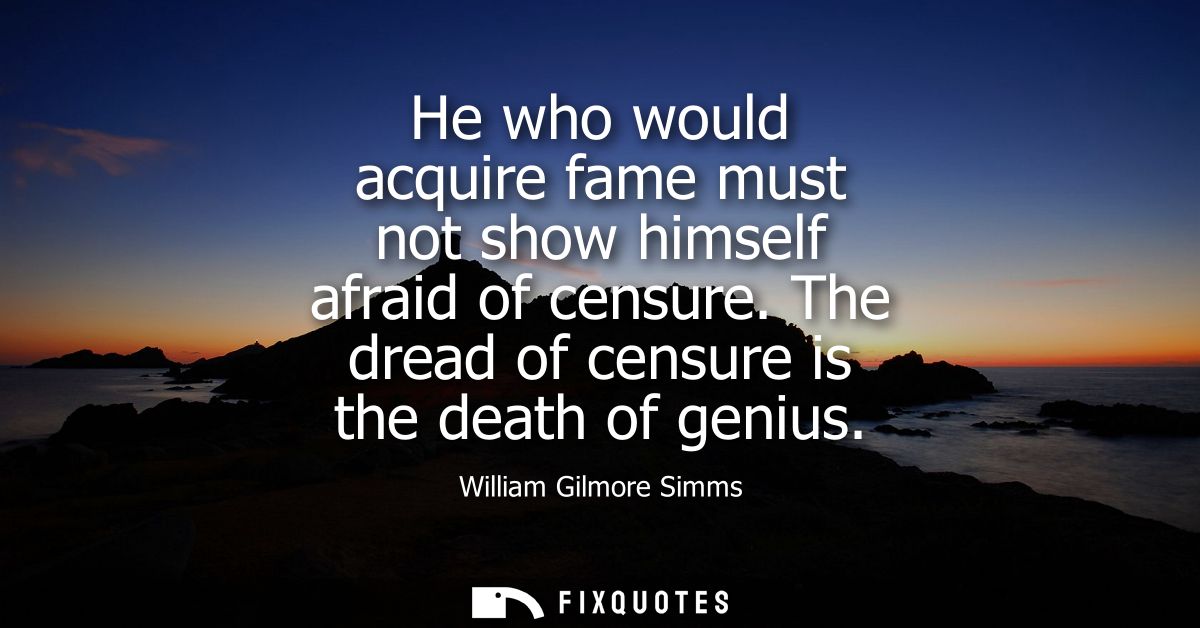
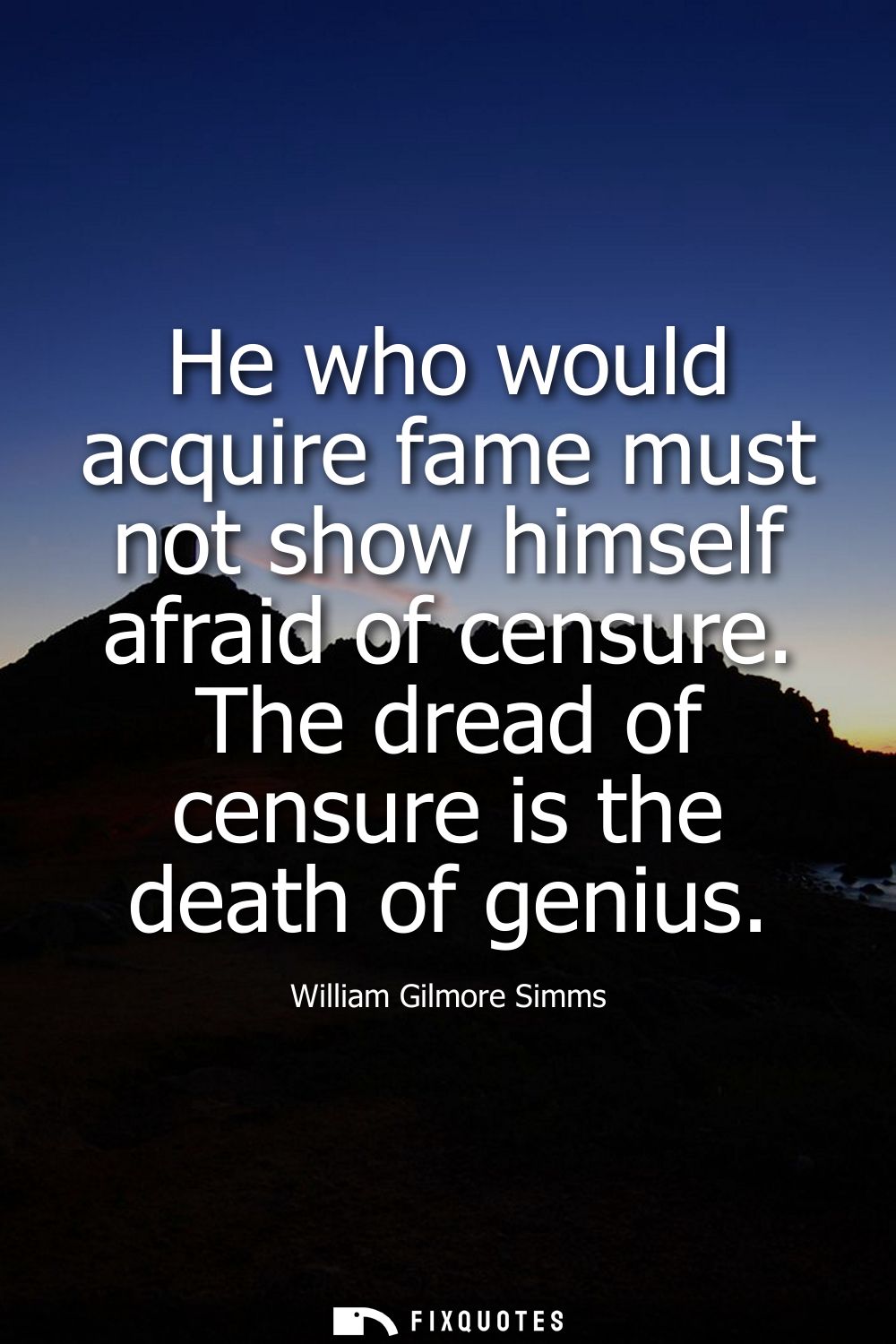
"He who would acquire fame must not show himself afraid of censure. The dread of censure is the death of genius"
About this Quote
Simms’s subtext is bluntly psychological. “Dread” is the villain, not criticism itself. Censure can even be useful; dread is what turns an artist into their own censor, trimming edges, sanding down strangeness, pre-answering the worst comments before they arrive. That anticipatory obedience is what he calls “the death of genius” - genius here meaning not mystical talent but the capacity to take imaginative risks without constantly checking the room for approval.
Context sharpens the stakes. Simms was a prominent Southern novelist and public intellectual in a 19th-century literary marketplace where reputations were built through reviews, lectures, and partisan periodicals - a culture of praise-and-punish not unlike today’s attention economy, just slower and inkier. For writers outside the dominant Northern centers, censure could be both aesthetic (you’re provincial) and political (you’re suspect). Simms turns that precariousness into a credo: the only way to write your way into public memory is to stop writing as if the public were a jury.
It’s advice with a barb. He’s not romanticizing suffering; he’s warning that the most efficient way to destroy original work is to fear the scolding it will earn.
Quote Details
| Topic | Motivational |
|---|---|
| Source | Help us find the source |
| Cite |
Citation Formats
APA Style (7th ed.)
Simms, William Gilmore. (2026, January 15). He who would acquire fame must not show himself afraid of censure. The dread of censure is the death of genius. FixQuotes. https://fixquotes.com/quotes/he-who-would-acquire-fame-must-not-show-himself-148300/
Chicago Style
Simms, William Gilmore. "He who would acquire fame must not show himself afraid of censure. The dread of censure is the death of genius." FixQuotes. January 15, 2026. https://fixquotes.com/quotes/he-who-would-acquire-fame-must-not-show-himself-148300/.
MLA Style (9th ed.)
"He who would acquire fame must not show himself afraid of censure. The dread of censure is the death of genius." FixQuotes, 15 Jan. 2026, https://fixquotes.com/quotes/he-who-would-acquire-fame-must-not-show-himself-148300/. Accessed 13 Feb. 2026.