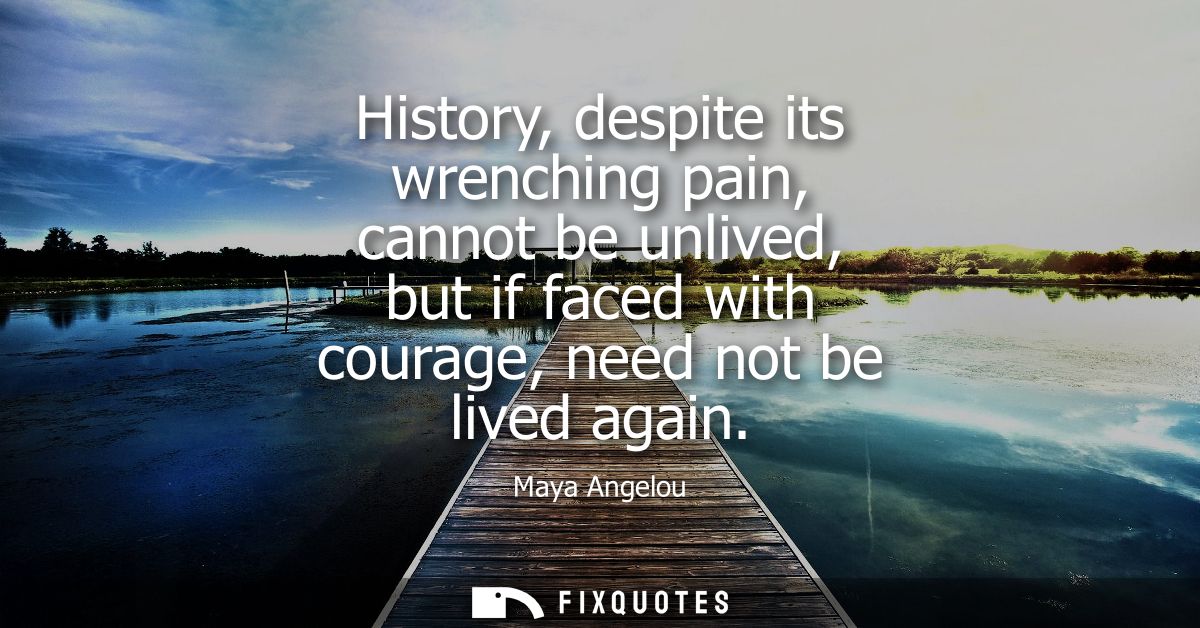
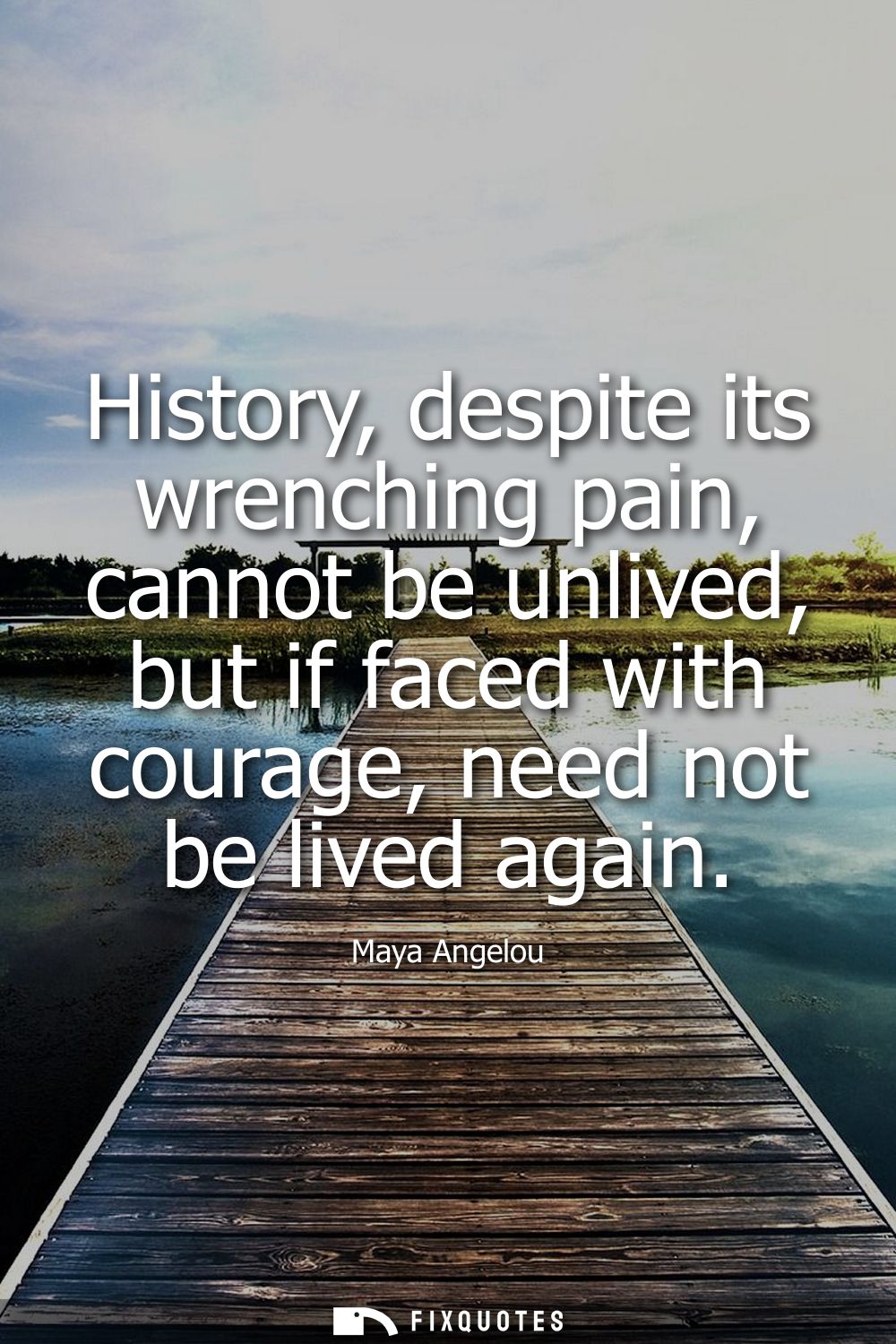
"History, despite its wrenching pain, cannot be unlived, but if faced with courage, need not be lived again"
About this Quote
Angelou takes the worst sales pitch in the world - the past - and refuses to let it keep collecting rent. The line starts with a blunt concession: history hurts, and not in a quaint, nostalgic way. "Wrenching pain" is physical language, the body remembering what the mind might prefer to file away. That matters because Angelou is never talking about history as trivia; she means the lived record of harm, especially the kind that repeats through families, communities, and institutions.
Then she turns a paradox into a strategy. "Cannot be unlived" closes the door on denial, revisionism, and the seductive fantasy of starting over unscarred. It is a moral insistence: you don't get to edit out what happened, whether it's personal trauma or a nation's violence. But she doesn't stop at resignation. The hinge is "if faced with courage", which reframes courage as something quieter than heroism - the willingness to look directly at what you've survived and what you've benefited from. Facing becomes an ethical act, not an emotional mood.
The real force lands in the last clause: "need not be lived again". Angelou sketches a politics of memory. Remembering isn't to fetishize suffering; it's to interrupt its cycle. The subtext is both intimate and collective: trauma unacknowledged metastasizes, while truth confronted can become prevention. It's a line built for people tired of being told to "move on" before anyone has told the truth.
Then she turns a paradox into a strategy. "Cannot be unlived" closes the door on denial, revisionism, and the seductive fantasy of starting over unscarred. It is a moral insistence: you don't get to edit out what happened, whether it's personal trauma or a nation's violence. But she doesn't stop at resignation. The hinge is "if faced with courage", which reframes courage as something quieter than heroism - the willingness to look directly at what you've survived and what you've benefited from. Facing becomes an ethical act, not an emotional mood.
The real force lands in the last clause: "need not be lived again". Angelou sketches a politics of memory. Remembering isn't to fetishize suffering; it's to interrupt its cycle. The subtext is both intimate and collective: trauma unacknowledged metastasizes, while truth confronted can become prevention. It's a line built for people tired of being told to "move on" before anyone has told the truth.
Quote Details
| Topic | Learning from Mistakes |
|---|---|
| Source | Line from I Know Why the Caged Bird Sings, Maya Angelou, 1969 (autobiography). |
More Quotes by Maya
Add to List