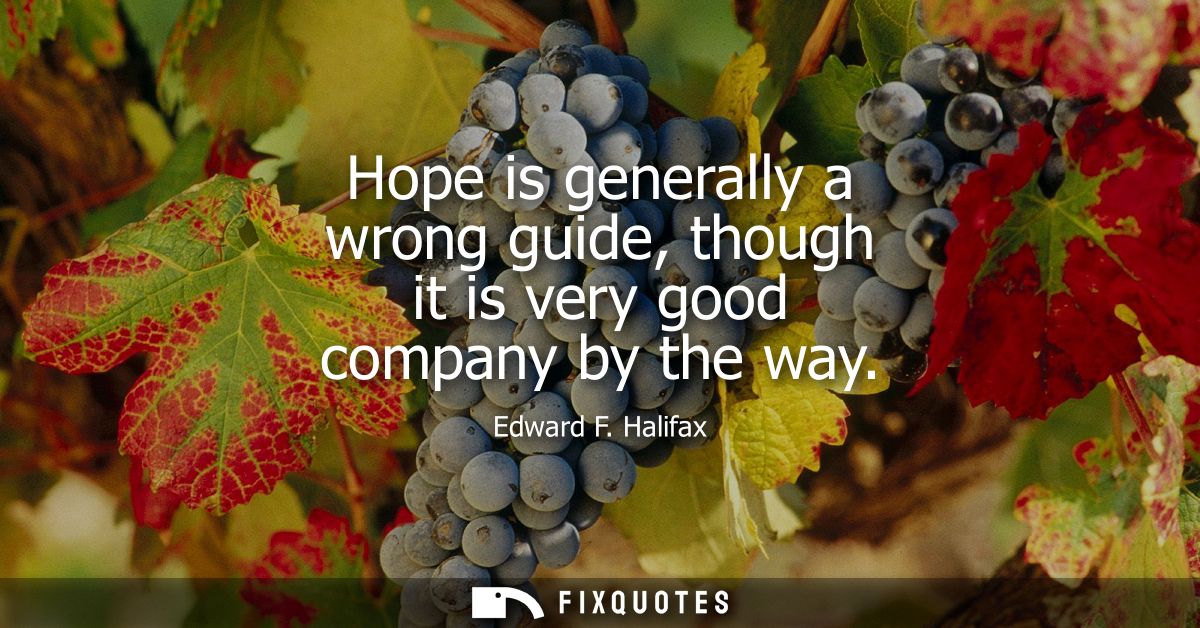
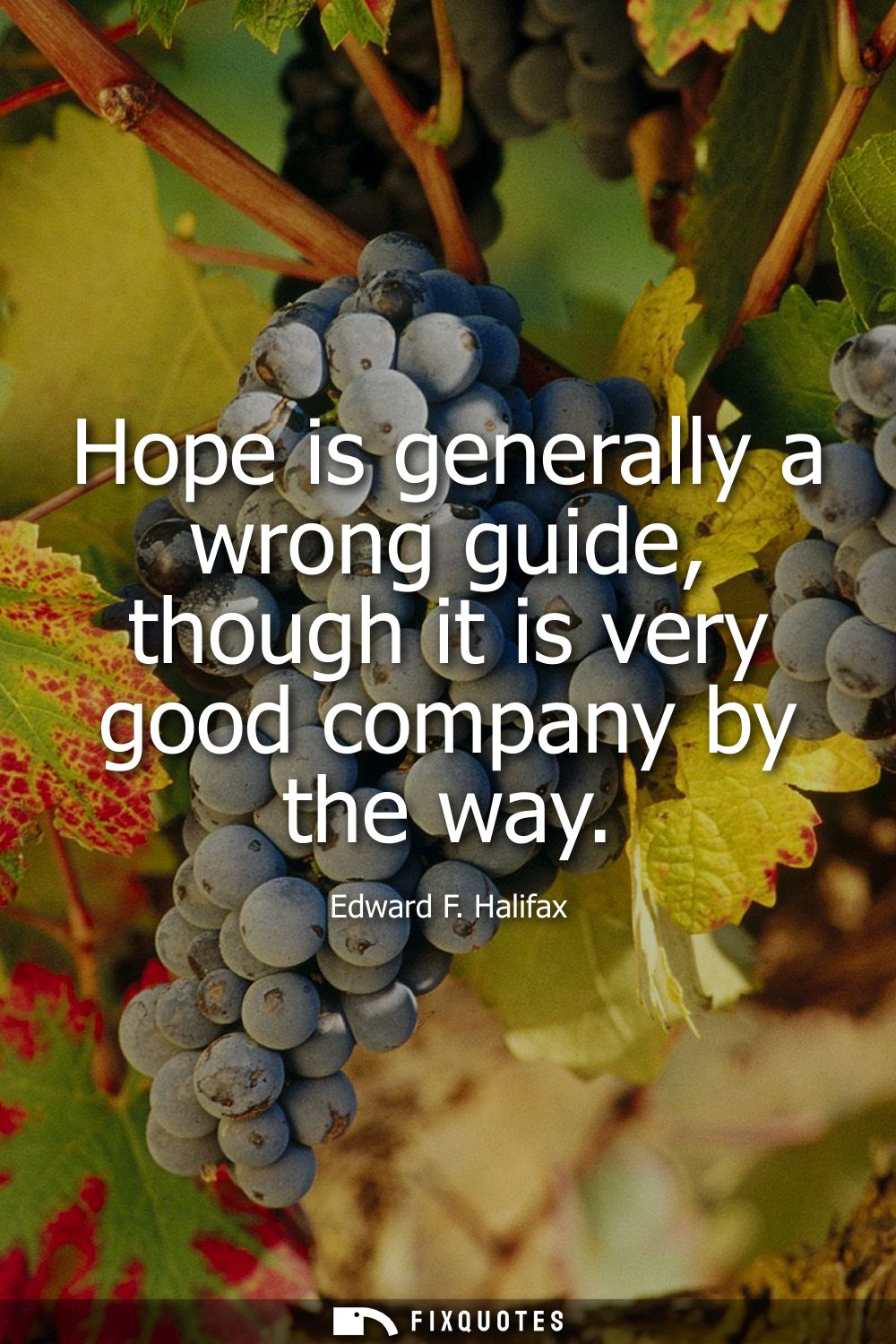
"Hope is generally a wrong guide, though it is very good company, by the way"
About this Quote
The sting is in the qualifier: “generally.” Halifax isn’t denouncing hope as a moral failing; he’s warning against promoting it to the job of judgement. That distinction matters in politics, where hope is easily weaponized into rhetoric: a crowd can be sustained by hope long after the facts have turned, and leaders can hide behind it as if optimism were policy. By calling it “very good company,” he admits its soft power. Hope keeps people functioning. It makes waiting tolerable. It lubricates solidarity. It also flatters the speaker: he sounds humane even as he argues for hard-eyed realism.
Read in the shadow of early 20th-century statecraft, the subtext feels like a critique of appeasing narratives and wishful forecasts - the temptation to treat intention as outcome. Halifax frames maturity as a kind of emotional compartmentalization: keep hope close for morale, but don’t let it drive. In one sentence, he sketches the statesman’s dilemma: you must sell tomorrow without lying about today.
Quote Details
| Topic | Hope |
|---|---|
| Source | Help us find the source |
| Cite |
Citation Formats
APA Style (7th ed.)
Halifax, Edward F. (2026, February 20). Hope is generally a wrong guide, though it is very good company, by the way. FixQuotes. https://fixquotes.com/quotes/hope-is-generally-a-wrong-guide-though-it-is-very-4797/
Chicago Style
Halifax, Edward F. "Hope is generally a wrong guide, though it is very good company, by the way." FixQuotes. February 20, 2026. https://fixquotes.com/quotes/hope-is-generally-a-wrong-guide-though-it-is-very-4797/.
MLA Style (9th ed.)
"Hope is generally a wrong guide, though it is very good company, by the way." FixQuotes, 20 Feb. 2026, https://fixquotes.com/quotes/hope-is-generally-a-wrong-guide-though-it-is-very-4797/. Accessed 29 Mar. 2026.