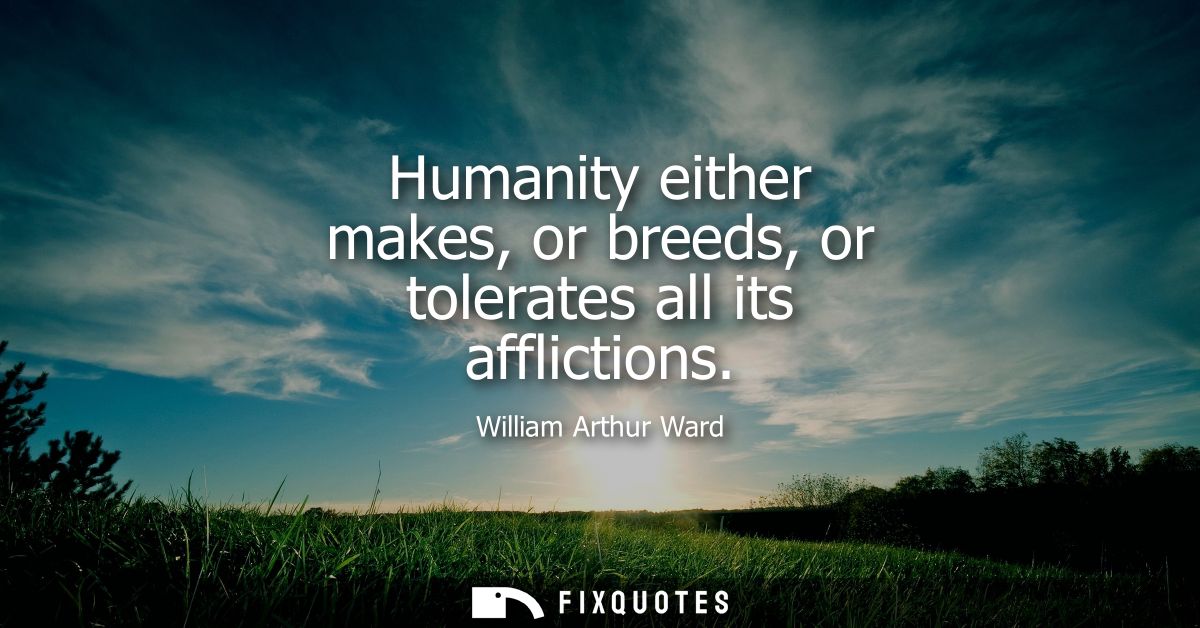
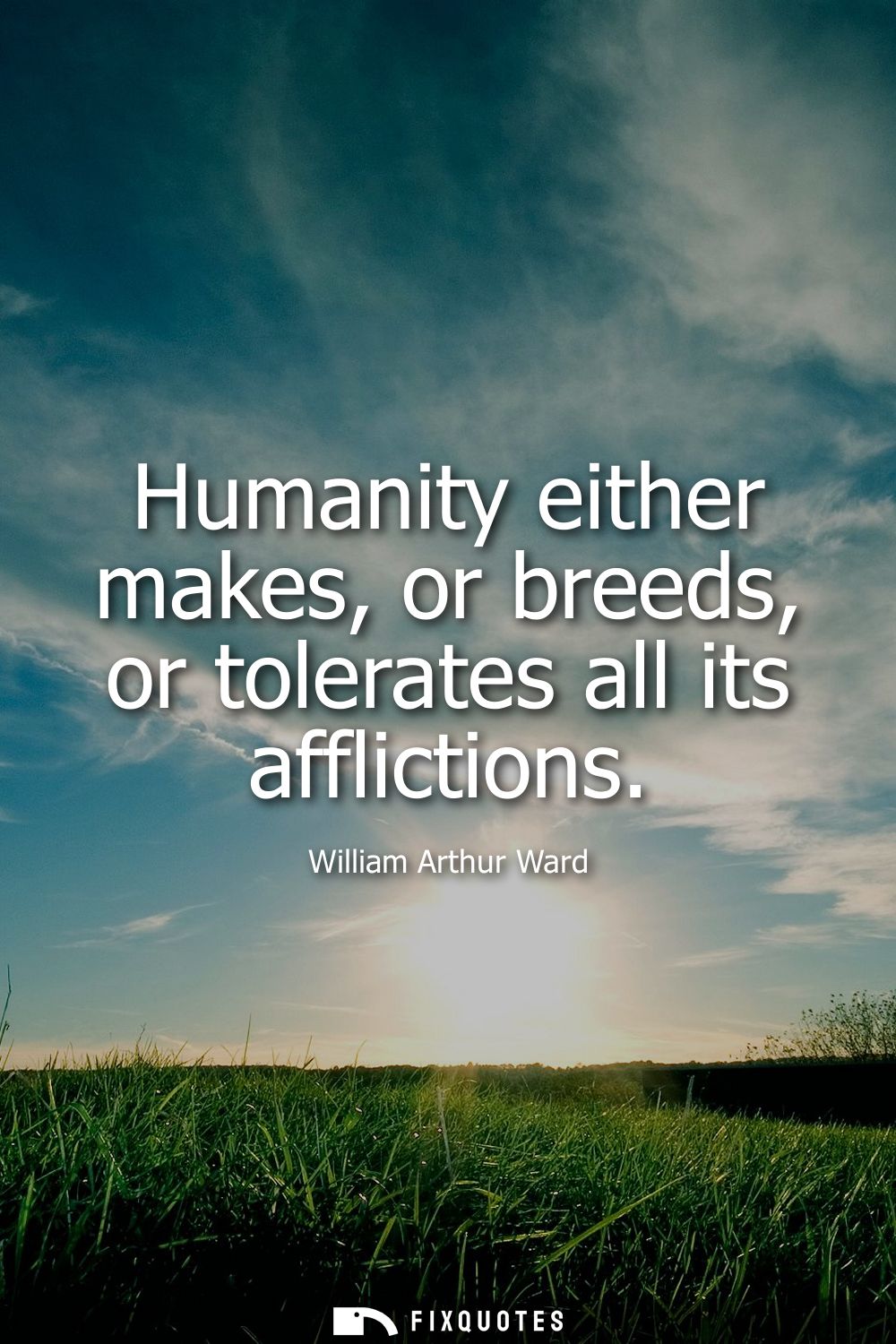
"Humanity either makes, or breeds, or tolerates all its afflictions"
About this Quote
Ward’s line is a neat accusation dressed up as a calm observation: if we’re suffering, it’s rarely because the universe is cruel in a vacuum. It’s because humans have fingerprints on the harm. The verb trio is the quote’s engine. “Makes” points to deliberate damage: war, exploitation, policy choices, the violence we do on purpose. “Breeds” is sharper, and more intimate. It suggests slow, systemic cultivation - the way inequality, prejudice, addiction, and environmental collapse aren’t always chosen in one dramatic moment but grown over time through habits, institutions, and incentives. Then comes the most damning option: “tolerates.” Ward saves it for last because it implicates the largest crowd. You may not be the arsonist, but if you watch the building burn and call it normal, you’re part of the story.
The subtext is a moral demotion of victimhood. Ward isn’t denying illness, disaster, or random tragedy; he’s reframing “afflictions” to include the man-made and the preventable, the harms that persist because they’re convenient for someone and survivable for everyone else. It’s a mid-20th-century civic-humanist move: faith in human agency paired with impatience at our excuses.
The intent, then, isn’t consolation. It’s accountability with a ladder attached. If people author most of their misery - actively, passively, or by cultural inheritance - people can also un-author it. The sting is the point: the quote works by making “tolerates” feel like a choice you’re already making.
The subtext is a moral demotion of victimhood. Ward isn’t denying illness, disaster, or random tragedy; he’s reframing “afflictions” to include the man-made and the preventable, the harms that persist because they’re convenient for someone and survivable for everyone else. It’s a mid-20th-century civic-humanist move: faith in human agency paired with impatience at our excuses.
The intent, then, isn’t consolation. It’s accountability with a ladder attached. If people author most of their misery - actively, passively, or by cultural inheritance - people can also un-author it. The sting is the point: the quote works by making “tolerates” feel like a choice you’re already making.
Quote Details
| Topic | Ethics & Morality |
|---|---|
| Source | Help us find the source |
| Cite |
Citation Formats
APA Style (7th ed.)
Ward, William Arthur. (2026, January 18). Humanity either makes, or breeds, or tolerates all its afflictions. FixQuotes. https://fixquotes.com/quotes/humanity-either-makes-or-breeds-or-tolerates-all-6090/
Chicago Style
Ward, William Arthur. "Humanity either makes, or breeds, or tolerates all its afflictions." FixQuotes. January 18, 2026. https://fixquotes.com/quotes/humanity-either-makes-or-breeds-or-tolerates-all-6090/.
MLA Style (9th ed.)
"Humanity either makes, or breeds, or tolerates all its afflictions." FixQuotes, 18 Jan. 2026, https://fixquotes.com/quotes/humanity-either-makes-or-breeds-or-tolerates-all-6090/. Accessed 27 Mar. 2026.
More Quotes by William
Add to List