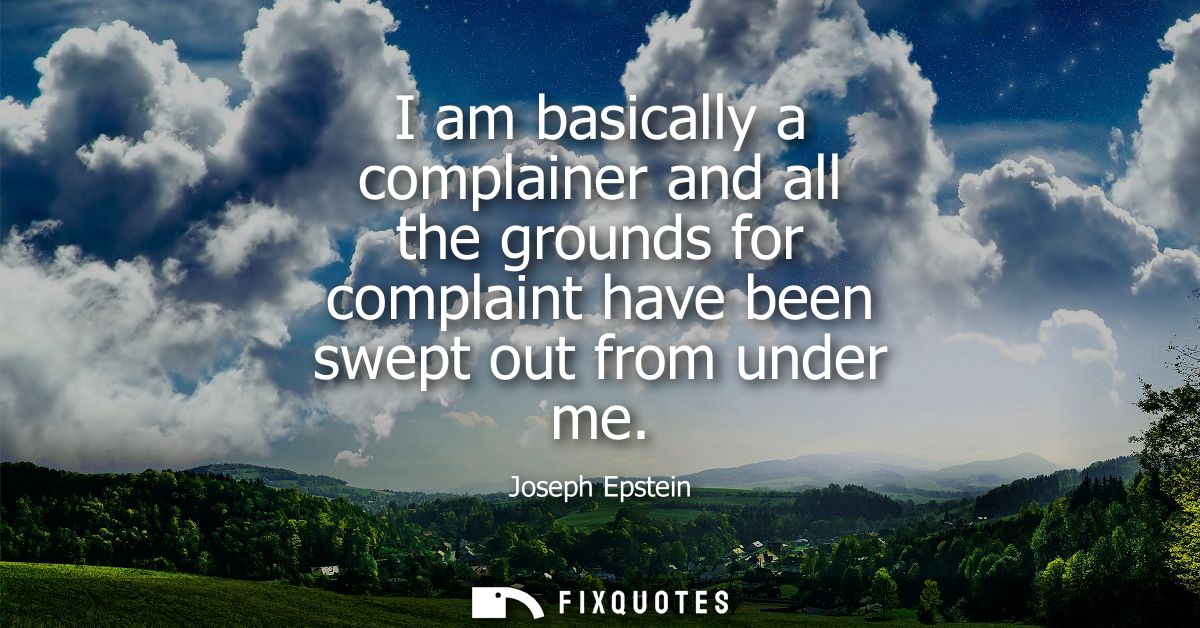
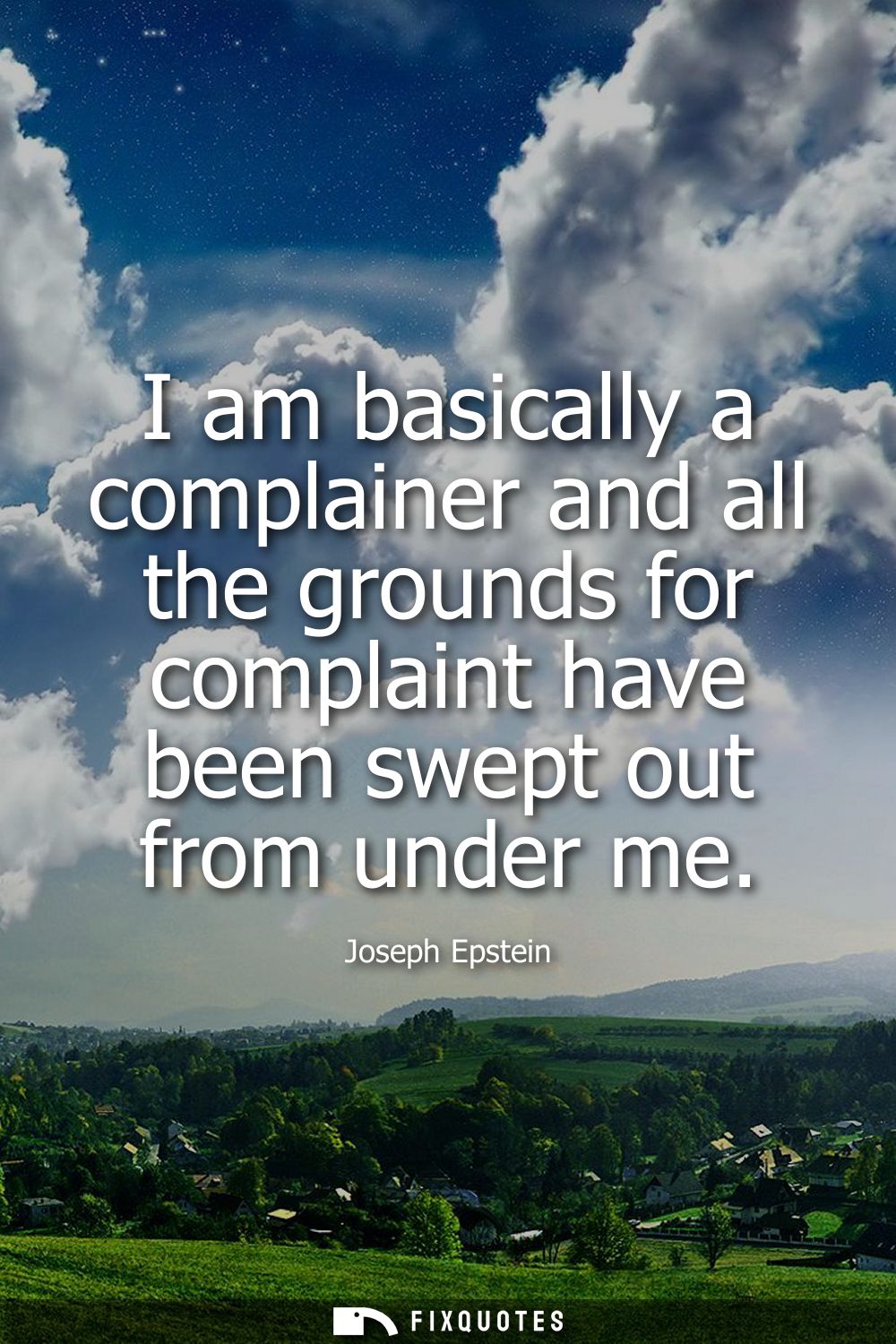
"I am basically a complainer and all the grounds for complaint have been swept out from under me"
About this Quote
The intent is self-deflation with teeth. By calling himself "basically a complainer", Epstein shrinks the grand moral posture of grievance down to temperament, like saying: this isn’t principle, it’s my default setting. Then he sharpens the joke with that bureaucratic, physical metaphor "swept out from under me". Complaint becomes carpentry, a platform you stand on. The phrase suggests someone else did the sweeping, too, which hints at the quiet panic behind the wisecrack: if your persona is built on dissatisfaction, what happens when life stops cooperating?
The subtext is a satire of both self and culture. Epstein is poking at the writerly impulse to convert irritation into prose, to treat minor affronts as fuel. He’s also anticipating a modern anxiety: we curate our identities around what we oppose. When the opposition disappears, we don’t simply relax; we lose narrative traction.
Context matters because Epstein’s persona is rooted in urbane skepticism and social observation, the sort of essay voice that thrives on small hypocrisies. The line acknowledges the possibility of comfort and stability while refusing to romanticize it. Even when the grounds vanish, the complainer remains - which is Epstein’s sly reminder that grievance is rarely about the world alone. It’s about keeping the mind occupied.
Quote Details
| Topic | Witty One-Liners |
|---|---|
| Source | Help us find the source |
| Cite |
Citation Formats
APA Style (7th ed.)
Epstein, Joseph. (2026, January 16). I am basically a complainer and all the grounds for complaint have been swept out from under me. FixQuotes. https://fixquotes.com/quotes/i-am-basically-a-complainer-and-all-the-grounds-94158/
Chicago Style
Epstein, Joseph. "I am basically a complainer and all the grounds for complaint have been swept out from under me." FixQuotes. January 16, 2026. https://fixquotes.com/quotes/i-am-basically-a-complainer-and-all-the-grounds-94158/.
MLA Style (9th ed.)
"I am basically a complainer and all the grounds for complaint have been swept out from under me." FixQuotes, 16 Jan. 2026, https://fixquotes.com/quotes/i-am-basically-a-complainer-and-all-the-grounds-94158/. Accessed 13 Feb. 2026.