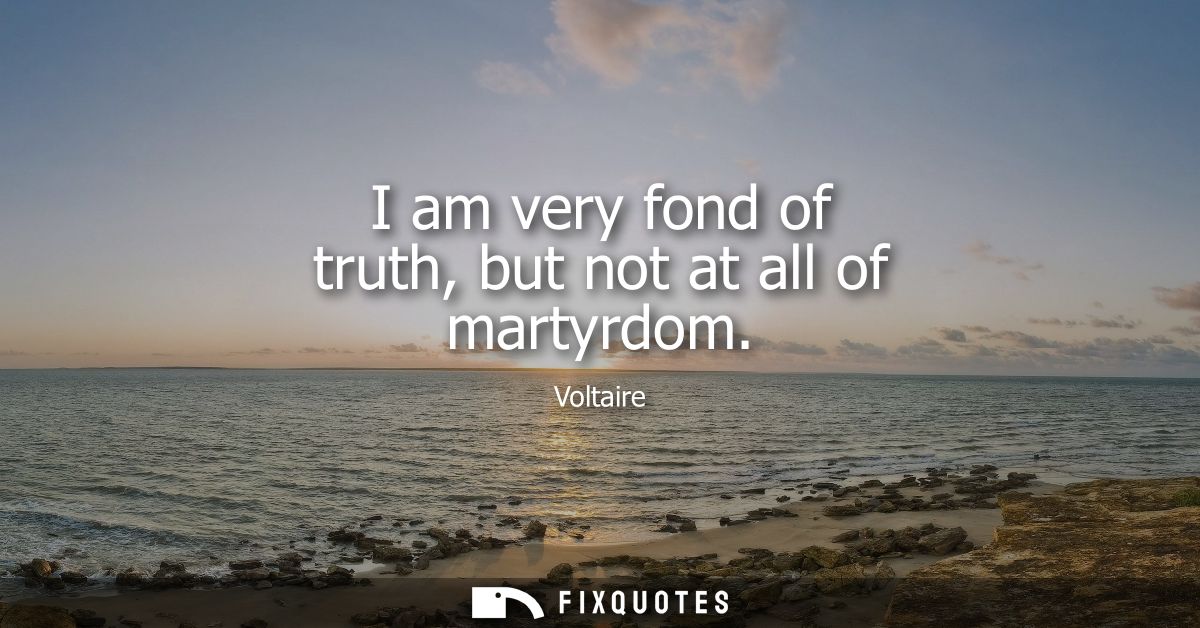
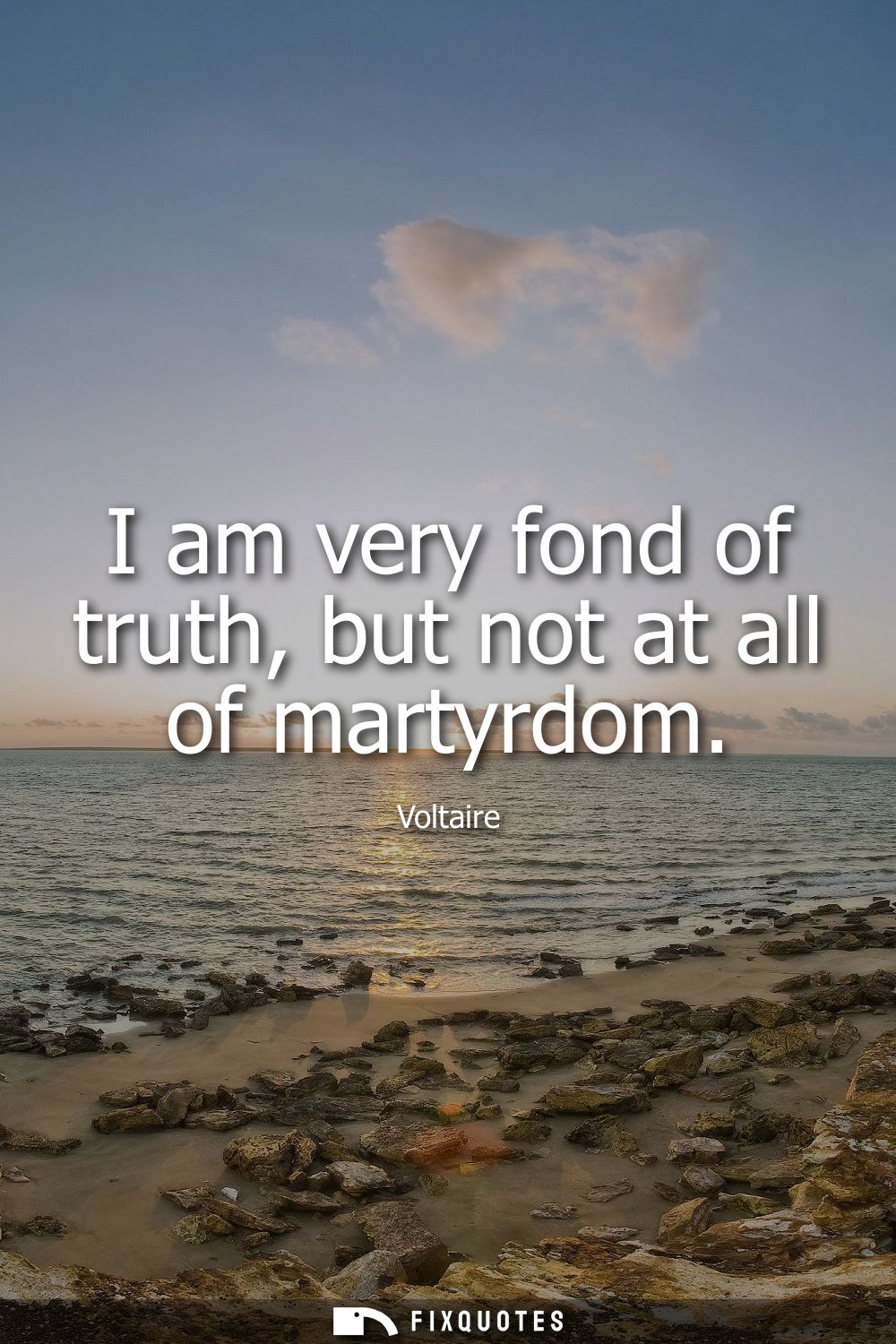
"I am very fond of truth, but not at all of martyrdom"
About this Quote
Truth is Voltaire's instrument, not his altar. "I am very fond of truth, but not at all of martyrdom" lands with the dry elegance of someone who has seen how quickly noble principles get you imprisoned, exiled, or quietly ruined. The line isn't a confession of cowardice so much as a diagnosis of how power works: regimes can tolerate abstract virtue; they can't tolerate a person willing to suffer publicly for it, because martyrdom turns dissent into theater.
Voltaire is writing out of an era when "speaking plainly" wasn't a personality trait, it was a legal hazard. His career is a long negotiation with censors, courts, and clergy - and he got burned often enough to learn that heroic self-sacrifice is a luxury good. The subtext is tactical Enlightenment: reason advances not by dying beautifully but by surviving long enough to publish, persuade, and embarrass your opponents with receipts.
The wit comes from the faux-modest phrasing. "Fond of" makes truth sound like a preference, as if he's choosing wine, not challenging dogma. That understatement is the point: it deflates the romantic myth that conviction must culminate in suffering. Voltaire's cynicism is purposeful. He prizes outcomes over purity, and he refuses to let the enemies of free thought set the terms of moral victory. Martyrs are useful to movements, but they are also convenient to tyrants who prefer their critics dead, sanctified, and safely silent.
Voltaire is writing out of an era when "speaking plainly" wasn't a personality trait, it was a legal hazard. His career is a long negotiation with censors, courts, and clergy - and he got burned often enough to learn that heroic self-sacrifice is a luxury good. The subtext is tactical Enlightenment: reason advances not by dying beautifully but by surviving long enough to publish, persuade, and embarrass your opponents with receipts.
The wit comes from the faux-modest phrasing. "Fond of" makes truth sound like a preference, as if he's choosing wine, not challenging dogma. That understatement is the point: it deflates the romantic myth that conviction must culminate in suffering. Voltaire's cynicism is purposeful. He prizes outcomes over purity, and he refuses to let the enemies of free thought set the terms of moral victory. Martyrs are useful to movements, but they are also convenient to tyrants who prefer their critics dead, sanctified, and safely silent.
Quote Details
| Topic | Truth |
|---|---|
| Source | Help us find the source |
| Cite |
Citation Formats
APA Style (7th ed.)
Voltaire. (2026, January 15). I am very fond of truth, but not at all of martyrdom. FixQuotes. https://fixquotes.com/quotes/i-am-very-fond-of-truth-but-not-at-all-of-10635/
Chicago Style
Voltaire. "I am very fond of truth, but not at all of martyrdom." FixQuotes. January 15, 2026. https://fixquotes.com/quotes/i-am-very-fond-of-truth-but-not-at-all-of-10635/.
MLA Style (9th ed.)
"I am very fond of truth, but not at all of martyrdom." FixQuotes, 15 Jan. 2026, https://fixquotes.com/quotes/i-am-very-fond-of-truth-but-not-at-all-of-10635/. Accessed 21 Mar. 2026.
More Quotes by Voltaire
Add to List