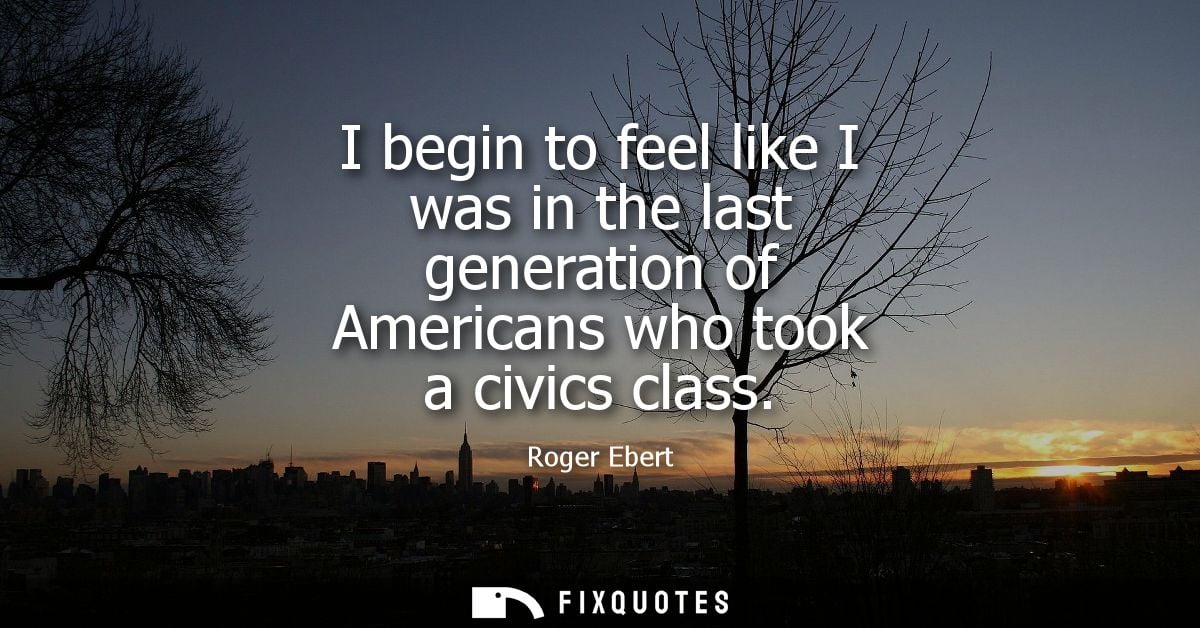
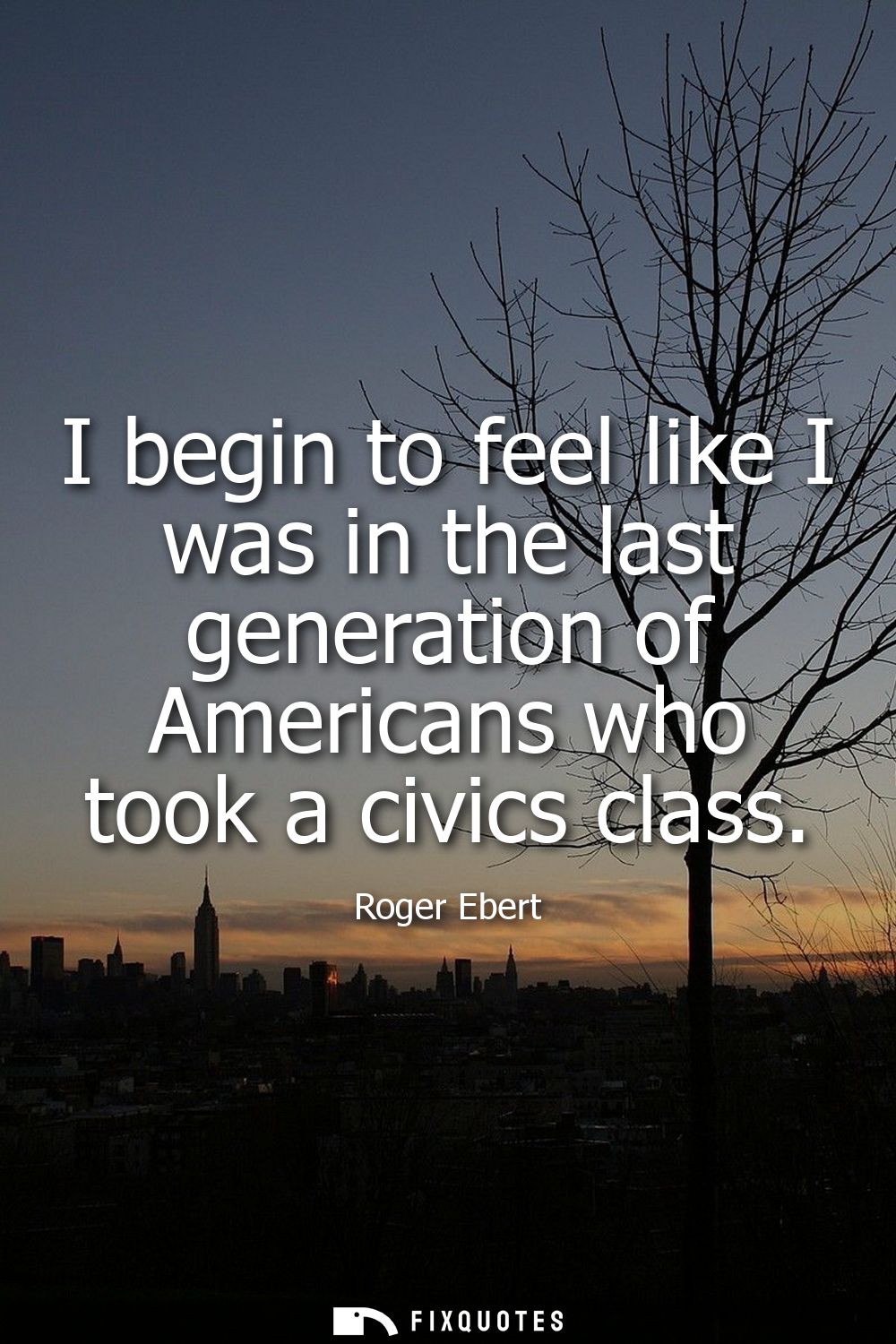
"I begin to feel like I was in the last generation of Americans who took a civics class"
About this Quote
The specific intent is to frame civic ignorance as a cultural rupture, not just an educational gap. Civics class isn’t nostalgia for worksheets; it’s shorthand for a shared operating system: how a bill becomes a law, what checks and balances are for, what rights actually mean when they collide with power. Ebert’s subtext is that public life has become legible mainly as spectacle. If you don’t understand the machinery, you judge outcomes like movie endings: satisfying, enraging, “plot holes,” villains. That’s critic brain turned outward, using narrative language to describe political literacy.
Context matters because Ebert wasn’t a pundit by trade; he was a mass-audience intellectual. When he laments civics, he’s also lamenting the erosion of common reference points that once made argument possible. The bite is that he doesn’t claim superiority outright. He claims disorientation: he feels like a survivor of a vanished curriculum. The line works because it suggests the quiet terror underneath contemporary politics: not that we disagree, but that we don’t even share the map.
Quote Details
| Topic | Knowledge |
|---|---|
| Source | Help us find the source |
| Cite |
Citation Formats
APA Style (7th ed.)
Ebert, Roger. (2026, January 17). I begin to feel like I was in the last generation of Americans who took a civics class. FixQuotes. https://fixquotes.com/quotes/i-begin-to-feel-like-i-was-in-the-last-generation-62924/
Chicago Style
Ebert, Roger. "I begin to feel like I was in the last generation of Americans who took a civics class." FixQuotes. January 17, 2026. https://fixquotes.com/quotes/i-begin-to-feel-like-i-was-in-the-last-generation-62924/.
MLA Style (9th ed.)
"I begin to feel like I was in the last generation of Americans who took a civics class." FixQuotes, 17 Jan. 2026, https://fixquotes.com/quotes/i-begin-to-feel-like-i-was-in-the-last-generation-62924/. Accessed 19 Feb. 2026.